

Unlock the White House Watch newsletter for free
Your guide to what Trump’s second term means for Washington, business and the world
The writer is an investor at venture capital firm CIV. He was previously special assistant to President Joe Biden for economic policy
America’s China policy over the past decade has been defined by anxiety about Beijing’s dominance of critical minerals and their derivatives. Today China controls more than 90 per cent of key markets, including for materials such as graphite and gallium and industrial inputs such as rare-earth magnets.
While Beijing spent decades working towards this goal, US mis-steps were also crucial. Environmental rules, zoning policies and political pressure (in many cases justified) contributed to the migration of these industries offshore.
The result has been a major economic chokepoint and security vulnerability. China has leveraged its dominance to develop advantages in downstream technologies such as batteries, electric vehicles and most recently robotics. Many of these products are now at the centre of global competition. The US is on its back foot, and re-industrialisation has become a bipartisan imperative.
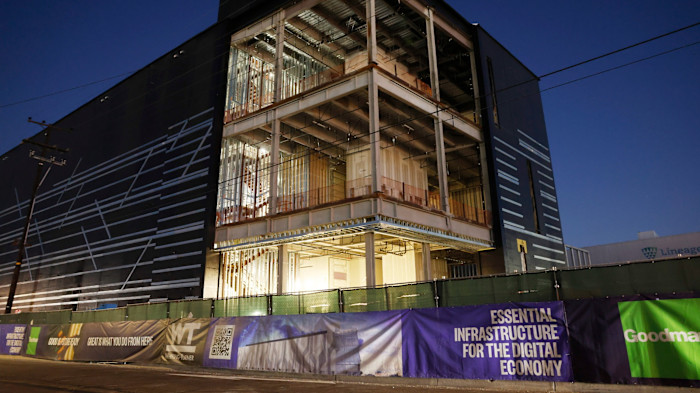
Unfortunately, the lessons are at risk of being forgotten when it comes to data centres. These high-tech warehouses are the rare-earth refineries and factories of the AI era. And they are already in the US’s crosshairs. In March, Senator Bernie Sanders and Representative Alexandria Ocasio-Cortez proposed a moratorium on new construction until AI safeguards are put in place. In total, $85bn of data centre projects have been cancelled over the past three years.
Like mines and refineries, they are despised by their would-be neighbours: recent polls show seven in 10 Americans oppose having them in their communities. Here, too, the concerns are reasonable, from higher energy prices to water consumption. But like the industrial facilities of old, they also bring economic benefits. The evidence suggests communities saw a 4 to 5 per cent rise in employment in the five to six years after their first data centre was built.
More importantly, they sit at the intersection of supply chains and technologies vital for America’s economic future. They require sophisticated electronics like transformers to manage the flow of power and incorporate cutting-edge technology, such as optical links that use light to transmit information.
The US has struggled as a result of deficient capacity across many of these technologies. Transformers have become a major bottleneck, with backlogs stretching two to four years and import reliance as high as 80 per cent.
Happily, demand from data centres is already catalysing billions in foreign direct investment from companies such as Hitachi and Siemens to build US manufacturing capacity for advanced electrical equipment.
The data centre bonanza is a special kind of opportunity: one where deep-pocketed buyers like Silicon Valley’s hyperscalers are willing to open their wallets to pay for fast, reliable access to industrial technology. It offers a chance for the US to get ahead in the next key technologies and to build domestic supply chains based on demand rather than subsidies and tariffs.
Preventing construction will not only deny the US as much as a percentage point in annual GDP growth in the coming years and a shot at leading the development of critical technologies. It will deliver those opportunities to competitors. Beijing is reportedly working on a $295bn plan to fund data centre construction.
This doesn’t mean concerns should be ignored. Construction and permitting rules must address environmental risks and hold operators accountable for any damage. The hyperscalers’ demand should also be turned to the benefit of communities, with developers covering the costs of building new, clean energy generation and upgrading the grid.
The US faces a choice when it comes to data centres. We can respond by preventing their construction or channel the market’s voracious appetite to build them on terms that work for US workers and communities. If we treat data centres the way we did rare earths and critical minerals, we may come to regret it.
