

It is “difficult” to pin down precisely who Cottrell is, Gabriel Pogrund, who led the Sunday Times team behind the investigation, tells the BBC’s Newscast.
Born in Gloucester in 1993, Cottrell is the son of the Honourable Fiona Cottrell, the paper reports, an aristocrat said to have “briefly dated” then-Prince Charles, the future king. Cottrell’s grandfather, the third Baron Manton, inherited a “family soap empire”.
The future Farage ally reportedly left education without A-levels after being expelled from Malvern College, an independent school in Worcestershire, due to a “gambling addiction”. He is alleged to have once walked into a bookies with tens of thousands of pounds in cash.
He went on to become a “fixer-cum-financier to the ultra-rich in Mayfair”, according to the report, and his wealth now “derives from crypto”.
It is not clear precisely when he became close with Farage, but at the age of 22, he was made Ukip’s head of fundraising – a reward for volunteering for Farage in a 2015 Essex by-election.
The two of them quickly became “very close”, says Pogrund. “George is seen as the Farage whisperer. He knows when Nigel needs a cigarette, he knows when Nigel wants a beer, he knows when Nigel wants a moment’s peace.
“He’s there to pull the chair from under the table when he’s about to sit down,” Pogrund said of this period.
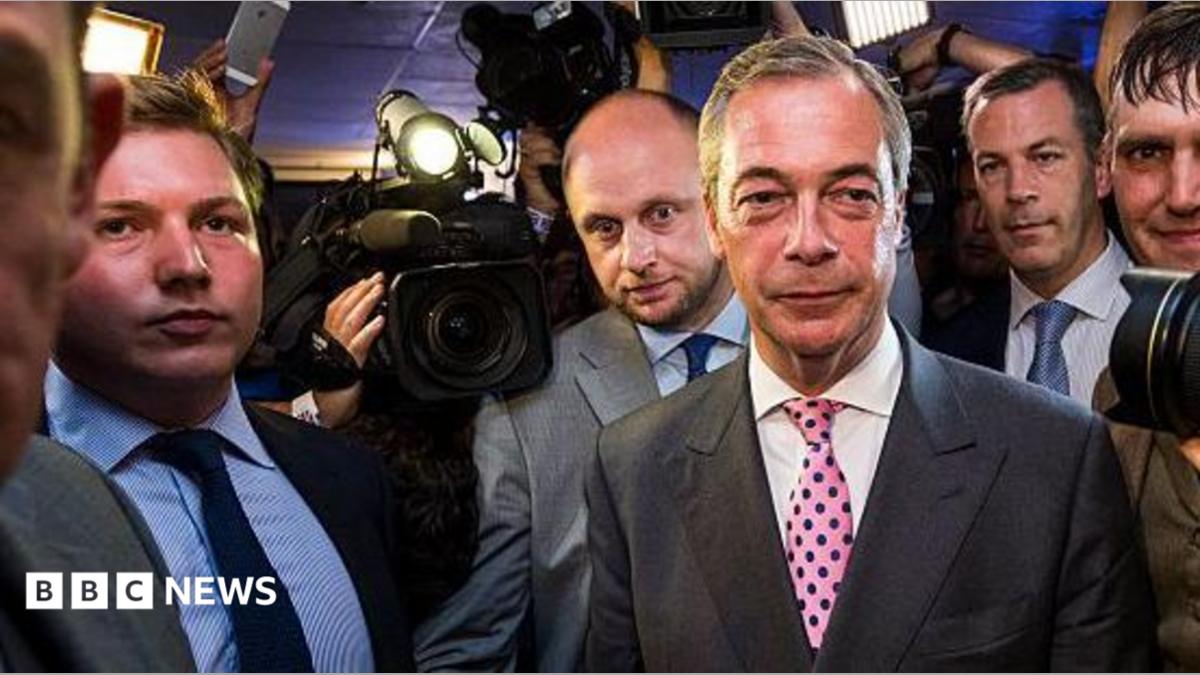
This “profound friendship” saw Cottrell at Farage’s side on the day of the Brexit referendum in June 2016.
A month later, Cottrell was arrested in the US as he and Farage were preparing to return to the UK after the Republican National Convention, where Farage had spoken at a rally in support of Donald Trump.
Cottrell had been caught agreeing to launder money for undercover agents posing as drug traffickers in an FBI sting operation.
Farage said at the time that he was surprised by what had happened and had “never had any suspicions” about Cottrell. He said he could not be held responsible for “what everyone around me does”.
Cottrell faced 20 years in jail for 21 counts related to money laundering, fraud, blackmail and extortion.
But he eventually brokered a plea deal, admitted guilt to a charge of wire fraud and ended up serving just eight months in prison.
In the plea bargain, Cottrell said: “I falsely claimed that I would launder the criminal proceeds through my bank accounts for a fee.”
He claimed that rather than launder the money, he and an associate planned on keeping it themselves.
