

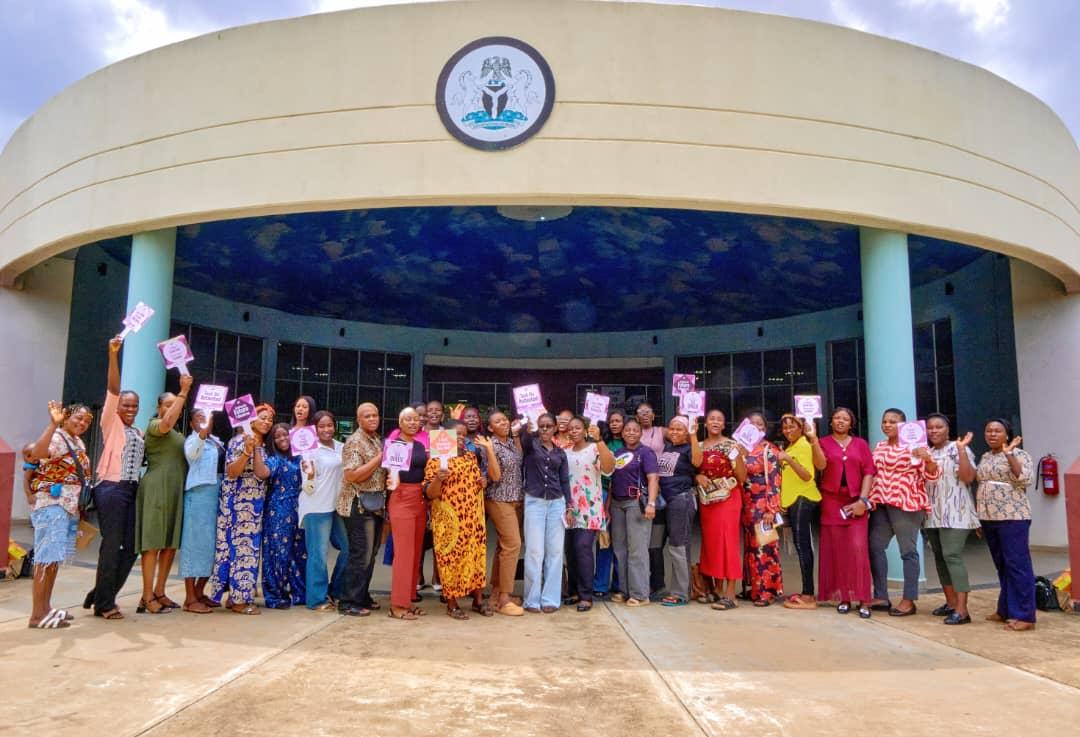
More than 150 women and girls in Edo State have successfully completed a six-day digital literacy programme aimed at equipping participants with practical technology skills to enhance career opportunities, support business growth, and increase participation in the digital economy.
The initiative, organised by She Code Africa in partnership with HP and supported by the Edo State Information Communication and Technology Agency (ICT Agency) alongside Girl Leads Project, brought together women from diverse backgrounds and age groups to acquire essential digital and workplace competencies.
Speaking during the closing ceremony, Programme Manager at She Code Africa, Oreoluwa Adetula, reaffirmed the organisation’s commitment to empowering women and girls across Africa with the skills and opportunities required to thrive in an increasingly digital world.
According to her, the programme was intentionally designed to be beginner-friendly and practical, enabling participants to progress from basic computer operations to more advanced productivity and communication tools.
“The goal of the programme is to meet women where they are and provide them with the necessary skills for today’s digital workspace. We want women and girls to understand productivity tools, communication platforms, and digital resources that can support their careers and businesses,” she said.
Adetula explained that participants received training in key areas such as Google Workspace, Microsoft Office applications, Excel, Google Sheets, Google Slides, internet safety, Google Meet, digital communication, and calendar management.
She noted that the programme caters to individuals at different stages of life and professional development, ranging from students preparing for future employment opportunities to entrepreneurs seeking to expand and digitise their businesses.
Operations Associate at She Code Africa, Deborah Ukparah, described the programme as an eye-opening experience, noting that while the target audience was primarily women between the ages of 16 and 35, many older women also participated.
According to her, the turnout highlighted a growing demand for digital literacy among women beyond conventional target demographics.
“We realised that learning has no age limit. We saw women above 35 and even above 40 who were eager to gain digital knowledge and improve their computer skills. It reminded us that there is still a significant digital gap that needs to be addressed,” she said.
Ukparah added that although the programme reached approximately 200 participants in the current cohort, many more women still require access to similar opportunities.
The training also generated positive feedback from beneficiaries, who described the programme as impactful in strengthening their digital confidence and practical knowledge.
One participant, Ugbewey Evelyne, said the training exposed her to opportunities beyond her initial expectations.
“I thought I was only coming to learn presentations and PowerPoint, but I discovered many more things that can support my career and personal development,” she said.
Another beneficiary, Ukana Augusta, expressed appreciation to the programme facilitators and highlighted the value of lessons on internet safety and information management.
Other participants also noted that they gained practical skills such as organising online meetings, using spreadsheets, managing digital calendars, and protecting personal information while using public devices.
Organisers said the programme aligns with She Code Africa’s broader mission of building a stronger pipeline of women equipped for careers in science, technology, engineering, and mathematics (STEM), while ensuring women at all stages of life have access to opportunities and resources capable of transforming their futures.
They further called on organisations, development partners, and other stakeholders to support efforts aimed at closing the digital skills gap and expanding access to technology education for women and girls across communities.


