

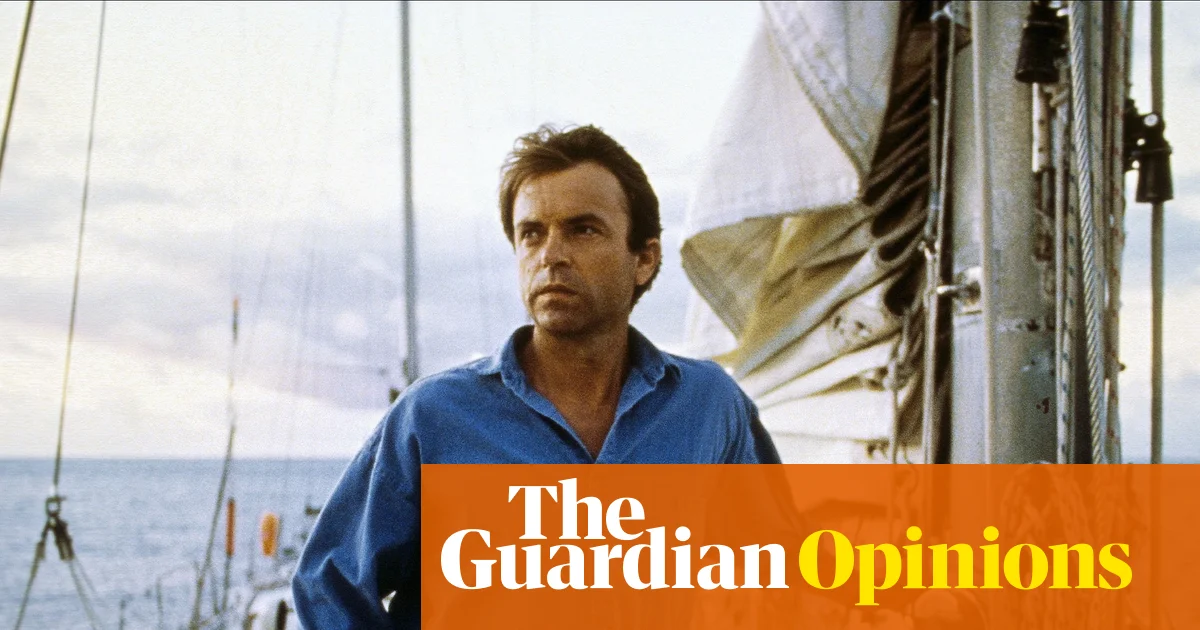
I interviewed Sam Neill in 2024, remotely: he was in Vancouver filming a Netflix series, Untamed, but we were there to talk about a quirky Australian court-room drama, The Twelve. He was immediately, disarmingly frank. Its second season, he said, was “considerably stronger” than the first, which was absolutely true, the first being a little schlocky, and the second showing more trust in its audience and our tolerance for nuance.
But actors, generally speaking, will never say anything remotely critical of any project, it’s just not worth the hassle. This can make even the most reflective among them sound anodyne, and the feeling of being in a conversation with a real, three-dimensional human was unfamiliar and warm.
He was quite an open person anyway, by reputation, charismatically self-deprecating. But he’d recently been through treatment for angioimmunoblastic T-cell lymphoma, which had spurred him to write his memoir and given him a fresh, no-bullshit perspective.
He described himself as “an idle man”, which I immediately challenged, just from his body of work – he had his blockbuster decade in the late 80s, early 90s, with Dead Calm, The Hunt for Red October, Jurassic Park of course, but that was on the back of an arthouse period in the late 70s, which delivered My Brilliant Career, an absolutely magnetic film about female emancipation, and the great, mental Possession in 1981.
“No, I seem to work a lot, but basically I’m an idler.” He disappeared off the Zoom to find a copy of his book, Did I Ever Tell You This?, and came back with another book altogether, Question 7 by Richard Flanagan. “If I was a man of a little more profundity, or any profundity, and I didn’t write my book in a hurry, if it wasn’t for those two things – but the hurry was of necessity – and if I had more of a brain, I would have written this.”
“Never mind my book, this book is better” encapsulated his modus operandi: boyish, generous, self-aware (he was right, as well – Question 7 is brilliant).
His first feature, Sleeping Dogs, in 1976, was the first from New Zealand ever to have a US release, and he didn’t become a full-time actor until he was 30. Dead Calm shot him and Nicole Kidman to international fame, but Neill never wanted to move to Hollywood, the longest stretch he did in LA was a year and a half. It wasn’t a place to raise kids, he felt: he is survived by his son with the actor Lisa Harrow – Tim, born in 1983 – and his daughter, Elena, born in 1991, with the makeup artist Noriko Watanabe.
But LA wasn’t a place for an adult, either. “There was nothing but show business. No other conversations, no other interests. It bores the shit out of me. That’s why my life now is half-performance and half-rural. I farm, I grow wine, and that keeps me sane. If I was only doing one, I’d go absolutely nuts.”
The Piano was probably his independent movie that made the most impact, but it was Possession he was proudest of and the first film to rewatch in his memory, somewhere between arthouse, horror and action, “very Polish and very brave, and Isabelle Adjani is astonishing in it. I was asked to go to places I’d never been asked to before, and certainly not since.”
By the time his memoir was published, his cancer treatment was over, its main residue being an absolute and nonchalant truthfulness – that action movies were dumb, that the golden age of cinema was the 50s to the 70s. But he wasn’t in any way jaded, and worked all the time, “probably more than I should,” he told me, “but that’s because I enjoy it so much. The idea of not working fills me with dread. Some of it is to do with coming from a little place, the most obscure place in the world, as far from anything as you could get, and being asked to do something with an international dimension. How immensely seductive is that?”
