

Unlock the Editor’s Digest for free
Roula Khalaf, Editor of the FT, selects her favourite stories in this weekly newsletter.
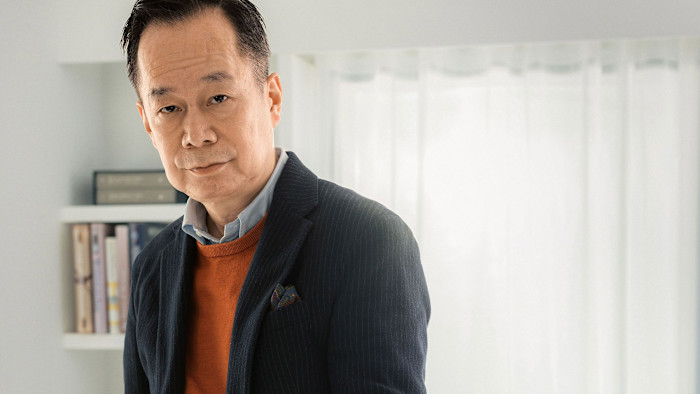
In the Tokyo office of Naoya Hida, a small Japanese independent watch company, there are hundreds of books and magazines dedicated to watches. Hida, now in his sixties, began a career in watch retail in the 1990s and has been collecting them for decades. He holds one up: it’s called Wristwatch Chronometers.
“I purchased this book in 1996,” he says in neat English. “And in it I found the Zenith Calibre 135 movement and I fell in love with it. I tried to connect with this movement for a long time, but for a lot of reasons I couldn’t.”
Zenith’s hand-wound Calibre 135 is revered by watch collectors. Introduced in the late 1940s, it picked up more than 230 prizes for chronometry — the science of accurate timekeeping — in observatory tests and is understood to have won more awards than any calibre in history. In an era before quartz and atomic clocks, such prizes meant something.
Now, Hida has become the first to collaborate with Zenith on a series of double-signed pieces that will bring together the Swiss brand and its GFJ Calibre 135 watch with some of the world’s most revered independent watchmakers.
Zenith, which is owned by LVMH and is part of the French conglomerate’s watch division alongside Tag Heuer and Hublot, reintroduced its star calibre a few years ago in a collaboration with the Finnish watchmaker Kari Voutilainen and the auction house Phillips. It returned to it again last year, placing it in a 160th anniversary watch in platinum called GFJ, named after Georges Favre-Jacot, who founded the company in 1865.
But this is the first time the company has put its halo movement in a co-signed piece — one with two brand names. The Zenith and Naoya Hida & Co names are stacked on the silver, microbead-blasted dial of the GFJ Naoya Hida limited edition, both hand-engraved and filled with blue Japanese urushi lacquer. To align to Hida’s restrained aesthetic, both companies agreed to remove part of their logos. Zenith’s star was left off, as was the word “Tokyo”.

“When we designed the watch as a first step, the Zenith star and Tokyo were on the dial,” Hida recalls. “But when I saw the drawing, I felt it was too busy. I didn’t like to ask to remove the star, and I was surprised they accepted. It’s a beautiful compromise.”
Hida turned to his Type 2 design for inspiration. The dial takes two weeks to craft and is hand-engraved and lacquered by the company’s in-house engraver Keisuke Kano, with Arabic numerals at 12, 3 and 9 o’clock, and a small seconds hand cutting through the hour markers at 6. The straight-sided baton hands are in white gold where normally Naoya Hida would use steel. Because gold is heavier than steel, these had to be hollowed out from behind to avoid problems with inertia without upsetting the aesthetic.
If the movement is all Zenith, the three straps are all Naoya Hida. “Zenith asked me to find something Japanese-related,” says Hida. “So I found some very special materials.” One strap is in the Himeji Kurozan leather used in samurai armour and weaponry; a second in Wagyu leather from Hida’s home town of Kyoto; and the third is in non-stretch Kaihara denim, supplied by a mill in Fukuyama. Each has a deep blue tone, matching the lacquered dial elements.

The model comes in three straps, including a special denim supplied by a mill in Fukuyama . . .

. . . as well as leather from Hida’s hometown of Kyoto
Getting hold of one will be difficult. Only 10 will be made, priced at £57,400, but each one is already accounted for. In March, Zenith and Hida contacted their 10 best clients and offered them the watch, sight unseen. According to Romain Marietta, Zenith’s chief product officer, who brought Hida into the partnership, all 10 said yes without so much as a photo. They were delivered at a private event in Kyoto last month.
“No one was disappointed,” says Eric Ku, a watch collector and co-founder of the watch auction platform Loupe This, who bought number “1 of 10”. “I’m an early supporter of Naoya’s and this is my eighth Naoya Hida watch. This one was out of left field, but I get it.”
Marietta says Zenith’s “double-signed” programme is open-ended and that he has confirmed another seven collaborations that will be delivered over the next five years or so. None will run to more than 25 pieces. A second double-signed piece is due later this year, showcasing another maker, as well as the legacy of the Calibre 135.
“The idea is long term,” he says. “GFJ is a fantastic platform to express our identity, like an independent brand within Zenith. We are the Japan of Europe and Naoya Hida is the Switzerland of Asia.”
Ku says the watch is a sign that Zenith is looking to compete at a higher level. “Making really premium watches in small quantities elevates the brand from a reputational point of view,” he notes. “But it doesn’t move the needle in terms of units.” Ku is confident it will be a good investment: “Because there are only 10 watches and Naoya Hida is a darling of the watch world, I can’t imagine it’ll ever go down in value.”
