

China’s decision to grant duty-free access to its vast market to 53 African countries has opened a new front in the continent’s long-running struggle to break out of the commodity trap. For Nigeria, Africa’s largest economy and most populous nation, the opportunity comes with a sharper political question: can Abuja convert preferential access to one of the world’s biggest consumer markets into factories, jobs, technology and value-added exports, or will the country remain largely a supplier of raw materials to Chinese industry? That question took centre stage in Abuja at an international seminar on China’s zero-tariff treatment for African countries, where Chinese diplomats and senior Nigerian officials offered converging but subtly different prescriptions on how the historic opening should reshape Nigeria-Africa-China economic relations, Michael Olugbode reports.
China has opened its vast consumer market to 53 African countries, but for Nigeria, the real significance of the initiative lies not in the tariff concession itself, but in what the country does with it.
The political question now confronting Abuja is straightforward: can Nigeria turn preferential access to China’s 1.4 billion-consumer market into factories, jobs, technology, value-added exports and a fundamental restructuring of its economy?
That question dominated an international seminar in Abuja on China’s zero-tariff treatment for African countries and its implications for the structural economic transformation of Africa, bringing together diplomats, government officials, farmers, manufacturers, exporters, traders, financial institutions and other stakeholders.
The discussions revealed a striking convergence of views: China can open its market, but Africa must build the productive capacity to supply it.
For Nigeria, that means moving decisively from exporting resources to exporting value. From preferential access to a strategic opening
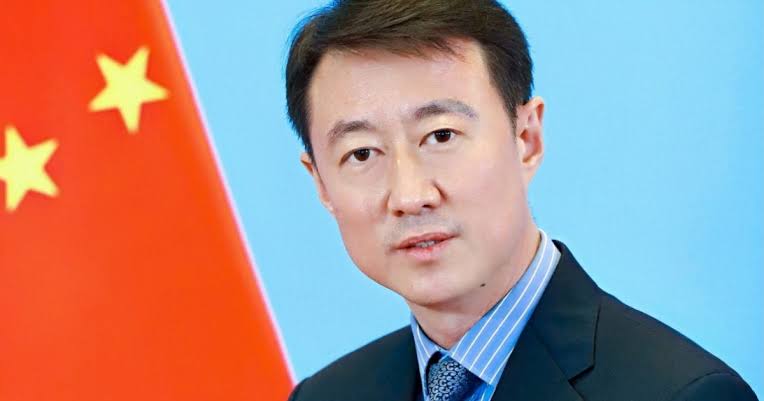
Chinese Ambassador to Nigeria, Yu Dunhai, described Beijing’s zero-tariff initiative as a major milestone in China-Africa relations and an instrument for accelerating Africa’s economic transformation.
President Xi Jinping announced the policy in February, with implementation beginning on May 1, 2026, extending zero-tariff treatment to all 53 African countries with which China maintains diplomatic relations.
But the initiative has a much longer history.
According to the Director of the Centre for China Studies, Charles Onunaiju, China’s preferential trade policy towards Africa dated back to 2003, when Beijing began implementing zero tariffs for least developed African countries, initially covering 194 tariff lines across 25 countries.
Between 2022 and 2024, China expanded zero-tariff treatment to 98 per cent of tariff lines for exports from 27 African countries in four batches, covering more than 8,000 tariff lines.
At the 2024 Forum on China-Africa Cooperation summit in Beijing, President Xi subsequently announced that China would extend zero-tariff treatment to 100 per cent of tariff lines for all least developed countries with diplomatic relations with China, including 33 African countries.
The latest move extends that opening across the 53 African countries with diplomatic relations with Beijing.
Onunaiju stressed that the initiative should not be seen merely as a reaction to recent trade restrictions imposed by Washington and other major economies. Rather, he presented it as part of the longer evolution of China-Africa economic relations.
The significance, therefore, extends beyond tariffs. It is about whether Africa can use access to China’s market to change its position in global value chains. The numbers are already moving. The early figures are encouraging.
Yu disclosed that China-Africa trade reached a historic high in the first half of 2026, while China’s imports from Africa rose significantly following implementation of the new regime.
For Nigeria, the numbers are particularly striking. Bilateral trade with China reached $18 billion in the first half of 2026, up 35 per cent year-on-year, while Chinese imports from Nigeria surged by 80 per cent to $2.3 billion. The ambassador said tariff removal was already generating direct savings for Nigerian exporters.
Every 100 tonnes of sesame exported to China, he said, could save about $11,000 in tariff costs. Nigeria’s annual export of about 7,000 tonnes of cattle bone granules could save nearly $450,000, while a single shipment of 23,000 tonnes of Nigerian liquefied propane generated approximately $300,000 in tax savings.
The figures demonstrate the immediate commercial benefit. But the deeper opportunity lies in what Nigerian businesses do with those savings. If they are used to expand processing, improve quality, increase production and develop export capacity, tariff relief could generate a much larger economic multiplier. If Nigeria simply exports more raw commodities, the structural weakness of the economy will remain.
Yu’s bigger message to Nigeria
Yu’s intervention therefore went beyond celebrating the policy. He called for Nigeria and China to work towards a formal Agreement on Economic Partnership for Shared Development, arguing that institutional arrangements could convert temporary tariff preferences into longer-term guarantees. According to him, 38 African countries have already signed framework agreements with China to advance early-harvest negotiations. He urged Nigeria to strengthen product quality and supply-chain stability, expand local processing and industrial differentiation, integrate trade with investment, improve institutional alignment and create platforms through which Nigerian businesses can directly access Chinese buyers.
He also encouraged Nigerian SMEs to take advantage of major Chinese trade platforms, including the China International Import Expo, Canton Fair and China-Africa Economic and Trade Expo. The message is clear: market access must be followed by aggressive market entry.
Nigeria’s diplomatic response: investment must build
Permanent Secretary, Ministry of Foreign Affairs, Ambassador Dunoma Umar Ahmed, gave the Nigerian government’s response a distinctly political and investment-oriented character. For Nigeria, he said, the critical issue is not simply how much Africa can export to China, but what Africa will produce, how it will produce it and how much value will remain within African economies. He linked the argument directly to President Bola Tinubu’s economic agenda. Nigeria, he said, must move beyond an economic model based predominantly on unprocessed commodity exports. Crude oil should support petrochemical and downstream industries. Agricultural commodities should feed agro-processing and manufacturing. Solid minerals should stimulate mineral processing and industrial production. And Nigeria’s human capital should become part of technology, innovation and knowledge-based industries. In the Permanent Secretary’s formulation, the objective is simple:
Nigeria must move from exporting resources to exporting value. That position also represents a new expectation of foreign investors.
Nigeria, Ahmed said, welcomes international investment, but increasingly wants investors to establish manufacturing capacity, develop industrial value chains, source locally, process locally, employ Nigerians, train workers and integrate Nigerian businesses into regional and global supply chains.
The government, he said, wants partnerships that produce factories, processing plants, technology centres, logistics networks and skilled employment.
In one of the strongest political messages from the seminar, he declared: “Nigeria is open for business. But increasingly, we seek investment that does more than extract. We seek investment that builds.”
Agriculture: the frontline of the new opportunity
If China’s market opening is to translate into broad-based prosperity, agriculture is likely to be one of the most important battlegrounds. Minister of State for Agriculture and Food Security, Aliyu Sabi Abdullahi, said the initiative creates an unprecedented opportunity to diversify Nigeria’s exports beyond crude oil and accelerate agro-industrial development. Agriculture employs millions of Nigerians, contributes significantly to the economy and provides livelihoods for millions of households. Yet the country’s longstanding trade pattern remains problematic: export raw commodities and import finished products at higher prices. That model, Abdullahi said, has constrained industrial growth, limited job creation and exposed Nigeria to volatile commodity markets.
His central question should now become part of the national export debate: “The question before us is not, can Nigeria export more? The question should be, can Nigeria export better?”
He pointed to processed cassava derivatives, premium rice, spices, hibiscus, cashew products, soybean products, fruits and vegetables as examples of products that could serve the Chinese market if Nigerian producers can meet international quality requirements.
The opportunity is therefore not simply to increase volumes. It is to increase value.
The Zero-tariff Trap
But Abdullahi also offered one of the most important cautions from the seminar. Zero tariffs do not guarantee success. Market access alone does not create prosperity. Nigeria must increase agricultural productivity, establish modern processing industries, improve logistics, strengthen quality assurance and traceability, provide competitive financing, expand storage infrastructure, improve export certification and comply with sanitary and phytosanitary standards.
Without those measures, he warned, the opportunity could remain available while other countries take advantage of it. That warning applies far beyond agriculture.
China can remove tariffs, but it cannot fix Nigeria’s electricity supply, roads, ports, customs procedures, financing environment or skills deficit. Those remain domestic policy challenges.
Tinubu’s industrial test
This is where China’s policy intersects directly with the Renewed Hope Agenda of the Tinubu administration. The government has placed agricultural productivity, infrastructure, mechanisation, research, climate-smart agriculture, quality seeds, youth participation, commodity value chains and private-sector investment among its priorities.
Abdullahi highlighted the Special Agro-Industrial Processing Zones programme, with projects launched or advanced in states including Kaduna, Cross River, Ogun and Gombe. The objective is to create one-stop environments where investors can process agricultural commodities into high-value, internationally certified products.
If effectively implemented, such zones could become critical links between Nigerian farms and the Chinese market.
The political significance is substantial. For years, Nigerian governments have promised diversification. China’s zero-tariff policy now provides a concrete external market incentive against which that promise can be tested.
From comparative advantage to competitive advantage
Africa has always had comparative advantage. It has land, minerals, energy resources and a large labour force. But those resources have not automatically translated into global competitiveness.
The next stage requires technology transfer, skills development, investment partnerships, research collaboration, modern logistics, digital agriculture and integrated value chains. This is where China could play an important role.
Yu said China is prepared to support Nigerian producers with technical assistance and standardisation, while encouraging industrial cooperation, technology, equipment and training.
But Nigeria must negotiate from a position of strategic purpose. Chinese capital and technology should help create Nigerian productive capacity, not simply increase Nigeria’s dependence on imported manufactured goods. The desired relationship is therefore one of co-production rather than simple consumption.
The AfCFTA dimension
The African Continental Free Trade Area provides another critical piece of the equation. Onunaiju argued that Africa must use AfCFTA to unlock regional value chains, harmonise standards and customs arrangements and create an integrated economic space capable of producing at scale. That could transform the significance of China’s zero-tariff policy. Nigeria does not have to produce everything alone. Raw materials can come from one African country, intermediate processing can occur in another, final manufacturing can take place in Nigeria, and finished goods can be exported to China. That is how Africa can begin to build the scale necessary to compete internationally. It would also give practical meaning to the continental integration ambitions embodied in the Lagos Plan of Action and now being advanced through AfCFTA.
Africa’s demographic moment
There is another strategic advantage. Africa has what China had when it emerged as the world’s manufacturing workshop: a large and relatively young labour force, competitive labour costs, a growing consumer market and enormous room for industrial expansion. But demographics alone do not create industrial power.
They must be matched by education, skills, infrastructure, technology, finance and investment. The danger is that Africa could become a huge consumer market for Chinese products without developing sufficient capacity to become a major supplier of manufactured goods to China and the rest of the world. That is precisely what the new policy gives Africa an opportunity to avoid.
A wider challenge to global trade
The initiative also has implications beyond China and Africa. United Nations Secretary-General, António Guterres has called on other developed economies to consider similar measures, arguing that Africa needs freer access for its goods and should not be penalised by restrictive trade policies. The argument is significant because African exporters have long faced tariff escalation and other barriers that can discourage local processing. A country may be able to export raw materials but face higher duties when it attempts to export processed products. That system effectively rewards commodity dependence. China’s zero-tariff initiative challenges that model. If other major economies adopt similar policies, African producers could gain unprecedented access to global markets. But Africa must first become capable of supplying those markets competitively.
The political choice
For Nigeria, therefore, the issue is much larger than China. It is about the kind of economy the country wants to build. The zero-tariff initiative provides an opportunity to accelerate the shift from commodity dependence to industrial competitiveness. But that requires coordination.
Agriculture must connect to manufacturing. Manufacturing must connect to trade. Trade must connect to infrastructure. Infrastructure must connect to finance. And government must create the policy certainty required by investors.
Nigeria’s success should not be measured simply by how much it exports to China.
It should be measured by the number of processing plants established, the growth of non-oil exports, the volume of value-added products sold abroad, the technology transferred, the jobs created and the share of export value retained domestically.
Moment of truth
The Abuja seminar ultimately exposed a remarkable convergence. China is saying: our market is open. Nigeria is saying: we want investment that builds.
Agriculture is saying: we must export better, not merely more.
Africa is saying: AfCFTA must provide the scale. The private sector must now answer with production. That is why China’s zero-tariff policy could become one of the most consequential economic openings available to Nigeria in years. But an open market is only an opportunity. It is not an industrial policy. It is not a factory. It is not a job. It is not a supply chain. Those must be built.
For Nigeria, the strategic objective should therefore be clear: use China’s market access to attract productive investment, deepen agro-processing, develop manufacturing, transfer technology, strengthen African value chains and create an economy that exports finished and semi-finished products rather than predominantly raw materials.
Nigeria at the crossroads.
It can use China’s opening to reinforce its traditional role as a commodity supplier. Or it can use the moment to begin rewriting that role. China has opened the door. AfCFTA can provide the scale. The Tinubu administration now has the political test of ensuring that Nigeria builds the factories capable of walking through it. The ultimate measure of success will not be the tariff Nigeria saves. It will be the value Nigeria creates.
