

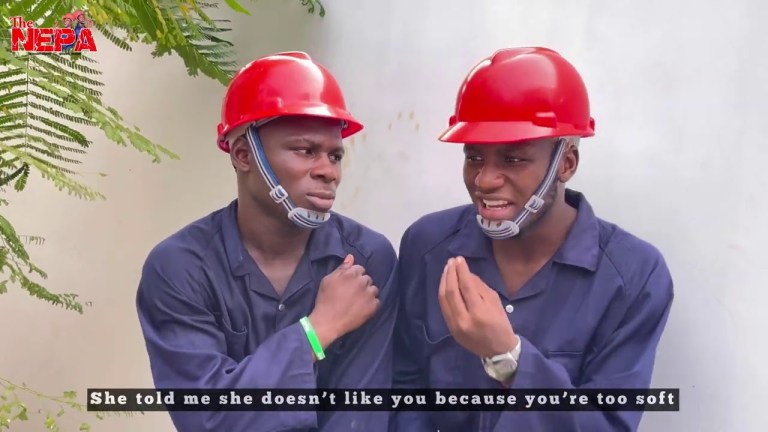
Content creator Hussein “Ozain” Kehinde has revealed why he and his colleague, Akinyoola “Kamo” Ayoola, stopped centring their skits on the popular NEPA Boys character.
The duo gained attention for their comic portrayal of electricity workers who harass residents over unpaid electricity bills, power cuts and other neighbourhood issues. Their use of Yoruba and relatable Nigerian street humour also helped them build a strong connection with their audience.
Ozain, who spoke during an interview with Kunle Afod TV posted on Facebook on Thursday, said the decision to move away from the character stemmed from their desire to explore different creative ideas and avoid limiting themselves to one concept.
He said: “We never separated. In a creative journey, there is no destination, only the journey itself. We were creating things before NEPA Boys, and we will still create things after it. If we decided to stay locked into NEPA Boys alone, we would be undermining our own creativity.
“We explored the NEPA Boys concept fully, and we are now exploring other things. Tomorrow, we may find another concept entirely, and we will explore that too.”

Concept pitching
According to Ozain, Kamo introduced the idea to him, and he embraced it because he believed it could help them gain recognition and grow their audience.
He explained that NEPA Boys was their first joint project, revealing that they had been producing content since they lived in the Galilee area of Ibadan, Oyo State.

“Kamo was like a community brother to me. When Kamo moved to Sango, and I also left, we later ran into each other outside the community. He pitched a concept to me. He said we should start shooting NEPA-themed content and that nobody was doing it. The moment he said it.
“I agreed immediately, and he was very confident it would blow up. After that conversation, we went out, bought costumes, did a photo shoot, and people started reposting our content. That was how the NEPA Boys began.”
Career
Furthermore, Ozain revealed that his content-creation journey began after his brother, Emperor, from his area, pushed him to venture into it.
According to the content creator, although he developed a passion for the entertainment industry as a teenager, he never considered pursuing it as a career.
Ozain noted, “I only loved stand-up comedy. I would watch stand-up shows regularly. I used to perform in the community, and one brother saw me and said I could start making skits, but I had no interest at the time, so I always ran away from him whenever he brought it up. One day, he caught me somewhere where it was just the two of us and said I had to say something. He recorded what I said that day, opened Instagram, and posted the video.

“For weeks, he was the one posting for me, and gradually I developed an interest in it. The brother’s name was Emperor. He was not in the entertainment industry at the time; he said he loved the way I performed. After Emperor left the community, I started recording skits on my own. I later met MC Olympia on Instagram. I would normally go to his house to shoot skits, and eventually, I started living with him after my father gave his permission.”
Love, not money
Besides, Ozain said his rise to prominence happened gradually rather than overnight.
He said he started making skits simply because he enjoyed creating them and had no idea he could make money from the content.
READ ALSO: ‘Stop filming Nigerians without consent or face sanctions’, NDPC warns content creators
Ozain added that every piece of content he produced brought him some value, though not necessarily in direct financial returns.
“Value is what eventually brings money. Some people would watch the content and bring ads. In some content, it was not the money I earned or the number of views that mattered most; it was that people who commissioned content liked my craft. I always made sure I put value into every piece of content so that it would attract brands that wanted me to create ads for them.
“I started this journey around 2017 and 2018. On the subject of creativity, I believe everyone is creative; we do not always explore our strengths. I knew enough about comedy to understand that there are different modes: wordplay, performance comedy, and storytelling. Sometimes it is not the story itself that is funny but the way the person behaves within the content,” he noted.
He added that some of the stories he created were not necessarily funny, but his delivery made them entertaining by blending wordplay, performance comedy, and storytelling.
“I used to watch Yemi Elesho and Sisi Quadri for wordy comedy. For funny stories, I watched Nasboi, who is a creative actor. I studied people with strong storytelling. For expression and performance, I watched Remote, among others.”
Discover more from Premium Times Nigeria
Subscribe to get the latest posts sent to your email.
