

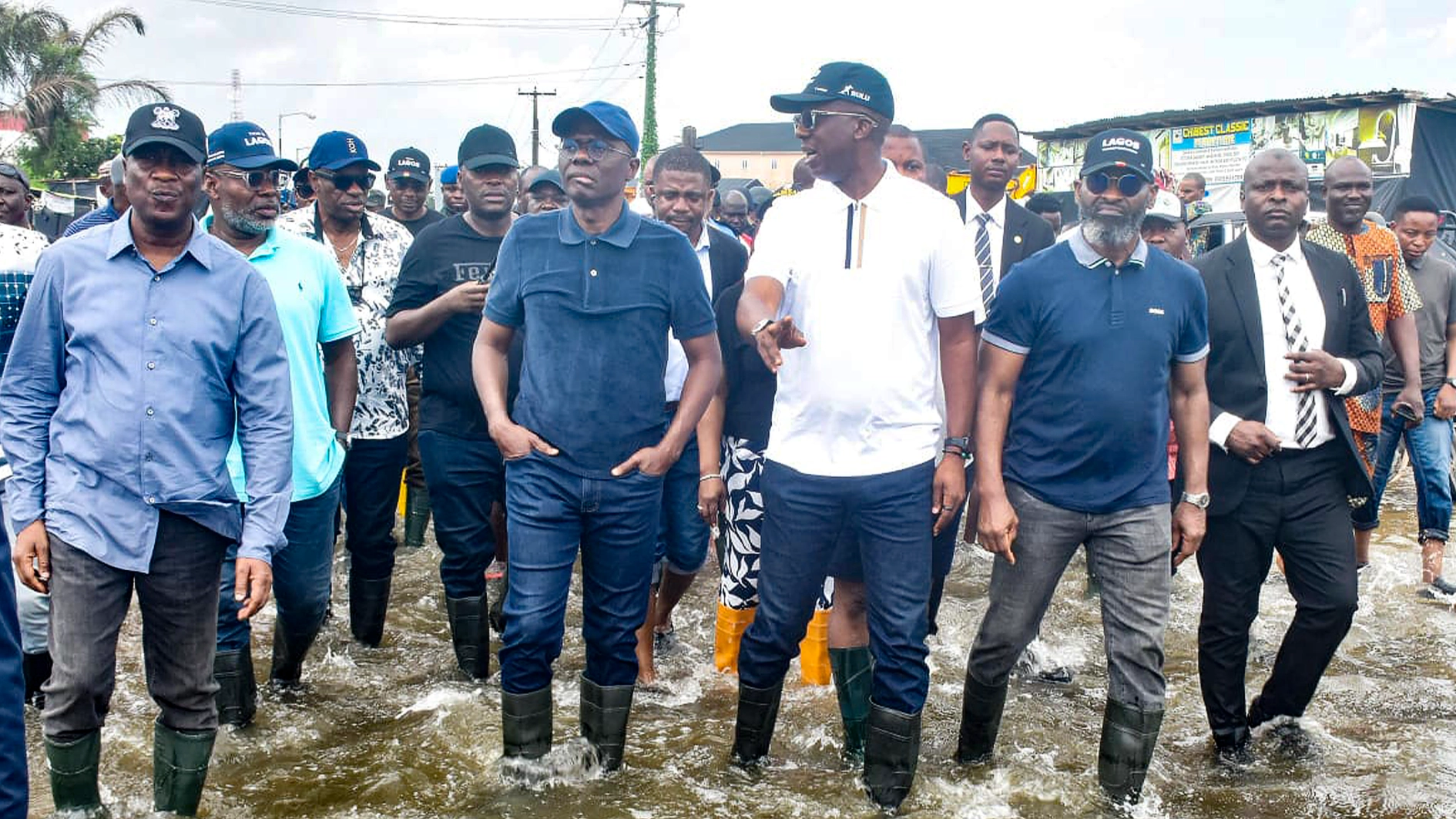
As Lagos continues to expand under the pressure of population growth, rapid development, rising waste volumes, flooding and climate change, the definition of infrastructure is also changing. Beyond the roads, bridges and buildings that dominate the development conversation, the state’s environmental systems, from drainage and waste management to wetlands, waterways and pollution control, are increasingly central to how the megacity functions and remains resilient. Chiemelie Ezeobi writes
For many years, infrastructure in Nigeria was largely understood through what could be physically built and easily seen: roads, bridges, schools, hospitals, housing estates and other public works.
These remain important measures of development, but in a city like Lagos, that definition is increasingly incomplete. The experience of Lagos shows that the environment itself has to be considered part of the infrastructure of the city.
For a coastal megacity dealing with rapid population growth, intense development, increasing waste generation, flooding and mounting climate pressures, environmental management is not simply about keeping the city clean or protecting its appearance. It is about maintaining the systems that allow the city to function.
Drainage channels, waste collection networks, waterways, wetlands, wastewater systems, shoreline protection, air-quality management and urban greenery all perform practical functions. Some are built by government, while others are natural systems that have existed long before the city’s expansion. Together, they form an environmental infrastructure on which the more visible infrastructure depends.
This provides a useful way of looking at the evolving work of the Lagos State Ministry of the Environment and Water Resources.
Managing the Weight of a Growing City
Perhaps nowhere is this more evident than in waste management. Lagos was estimated by state officials in October 2025 to be generating between 13,000 and 14,000 tonnes of waste every day. The scale alone makes clear that waste management cannot simply be about removing refuse from streets and residential areas.
It requires an extensive system of collection, transportation, sorting, recycling, disposal, enforcement and landfill management. As the volume of waste increases, the question is also becoming one of how much of that waste can be recovered and put back into productive use.
This is behind the growing emphasis on the circular economy and the idea of waste to wealth. The traditional approach of collecting waste and taking it away is gradually giving way to greater attention to separation, recovery and recycling.
Materials that would previously have been treated only as refuse can instead become inputs for other economic activities, while other forms of waste are being considered for conversion into energy and compost.
The Lagos Waste Management Authority says the number of recycling companies operating in the state has risen from three to 78, creating more than 6,000 jobs.
Beyond the employment figures, the development points to a change in the way waste is viewed.
It remains an environmental challenge, but it can also be an economic resource when the systems for recovering its value are available.
That is an important part of environmental infrastructure because the waste generated by a city of Lagos’ size cannot be managed sustainably without systems that go beyond disposal.
Flooding and the Geography of Lagos
Flood management presents another dimension of the same challenge.
Lagos’ geography makes it particularly vulnerable. The state is low-lying and coastal, with lagoons, creeks and waterways running through and around its urban areas.
Heavy rainfall therefore interacts with a landscape that already has a complicated relationship with water. Rapid urbanisation has added another layer to the problem.
The expansion of built-up areas, encroachment on drainage alignments and indiscriminate disposal of waste into waterways can reduce the capacity of the city’s drainage systems. Climate change and changing rainfall patterns add further pressure.
The response has consequently had to extend beyond the construction of drainage channels.
Dredging and drainage works remain important, but so are regular maintenance, enforcement, public awareness and the protection of drainage corridors. The effectiveness of a drainage system depends not only on what is constructed but also on whether the channels remain functional and whether the surrounding environment allows water to move as intended.
This is also why the state’s growing attention to wetlands and biodiversity matters. Wetlands are sometimes viewed simply as undeveloped portions of land within an expanding city. But they perform ecological functions, including helping to absorb and retain water.
Protecting them is therefore connected to the broader question of how Lagos manages flooding and responds to environmental pressures.
The development of a policy specifically addressing wetlands and biodiversity reflects an acknowledgement that environmental protection and urban development cannot be treated as entirely separate concerns.
The Less Visible Side of Environmental Governance
There is another part of the environmental infrastructure that receives less public attention because its success is often measured by problems that do not occur.
Wastewater regulation, pollution control, sanitation enforcement and environmental monitoring are examples.
They do not necessarily produce the kind of visible project that can be photographed or commissioned. Yet they are important to public health and the quality of life in a city where residential, commercial and industrial activities operate in close proximity.
This is why the environmental story of Lagos cannot be assessed simply by looking at whether a particular street was clean on a particular day or whether a particular rainfall caused flooding.
Those are important indicators, but they are only part of the picture. Lagos continues to face substantial environmental problems. Waste remains a major challenge, flooding continues to affect communities, and the pressures created by development and climate change are not going away.
A credible assessment therefore cannot suggest that the problems have been solved. The more significant question is whether the institutions, policies and systems required to manage them are being progressively developed. That is where the environmental legacy of Lagos deserves attention.
Infrastructure Beyond Concrete
The conventional picture of infrastructure tends to begin and end with what is constructed. But Lagos illustrates why that definition needs to be broader.
A drainage system protects roads, homes and businesses. A functioning waste-management system protects communities from the consequences of uncontrolled refuse. Wetlands provide natural environmental functions that support the city’s ability to deal with water.
Trees and urban greenery can help moderate the effects of heat. Regulation and monitoring provide a framework for controlling activities that could threaten public health or the environment.
None of these operates in isolation.
The environmental systems of Lagos are connected to the city’s economic and social life. When they function properly, they support the infrastructure that is more readily recognised as development. When they fail, the consequences can spread quickly across communities, transport networks, businesses and public services.
This is why environmental management should no longer be viewed simply through the lens of aesthetics. A clean environment is important, but the issue is much bigger than cleanliness. It is about whether a city can accommodate growth without overwhelming the systems that sustain it.
For Lagos, that is becoming an increasingly important consideration. The state will continue to need roads, bridges, housing, schools and other conventional infrastructure. But the durability and usefulness of those investments will also depend on the environmental systems around them.
Ultimately, a resilient Lagos will not be defined only by the infrastructure residents can see or drive on. It will also depend on the drainage beneath them, the waste systems moving refuse out of communities, the waterways and wetlands that manage water, the trees that contribute to urban comfort and the institutions responsible for protecting the environment.
In a megacity such as Lagos, the environment is no longer simply a matter of aesthetics or an issue to be addressed after other development priorities have been met. It is infrastructure.
And increasingly, it is among the most critical infrastructure the city has.
