

By Adeola Akinremi
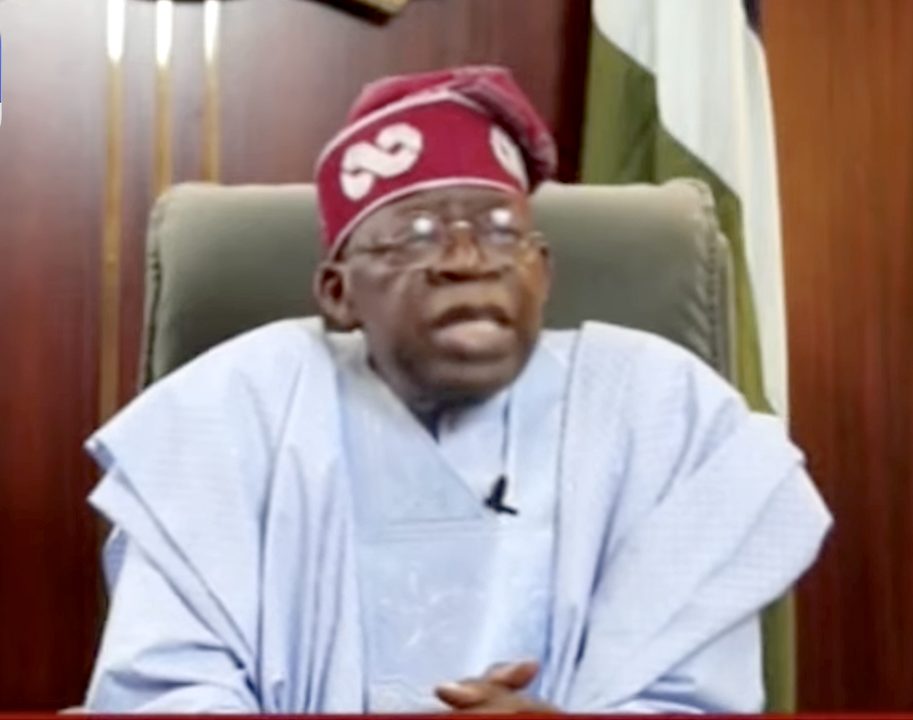
In August 2018, when I arrived at Johns Hopkins University–SAIS for my graduate to study Public Policy, I did not anticipate that President Bola Tinubu would become a case study for one of my classes. But he showed up. The course was Energy and Environment, and the case study was titled Remaking a Neglected Megacity: A Civic Transformation in Lagos State, 1999–2012.
It was not only Johns Hopkins University. Harvard University studied it. Princeton University studied it. Cornell University and many other institutions in their league studied it. The subject was Lagos, and the man at the center of the transformation was Tinubu.
I remember reading the case and thinking about Nigeria differently. Not because everything Tinubu did was perfect; it wasn’t. But because there was something unusually revealing about studying a Nigerian politician not as a newspaper character, a campaign slogan or the subject of partisan argument, but as a governance case.
The case asked a more enduring question: What happens when a leader thinks beyond the next election?
I thought about that question again while reading an extraordinary interview Tinubu gave to Princeton University in 2009, two years after leaving the Lagos State Government House. It is extraordinary not because politicians do not talk about their achievements, but because Tinubu was asked to explain, in considerable detail, how he thought about governing. He did not read a prepared speech. He spoke from his heart.
And some of what he said then sounds remarkably familiar today. He called his philosophy “thinking for change,” and that phrase deserves attention because before the roads, the taxes, the transportation reforms, the digitization, the restructuring of government and the other things that became associated with the Lagos transformation, there was a mental exercise: first understand the problem, then break it down, then build a team, then reform the system, and finally make the reform survive you.
That last part may be the most important. When Tinubu became governor of Lagos in 1999, he described the state he inherited in brutal terms: decaying infrastructure, chaotic traffic, mountains of refuse, an antiquated accounting system, a bloated bureaucracy, poor revenue collection and a government running on overdrafts. He said the state was near bankruptcy.
I lived in Lagos. I grew up in Lagos. I walked the streets of Lagos. I knew what Lagos Tinubu spoke about in his interview with Graeme Blair of Princeton University.
But he did not describe the situation as an excuse.
He spoke of taking a “complex situation” and breaking it “into manageable components.” He showed the brilliance of someone who worked with a high-level management consulting practice like Deloitte, applying that kind of thinking in real time. My work with the World Bank on private sector development and what a government can do to facilitate it tells me that this is not simply the language of management. It is the language of institutional reform: understand the constraints, identify what government can change, bring the right people to the table, and build systems that can deliver beyond the tenure of one person.
He started with government itself: revenue, payroll, information systems and accountability. He said a biometric payroll system eliminated thousands of ghost workers, and he described a system in which savings from payroll reform could be redirected toward better salaries and working conditions.
He spoke about computerization not merely as a government technology project but as something that could change the lives of civil servants and their families. He spoke about tax collection, eliminating cash payments and using technology and outside expertise to make government revenue traceable.
And he offered one particularly striking measure of the transformation: Lagos revenue, which he said was about N600 million a month when he began, eventually rose into the billions. Princeton’s account of the Lagos reform similarly identifies revenue generation, public-service delivery, infrastructure, transit and overcoming corruption as central elements of the transformation.
But the most revealing part of the interview was not about money. It was about people.
Tinubu was describing something else: a system that could continue after he left, a successor who could “build from there,” and a government that would continue to care for the people and not collapse when its founder departed.
That is the long game.
And it is why I think Nigerians should pay closer attention to Tinubu’s own words from that 2009 interview as we assess the Nigeria he is building today. Because the question is no longer simply whether Tinubu can point to individual achievements; the harder question is whether he can reproduce at the federal level the governing logic that he says he learned in Lagos.
Nigeria is, of course, vastly more complicated than Lagos. The federal government is not a state government, and Nigeria’s problems are not Lagos’s problems. The scale is different, the constitutional architecture is different, the political coalition is different and the economic constraints are different. What is not different are Tinubu’s mission and mindset.
At its core, it is about institutions, revenue, information, competent people, incentives, infrastructure and confronting entrenched interests.
It is also about making citizens see the evidence of change.
Tinubu said something else in that interview that struck me: communication was not enough. If you want people to believe that a road can be built differently, he said, build the road and let them see it; if you want people to believe that a school can be better, build a good school. Show them the arc of what is possible.
This is an important lesson in a country where politicians, especially when they are seeking power, make promises without a plan.
But there is another lesson in Tinubu’s own account that deserves equal attention: he understood that reform creates enemies. That is the uncomfortable part of reform. The people who benefit from the old system rarely volunteer to dismantle it. The beneficiaries of opacity do not campaign for transparency. The beneficiaries of waste do not demand efficiency. The beneficiaries of patronage do not ask for merit. The beneficiaries of a broken system often know exactly how to defend the brokenness.
What’s more, in the Princeton interview, he warned that power “does catch you.” He called it infectious and said leaders must eventually let it go at the time prescribed by the Constitution.
That may be one of the most important things he said.
Because a leader’s true test is not only what he does with power. It is what he leaves standing after he has gone: institutions that can survive him, people who can outperform him, systems that do not require his intervention and a political culture that does not confuse loyalty with competence.
That is the test of the long game.
And this brings me back to the classroom at Johns Hopkins-SAIS. I was sitting there as a Nigerian student, reading about Lagos as though it were somewhere else.
Professors were examining what had happened there as a governance experience. They were interested in the mechanics of transformation: how revenue was raised, how public administration was reorganized, how transportation was reformed, how corruption was confronted, how political support was built and how continuity was created.
And I remember thinking about the strange distance between how Nigeria often talks about itself and how the outside world sometimes studies what Nigerians have built. We can spend years arguing about whether a Nigerian leader is a hero or villain; academics are often asking a different question: What actually worked?
That is the question I want to bring back into the national conversation: What will Tinubu leave behind?
Watch for the next chapter in this series next week.
Adeola Akinremi is a public policy advisor, strategic communications expert, and the founder and CEO of Hintells, an AI-powered intelligence platform serving businesses and African diplomatic missions in Washington, D.C. He has extensive multilateral experience advising on governance, economic and policy reforms across global markets and can be reached at: adeola@hintells.com
