

Jeanine Tesori is thinking about her mother back home in the US. “She’s 95,” says the composer, “and she’s not been well. But she would look in the mirror and be like, ‘I can’t believe I’m old.’ It’s always a surprise, always. There’s an interiority about ageing, especially as women. You stay playful and you stay curious, but the world has other ideas.”
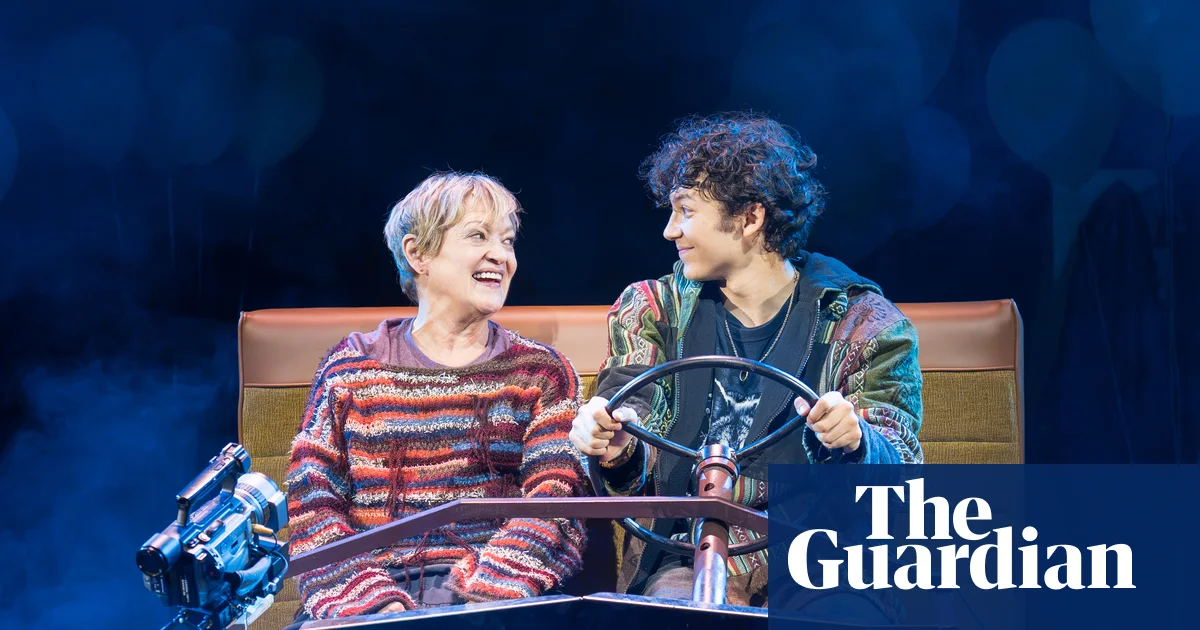
Ageing – and growing up, which is not necessarily the same thing – are a central consideration in the musical that Tesori has been rehearsing. Kimberly Akimbo, which the composer developed with David Lindsay-Abaire from his play, follows a teenage girl with a rare genetic condition that causes her to age at four times the normal rate. Its London debut stars the 66-year-old Maria Friedman as Kimberly. “And she has such a bright young energy,” says Tesori as we chat in a rough-and-ready rehearsal room in London, “that she doesn’t have to do anything to play 16.”
If a story about a girl with a life-shortening condition sounds like a tragedy, don’t be fooled. Kimberly Akimbo is a comedy about a chaotic family (from a hypochondriac mother to a criminal aunt) and a tender teenage romance. Uplifting and achingly funny, the original New York production was the biggest winner of the 2023 Tony awards. Tesori watched the London cast rehearse its bittersweet ending with her lips zipped firmly shut: “David and I know the show so well that we have to just let people interpret it their own way.”
For Tesori, a protagonist who knows she may not reach adulthood raises the question of how we use our time. “We all have an expiry date,” she says, recalling the line from Mary Oliver’s poem, The Summer Day: what is it you plan to do with your one wild and precious life? “I lost so many friends during the Aids crisis. I’m from that generation of watching these incredible people, mostly men, disappear. You become aware of how you live.”
At 64, her own life looks a fulfilled one: mother, teacher, legend of her industry. Her compositional dexterity and range, combined with an extraordinary ability to turn playwrights into lyricists and librettists, has produced everything from fun-packed Broadway shows (Thoroughly Modern Millie, Shrek), to complex, thought-provoking musicals (Soft Power, Caroline, or Change) and avant garde operas about police racism, drone pilots, and Eugene O’Neill’s marital rows.
“Everybody knows she’s a brilliant composer,” says Lindsay-Abaire, when he swings by rehearsals during lunch. “But she’s also one of the most insightful dramatists – she understands story structure and character and things that not all composers do or are even interested in.”
What Tesori’s projects have in common is her laser-sharp focus on emotional truth, be it in the powerfully orchestral blues and spirituals of Caroline, or Change – or the intimately interwoven harmonies and counterpoint of the three-handed chamber piece, Fun Home. The first UK production of that last one – an adaptation of Alison Bechdel’s celebrated autobiographical graphic novel – ran at Manchester’s Royal Exchange Theatre this summer and its director, Sarah Frankcom, calls it “a masterpiece”, adding: “Jeanine is able to express moments of profound change in people, in what is a very spare musical. The motifs coalesce and consolidate and lead you towards a last 15 minutes that are absolutely shattering.”
Tesori admits she’s drawn to dad-daughter stories, which are at the heart of Fun Home, Caroline, or Change and Kimberly Akimbo. Her own father died more than 20 years ago, but “the story lives on, and I think it helps me process – you try to answer the unanswerable question. My father was a very complicated man: a man of science who really wanted to be a fisherman. He wanted a simple life and he got anything but; he wanted sons and he got daughters.”
Tesori’s upbringing in a chaotic, multi-generational Italian family helped inspire some of Kimberly Akimbo’s scenes. (Her three sisters sound a hoot: not long ago one of them stole a picnic table from a park in broad daylight to prove that older women are invisible). It also played its part in her musical development. Tesori’s grandfather was a band arranger and violist who emigrated from Sicily – she still has his baton – and one of her sisters played piano while another had a vast record collection. “We listened to everybody from Stevie Wonder and Aretha Franklin to the Stones and the Beatles, Led Zeppelin, Carole King. Cat Stevens was huge in our house.”
That breadth of repertoire – encouraged by her first piano teacher – led Tesori outside the confines of classical academe, and fostered a musical versatility that has become the hallmark of her career. A recent trip to Jesus Christ Superstar blew her away, although she says it can be hard to relax and enjoy musical performances because her brain insists on analysing the scores. Instead, she has spent these weeks dipping into plays and comedy in off-West End and fringe venues: “That’s my favourite kind of theatre, to go in not knowing anything and just discover it.”
What about Broadway, which Andrew Lloyd Webber recently pronounced to be “in dire danger”? Tesori says she finds the capitalisation of its business models “scary” and feels a responsibility to find solutions for its increasing costs. “My job is to make things work better than when I leave – that’s the job of everybody who has been rewarded by the industry. When I started doing shows they were tearing Broadway houses down, because there were not enough shows to fill them. So I’ve always heard this chorus of ‘Broadway’s in trouble’, but for different reasons.”
She is a dedicated mentor (“I take that job seriously”) at a time when performing arts space in the US is being threatened and politicised. “It’s really frustrating,” she says, “and it’s very easy to feel hopeless. But I don’t. You could throw up your hands – but our job is to write.” She typically has three to four projects on the go, and has recently been researching a story in Naples, but never writes music for anything she doesn’t believe in. “Any show I do is going to be five years of concentrated work. That’s like graduate school plus a year. If I don’t understand it, I can’t say yes to it.”
She adds: “I love working with playwrights who are looking at the global conversation.” And her deep friendship with Lindsay-Abaire is obvious. “We both have a similar sense of humour,” he says. “We like dark, inappropriate comedy, which is why this show is funny and sad at the same time.”
