

Topline
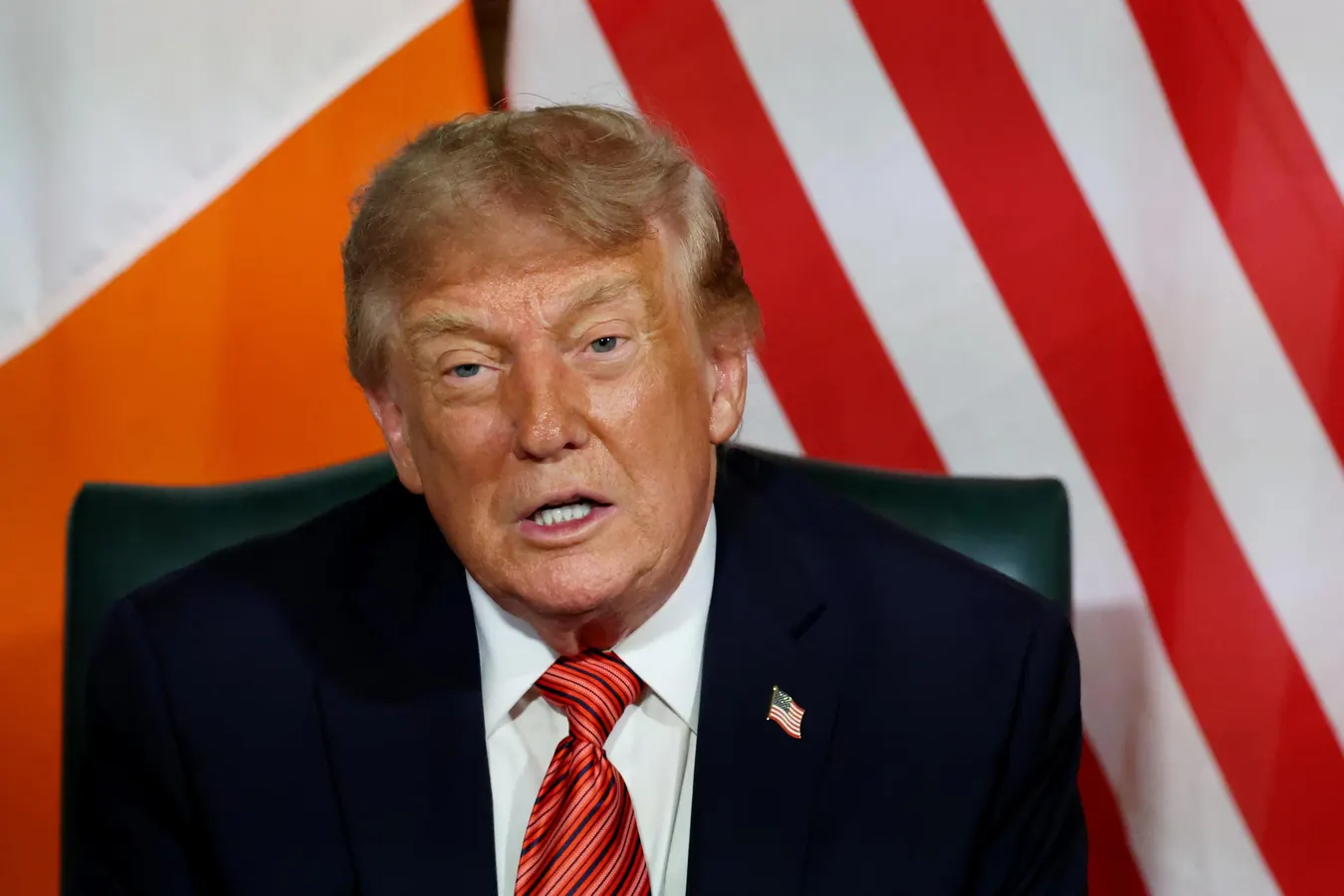
President Donald Trump on Saturday waded into a politically charged subject overseas when he said he’d “love” to see a unified Ireland and predicted it’s “going to happen eventually” during a meeting with Irish Prime Minister Micheál Martin in Dublin.
President Donald Trump attends a bilateral meeting with Taoiseach Micheal Martin on Sept. 12, 2026 in Dublin.
Getty Images
Key Facts
Trump, who is visiting Ireland for the weekend to attend a major tournament at his golf course, angered Unionist leaders in Northern Ireland who were quick to condemn his comments and warned that Washington has no say over their place in the United Kingdom.
His comments also put him at odds with British Prime Minister Andy Burnham, who said as recently as Wednesday that the majority public doesn’t support a unity referendum.
Trump’s comments broke a decades-long tradition among American presidents who have maintained neutrality even when—like in the case of Joe Biden—they have deep emotional ties to Irish nationalism.
Republican and nationalist groups welcomed the comment and used it to argue that global momentum for a united Ireland is growing.
NEWS PEG
Trump is in Ireland to attend the Irish Open at the Trump International Golf Links & Hotel in Doonbeg, but started his trip with a series of diplomatic meetings Saturday morning. He held bilateral talks with Martin (where the unified Ireland remarks were made), met with Irish President Catherine Connolly and spoke to U.S. and Irish corporate executives.
WHAT EXACTLY DID TRUMP SAY ABOUT IRELAND?
“Well, I don’t want to cause any problems, but I will tell you I’d love to see it unified. I have friends on both sides, great people. They’re Irish people. How can they be bad, right? I’d love to see it unified. I think it would be a great feather in everybody’s cap if that happened. It’s going to happen eventually. You know what? The way I look at it, it’s going to happen eventually. It may as well happen now. We’re talking about it and you got the right man over here to get it moving. But, yeah, I think it would be a fantastic thing. Now the UK will have something to say about it, obviously. But I think it would be a great thing. I mean, how can it be bad?”
Key background
After centuries of British rule and a war of independence, Ireland became a self-governing, Roman Catholic-majority country in 1921. The southern majority gained independence, but six northern counties—which had a majority Protestant population loyal to the British Crown—remained in the United Kingdom. Northern Ireland was split between two main communities: nationalists (most of them Catholic) who desired unification with the rest of Ireland, and largely Protestant unionists, who wanted to stay British. Tensions eventually exploded into what’s known as the Troubles, three decades of violence that killed more than 3,600 people. The conflict largely ended in 1998 with the landmark Good Friday Agreement, a peace deal heavily brokered by the United States that said Northern Ireland’s status will only change if a majority of people in Northern Ireland vote for it in a referendum called for by the British Secretary of State for Northern Ireland. The debate over an Irish border poll has intensified recently due to Brexit, shifting demographics and political gains by the nationalist party Sinn Féin, but it remains an intensely polarizing topic and diplomatic headache for the UK.
CHIEF CRITICS
Northern Irish Unionist leaders have pushed back strongly against Trump’s comments, including from Democratic Unionist Party leader Gavin Robinson who said,” Northern Ireland’s constitutional future will be decided by the people of Northern Ireland, not by commentary in London, Dublin or Washington.” Jim Allister, leader of the Traditional Unionist Voice, said Trump was “meddling in affairs which don’t concern him” and that “Northern Ireland is not a pawn in Trump’s fall-out with the UK.” Conservative leader Kemi Badenoch said, “President Trump is shooting from the hip as usual, just like he did with Greenland and Canada becoming the 51st state. This sort of loose talk about the future of democratic countries is deeply unhelpful and creates unnecessary tension.”
CONTRA
Colum Eastwood, a member of parliament and frequent critic of Trump, posted a clip of the president’s remarks and wrote: “Always liked him.” Several prominent Irish-American organizations and lobby groups in the U.S. also backed the comments.
