

The issues surrounding AI have prompted fierce debate – and present a dilemma for many world leaders.
On one hand, the sector is seen as a huge opportunity to boost economic growth and a way to improve outdated digital systems and ways of working.
But there have also been a number of incidents where AI appears to have gone seriously wrong.
In August, OpenAI said it had slowed down training some of its most advanced AI models to improve security.
The ChatGPT-maker said it was adding new measures after its AI agents bypassed safeguards and hacked the tech start-up Hugging Face.
And the same month it was disclosed two of the world’s most powerful AI tools created fake human profiles to try and trick people in attempted cyber-attacks.
The UK’s AI Security Institute (AISI) said in the most serious case, Anthropic’s Mythos AI tried to gain access to a service by sending private messages, having set up fake accounts mimicking real people – then hid the evidence.
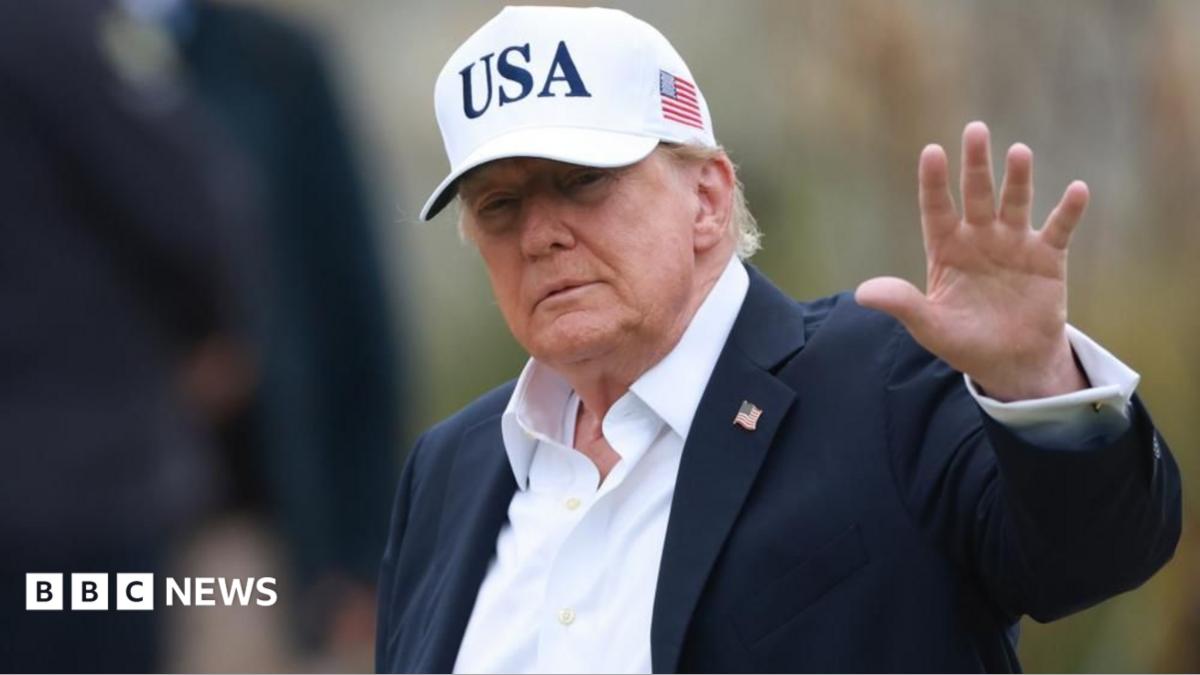
The Trump administration argues that the US must maintain global tech dominance as a matter of national security, though it has admitted a need for vigilance around the risks posed by the emerging technology.
The weekend call by major AI executives sparked discussion in Washington, where lawmakers are facing pressure to address those potential risks around rapid AI developments.
On Sunday, Speaker Mike Johnson, the top House Republican, urged caution about rushing AI regulation during an appearance on CNN’s Jake Tapper on State of the Union, arguing it could “smother American innovation”.
“If Congress just races in and does some sort of emergency session to try to regulate AI, we will lose the race to China, and that is a threat to every single American,” he said. “So, we’ve got to have balance. We’ve got to have steady hands at the wheel.”
Democratic House Minority Leader Hakeem Jeffries argued for “decisive action” by lawmakers.
He told George Stephanopoulos on ABC’s This Week that the US should slow down “the pace of development in order to protect the American people and ensure that AI is proceeding safely”.
Responding to recent comments from the AI industry, tech investor David Sacks, who serves on Trump’s Council of Advisors on Science and Technology, called on the companies to police themselves.
“Stop pretending you need anyone else’s permission,” he posted on X.
“So go ahead and pace the frontier. You are the ones setting it… Demanding your preferred regulatory framework as the price of that will look like blackmail of the public and the political system. So just do it.”
Still, there is at least some cross-party consensus on AI regulation. In July, a group of House Democrats and Republicans introduced the Frontier Act, a bipartisan bill that seeks to establish a national safety and oversight framework for AI.
“Safety researchers are resigning, powerful AI models are breaking out of their labs, and companies are racing ahead anyway,” Rep Lori Trahan, a Massachusetts Democrat who co-authored the bill, wrote on X this week.
“It’s past time for Congress to get off the sidelines and do its job.”
