

The new Premier League season is upon us. Yeesh, it really feels like the World Cup only just ended yesterday, doesn’t it? Welcome to soccer. Off season? I think not. You can see why the guys on Wall Street are so keen. Truly, this is the sport that never sleeps.
In the lead-up to the 35th season of what is indisputably the biggest domestic football league in the game, we’re going to be looking into seven of the biggest and most intriguing teams the Premier League has to offer. We shall see what you might need to familiarize yourself with if you’re coming to the English game fresh from the top flight, catch you up if you’ve been dropping in and out, and go rummaging through the weeds to satisfy my own curiosity. And there’s plenty to be curious about when it comes to our first team, the survived-by-the-skin-of-their-teeth “Big Six” club that is Tottenham Hotspur.
Why you should root for them
Because the joy is all the greater when it’s delayed and delayed… and delayed. It’s a comparison that’ll aggravate die-hards of both teams, but think of Tottenham as the New York Knicks of the English game. This is a club with a rich history but not one that would put themselves in the upper echelon on silverware alone. A big team in a mega city (though in this case certainly not the biggest game in town), their fanbase has to go through it in pursuit of trophies.
The Europa League win in 2025 brought an estimated quarter of a million fans onto the streets of north London as the club celebrated its first trophy in 17 years. Just imagine what the scenes would be if they ended a 66-year wait and earned a third league title. For now, imagining might be as close as you can get.
Is this team good?
No, they are not. Or at least, they were not the last time we saw them in action. In a few of the previews to come, we’re going to give you far less conclusive answers; we might even spend some time interrogating the nature of the question. Not for Tottenham though. Jeez they were bad.
For most of the last two decades it was taken for granted that a team with their commercial might — their most recent accounts showed revenue of over three-quarters of a billion dollars — was functionally safe from relegation. The rising tide of Premier League TV money lifted the other boats, though and all it took was some competent sides coming up from the Championship for Spurs to have to stare down a cataclysm. If West Ham forward Pablo hadn’t fouled David Raya… if Joao Palhinha hadn’t scrambled home some clutch goals… if Aston Villa hadn’t tanked their pre-Europa League semifinal game.
This was a legitimately bad team, albeit one that was only at real risk of relegation because of the relative strength of those around them. Their tally of 41 points has rarely been insufficient for survival, but it is also rare that a good team gets so unlucky to end up with so few. In terms of expected goals difference, Spurs were not all that much better than the Leicester City side that went down in 2022-23 and were a shade ahead of the West Ham side they pipped to survival. In short, there was a very real prospect that we could have been covering this team’s prospects last week in our EFL preview.
What has changed?
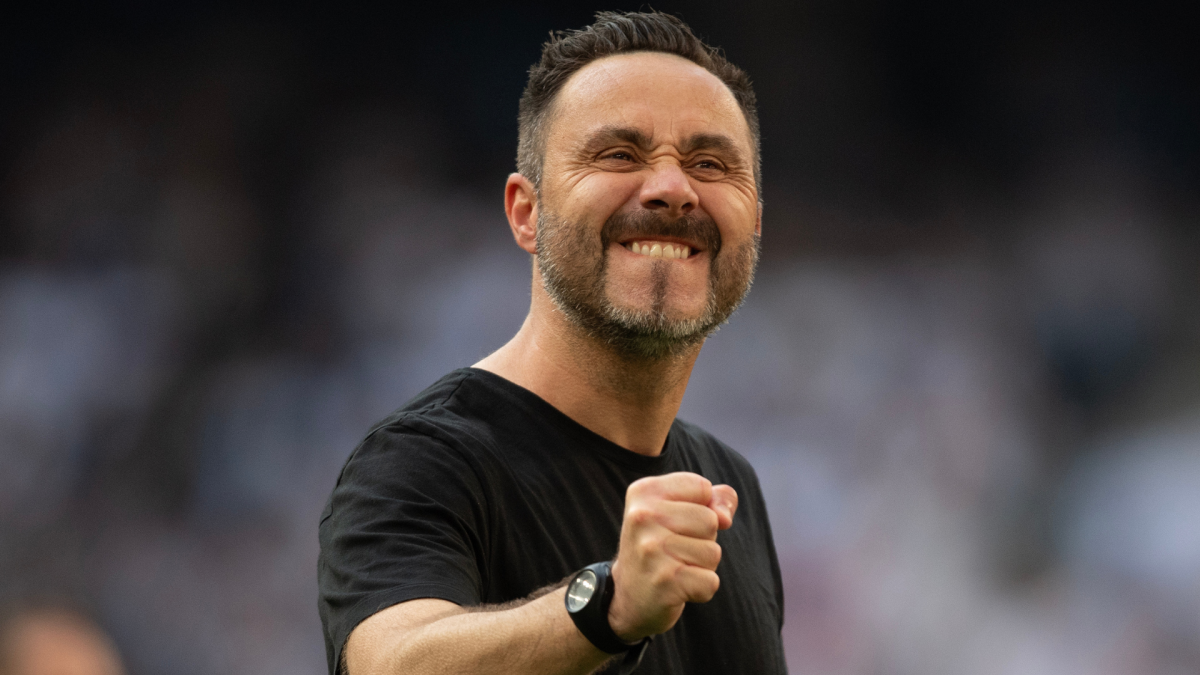
Quite a lot, no great surprise given how far below expectations Spurs plumbed. Perhaps the most significant change for Tottenham’s medium-term future came before the season was out, Roberto De Zerbi brought in both to keep the good ship Spurs from the sink and to eventually send it to calmer seas. Eleven points from his final seven games was an impressive return, an expected goal difference of 1.97 the fifth-best in the division during that period. Survival secured, the Italian has had vast authority to carry out widespread changes on the Tottenham squad.
That has meant radical investment in a faltering midfield, Sandro Tonali and Mateus Fernandes arriving for a combined fee of nearly $250 million. The latter is a sparkly young prospect who could flourish under De Zerbi’s tutelage as the likes of Moises Caicedo and Alexis Mac Allister did during the managers time at Brighton. There are more questions about Tonali, a solid passer who had his moments at Newcastle, but rarely enough to suggest this was a player who would command a nine-figure fee. Still, his new manager knows Tonali well from his time at Brescia, and it took only a 10-minute phone call for the Italy international to make the switch from Tyneside.
CBS Sports
The big money spending might not be at an end. De Zerbi has spoken of a “bomba” that would strengthen his attack. Is that Manchester City winger Savinho, on whom Spurs are closing in on? Both he and Cody Gakpo, to whom they have been linked, profile as the sort of players who would add options to an inexperienced frontline, but shopping on the fringes of your once rivals is hardly worthy of a bomba. There might yet be a surprise name to enter contention.
While it is hard to parse out what Spurs are planning in attack, at the other end of the pitch the logic is much clearer. After a turbulent season in which his off-field behaviour was oft questioned, Cristian Romero is set to leave, Atletico Madrid his likely destination. His talent is not in doubt; his temperament is. Ultimately, it was hard to see much of a future for a club captain who had to be urged to return from Argentina to be present on the sidelines for the relegation decider on the final day of the season. Djed Spence is also close to departing to Inter Milan.
In place of those two comes four-fifths of a new defensive line. Marco Senesi, a free addition from Bournemouth, adds the passing that this squad so desperately needs while Andy Robertson is an experienced guide for Destiny Udogie at left back. Martin Dubravka arrives as a backup goalkeeper with Antonin Kinsky expected to be promoted to first choice should Guglielmo Vicario depart. He wants to go back to his native Italy and is wanted by Juventus.
The final piece of defensive business has the highest risk of backfiring. At 19 Luka Vuskovic was one of the best defenders in the Bundesliga on loan at Hamburg last season, but Spurs effectively swapped him for Jan Paul van Hecke from Brighton, nearly seven years his senior. In Van Hecke they have added a solid, experienced Premier League center back. Vuskovic is neither of those things yet. Five years hence, this could look an almighty misjudgement.
Much of the business at the Tottenham Hotspur Stadium had had a view to the future before last season. That is how they got into such a mess, prizing physical attributed in often inexperienced young players on the assumption that they could coach them to build value and/or coalesce into a winning team. That is all well and good when you don’t have to fear the quarter billion revenue hit of relegation. After two near misses, Spurs cannot afford to take their eye off what is right in front of them.
Expectations for 2026-27
Their business and their manager is probably enough to protect Tottenham from the bigger downside risks they faced last season. Buy a lot of solid Premier League talent, hand them to a coach who knows the league: you’ll probably be fine. That is not to be sniffed at for 2026-27 but the question is whether in solidifying their status this year Spurs might have shrunk the platform off which they can build in years to come.
So long as they have the revenue of their 60,000 stadium and global brand appeal, there will be an eventual path back towards the top six, but for now you suspect this season will have to be one of careful strides in the right direction rather than some great leap forward.
