

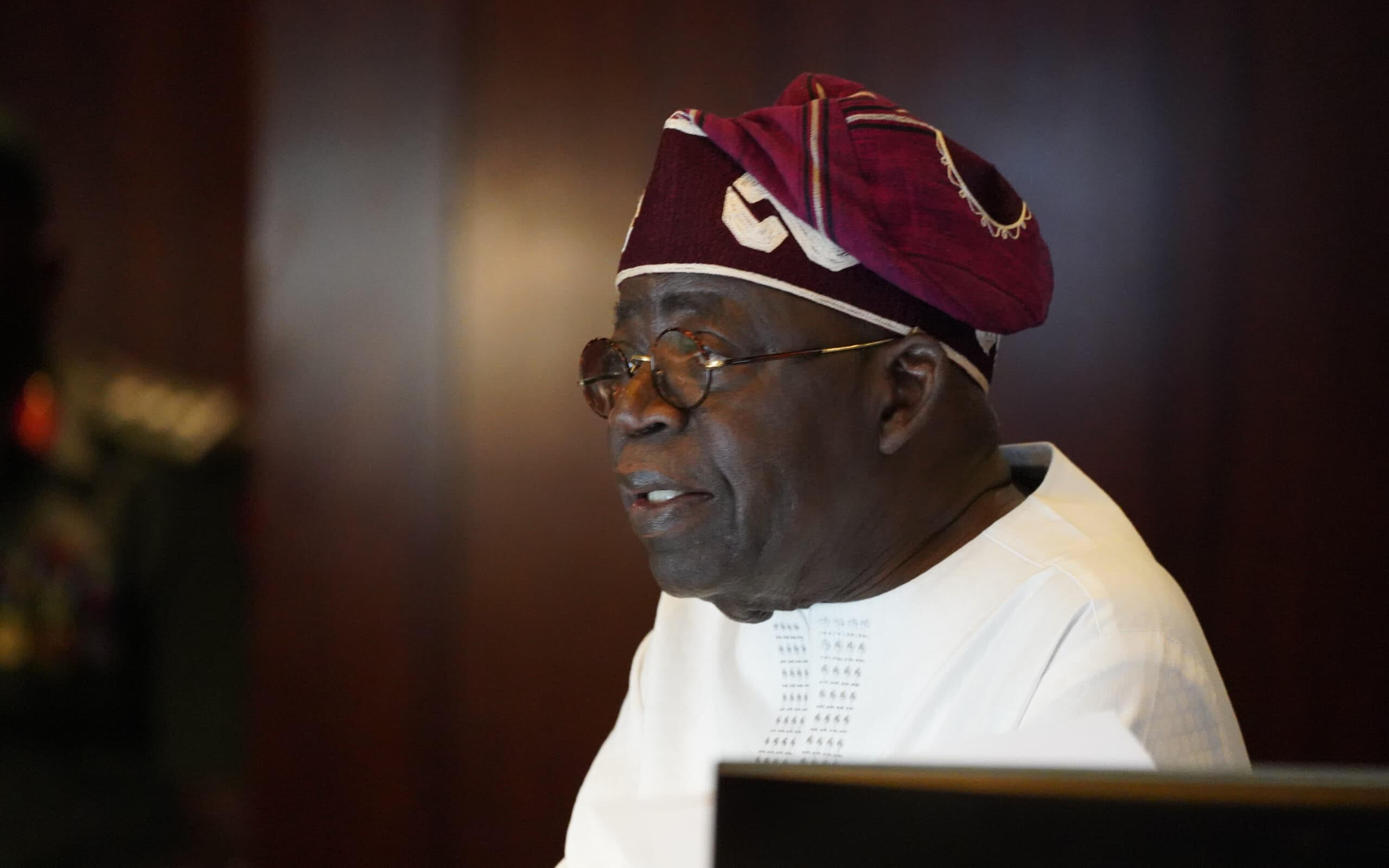
President Bola Tinubu has directed a comprehensive reform of Nigerian football following the resignation of Nigeria Football Federation (NFF) President Ibrahim Gusau and other members of the federation’s leadership.
The directive, contained in a statement issued by Bayo Onanuga, Special Adviser to the President on Information and Strategy, on Thursday, comes on a day of major shakeup in Nigerian football.
Mr Gusau confirmed his resignation at a press conference in Abuja. At the same time, the NFF later announced that its General Secretary, Mohammed Sanusi, and members of the Executive Committee had also resigned.
President Tinubu said the proposed reform would address longstanding weaknesses in the administration and development of the sport.
“The reform must respond to a longstanding need to strengthen governance, administration, stakeholder representation, development pathways, domestic competitions and accountability across Nigerian football,” he said.

The President directed the Chairman of the National Sports Commission (NSC) to work with the NFF Secretariat and relevant football stakeholders to ensure continuity in essential football administration while facilitating a broad and consultative reform process.
The process, according to the statement, will include engagement with FIFA and the Confederation of African Football (CAF), while ensuring that Nigeria continues to meet its obligations under the international football framework.
Tinubu: Football suffering from structural weaknesses
President Tinubu said football had not recorded the same progress witnessed in other sports since the reset of Nigeria’s sports administration through the re-established National Sports Commission.
“Football, Nigeria’s most popular sport and the greatest beneficiary of public support, investment and national attention, has continued to struggle basically due to structural deficits within the system,” Mr Tinubu said.
His intervention follows a difficult period for Nigerian football, with the country’s senior national teams suffering significant setbacks.
Despite Africa securing an unprecedented 10 slots, the Super Eagles failed to qualify for the 2026 FIFA World Cup, having also missed the 2022 edition.
The crisis deepened this month when the Super Falcons failed to qualify for the 2027 FIFA Women’s World Cup for the first time since the tournament began in 1991.
Gusau’s resignation
Mr Gusau, who was elected NFF president on September 30, 2022, had 34 days remaining on his four-year tenure when he resigned on Thursday. He had succeeded Amaju Pinnick after defeating Peterside Idah in the decisive round of the 2022 election.
READ ALSO: Gusau confirms resignation as NFF president
What the reform means
President Tinubu’s directive now places institutional reform at the centre of the next phase of Nigerian football administration.
The areas specifically identified by the President include governance, stakeholder representation, development pathways, domestic competitions and accountability.
The directive also seeks to maintain continuity during the leadership transition, rather than allowing the current crisis to disrupt the administration of national teams and domestic competitions.
With the NFF’s elective congress scheduled for September 27 in Lafia, Nasarawa State, the reform directive also raises questions about the immediate future of the federation’s electoral process.
President Tinubu urged football stakeholders and Nigerians to support the transition and work collectively to build a stronger, more accountable football system.
Discover more from Premium Times Nigeria
Subscribe to get the latest posts sent to your email.
