

Despite singing dogs and a chorus of hallucinogenic sheep, Missy Mazzoli and Royce Vavrek’s The Galloping Cure is not for the faint-hearted. Based on an original story by Karen Russell, itself inspired by Kafka’s A Country Doctor, the opera tells how a charismatic sideshow huckster rids a rural town of pain only to replace it with something far more sinister in a thinly veiled allegory of America’s opioid crisis. It’s a typically confronting slice of music theatre from the creators of Breaking the Waves, their acclaimed adaptation of Lars von Trier’s film.
The plot centres on local doctor Theresa Hart and her efforts to cope with a community struggling with disillusionment and chronic illness. When a carnival arrives in town led by the mysterious Lucky Mack, the release people feel “flying” on his carousel (first ride is always free) seems like the answer to everyone’s prayers. At first Hart endorses the galloping cure, but Mack’s devious methods, including two-rides-a-week limits and surge pricing, lead to conflict, desperation and ultimately death. Contemporary parallels are a little obvious, but the opera nevertheless reflects the insidious way prescription painkillers affect ordinary people, elderly people and most tragically children.
Vavrek’s libretto mixes poetic lyricism with biting satire in a heady cocktail seized upon with vigour by Mazzoli. Her text setting is impeccably crafted, with vocal lines eminently singable. The musical language is direct yet spikily sophisticated, with a brassy, in-your-face quality and at times a creepy carny vibe. A battery of percussion plus club beats by Blume and Lorna Dune add to a richly textured score.
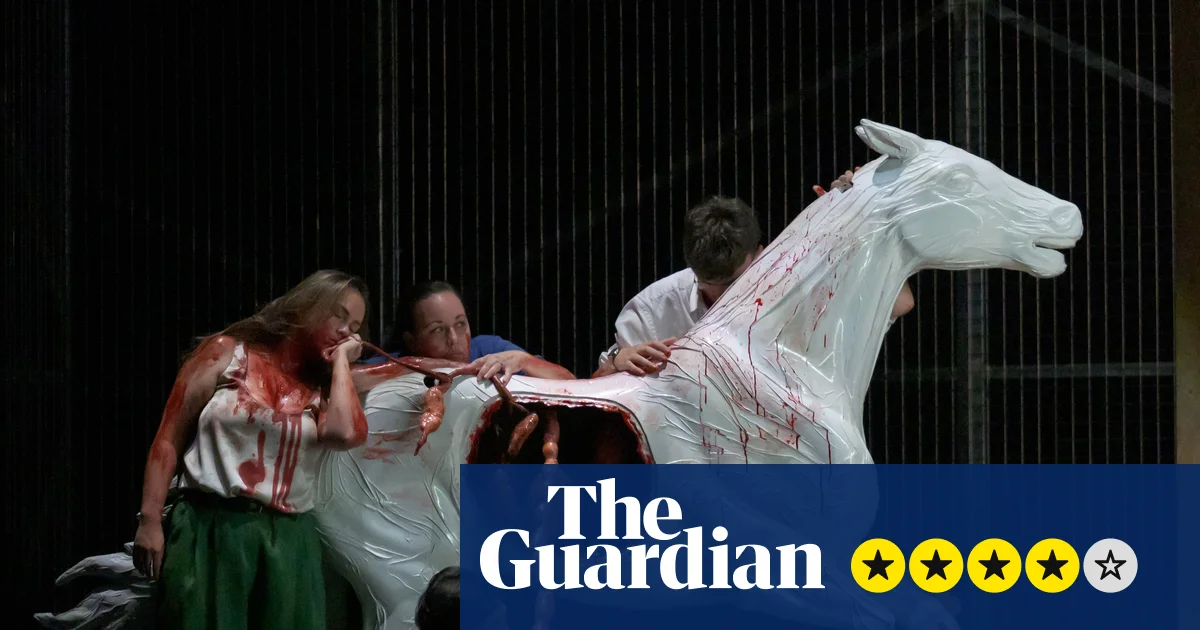
Tom Morris’s world premiere staging for Scottish Opera and Opera Ventures Productions is admirably clear (even if the sheep remain somewhat enigmatic). The flying horse sequences are breathtaking thanks to Lucy Carter’s rising and falling multihued lighting rods. Rebecca Ringst’s rudimentary sets simultaneously suggest industrial decay and prison, while Christina Cunningham’s costumes range from low-income utilitarian to garish trailer trash. Morris is at his most brutally effective in a pitch-black comedic scene in which Mack persuades a desperate old lady to sell her hair, kneecaps, eyes and tongue to pay for her next ride; the act three denouement is genuinely chilling, with mutilated townspeople lurching through smoke like something out of a zombie apocalypse.
Conductor Stuart Stratford draws a powerful performance from the Scottish Opera Orchestra, even more so from the busy ensemble, whose commitment and collective diction is outstanding. Daniela Mack’s fist-in-a-velvet-glove mezzo-soprano is ideal for the conflicted Hart, with Gabrielle Turgeon’s steely soprano lending sass to her daughter, Noy. Justin Austin is silken-toned but needs sharper teeth to encapsulate every facet of the skin-crawling Mack. Susan Bullock, on the other hand, has bite in spades as curmudgeonly senior Ivona Kowalski.
