

One of the most difficult things to address in writing Afrilition is addressing Blackness as an identity. An identity that many have died to assert and many live with through coercive and oppressive encounters. For many (including me), a settled position that determines self-love and affirmation. An identity that has shaped my own adult life and defined my contribution towards the esteem of my community and my children. On the face of it, things seemed settled: that the world that is seen is black. A nice rallying call for the wider diaspora and possibly future generations. Recently we watched Togo lead the vote in the United Nations to replace the Mercator map, which has guided the world in a fiction since the 1600s, guiding Europe into the world of Empire and maintaining the illusion and reduction of Africa. A misrepresentation that was argued to have made sea travel easier, but not for raising children to be educated about global complexity in an increasingly multilateral world. The usual Western logic or sleight of hand that provides a simplistic tool that offers ease but proffers submission of wisdom and represents humiliation. The Equal Earth projection adopted by the African Union in February 2026 guided the world into a less jaundiced expression in spite of the objection of the world’s only superpower. A fair world begins with a fair map, said the Togolese Foreign Minister. Who can argue with that, especially when African collaboration delivers world support and conquers the position of the only standing superpower.
In understanding the challenge of Black as an identity, I had to contend with its capacity to oversimplify our complexity and diversity, reducing the genuine power of Africaness from its basis as the origin of humanity to its shade in a caste pigmentation stereotype. From the age of reduction into the pseudoscientific classification as Negro, to the sheer will of the profound power of Black as all shades of ebony. Yet none deals with the deeper complexity of African identities. Often, to project the power of the origin of humanity, we reacted to the design of the mass murderers and torturers of our people, defining pigmentation as explanation with probative value and Melanin as distinction. If only it were that simple and the distinction so well drawn. All humans are indeed African, but not all are black. Not all visibly dark people are of the same tone. Africa defines all of humanity, even though not everyone identifies as African. The insecurity that leads large chunks of humanity to reject an African origin clarifies the second aspect of Afrilition, which is choice as intentionality. Africa does not need to foist itself or represent a hierarchy on the world. This, despite it being the origin of all modern human life, the choice of identification with it has to be willing and celebrated, not done under duress. All humans trace their matrilineal source to one African woman, our genetic Eve. Yet the constant rejection of African origin is denying the humanity of your being.
The extraordinary challenge going forward is how the diverse humanity greatest in Africa and acknowledged beyond the simplicity of black identity can build a powerful and plausible future alternative to the cannibalistic capitalism that exemplifies what has now been titled Western civilisation. Many argue that the way ahead is a unification that carries all under a banner and ideology that replaces what at least dehumanises us. Afrilition opens the door to requisite variety, suggesting that what makes the African world unique is abundance and diversity. Giving life to our natural variety and robust dialogue that will drive adaptiveness within our world as a fitness landscape. Guiding us to acknowledge that it was the thousands of ethnic nations that confused self interest with destruction of their neighbours that gave ‘the devils’ space to export millions into intergenerational mass murder, torture, rape and bondage, That these where not tribes but nation systems who had God in their likeness only. These differences remain largely trapped in the negative cycles of scarcity and winner-takes-all. We have two generations to unleash our age of discovery within ourselves, starting with self-love that recognises our ancestral and cultural imperfections. Loving ourselves enough to want to do better. Recognising that the differences are greater within our ethnic nationality, genetically and otherwise, than with those we label as outsiders. Afrilition is about the broad church of our humanity, built through the love, fights, and flashing kindness, covered in using the African world as our holding space so that incoming generations stand on mental models of cooperation despite areas of disagreement, building on practices of understanding multiple perspectives.
Black identity has built into it a simplicity that even the colour cannot tolerate. Worse, those who built the identity did so as a reaction or alternative to the idea of whiteness. So in Afrilition, Africa is the standard identity, but never rejecting those who choose Black. It costs far too much to be black for it to be labeled redundant, but we must build tomorrow to hold all who have the intention to express humanity on the foundation of its origin, which remains the basis of deep psychospiritual capacity. It is in what my ancestors call Oyé that resides the light of realisation and a blinding dawn of the obvious to which you were oblivious. Afrilition is Oyé unleashed.
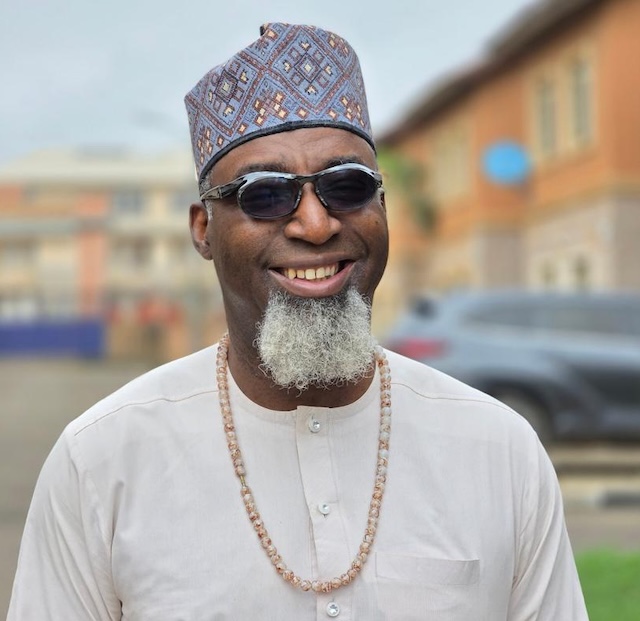
Adéwálé Àjàdí, a lawyer, creative consultant and leadership expert, is author of the newly released Afrilition: 21st Century African Manifesto, and Omoluwabi 2.0: A Code of Transformation in 21st Century Nigeria.

Discover more from Premium Times Nigeria
Subscribe to get the latest posts sent to your email.
