

Good morning, happy Friday and welcome to FirstFT. In today’s newsletter:
-
The battle for control of Tata Group
-
Anthropic investors bet on $2tn valuation in record IPO
-
Seoul’s Incheon airport becomes the world’s busiest international hub
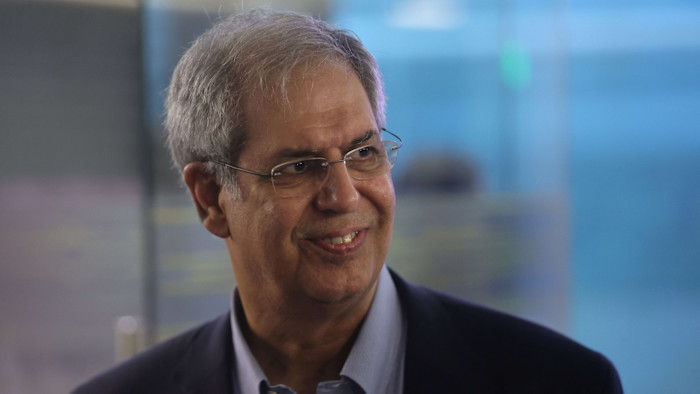
N Chandrasekaran’s surprise announcement on Wednesday that he would step down in February from running Tata Sons marked a victory for family scion Noel Tata, the 69-year-old head of the charitable trusts that control India’s biggest conglomerate.
The two men had clashed repeatedly in recent months over strategy and a potential role for the next generation of Tatas in the business, with the feud regularly making headlines in India.
It also sparked an intervention from New Delhi, with the home affairs and finance ministers meeting Noel Tata and Chandrasekaran to address the conglomerate’s stability.
“This is very much the beginning of the Noel Tata era,” said Saurabh Mukherjea, founder of Mumbai-based Marcellus Investment Managers, which holds shares in Trent, Tata’s clothing retailer.
Noel Tata has until February to find a new leader to oversee a $280bn group that produces steel and power, owns Jaguar Land Rover, Air India and India’s largest IT services company and employs more than 1mn people. Meanwhile, Tata Sons is struggling to turn around high-profile businesses and fight off pressure to float its holding company.
Chandrasekaran does not have a deputy and the group lacks a succession plan. Tata’s five-member selection committee is expected to convene soon to start the process of replacing the low-key but intensely driven chair known as Chandra.
Read more about the battle for control of Tata Group.
Here’s what we’re keeping tabs on today and over the weekend:
-
Economic data: Hong Kong and Malaysia report second-quarter GDP figures.
-
India: Prime Minister Narendra Modi delivers a speech on Saturday to mark the anniversary of the country’s independence from British rule in 1947.
Five more top stories
1. Anthropic investors expect the AI start-up to float at a valuation of $2tn or more in October, a dizzying figure that would eclipse SpaceX and make the AI lab’s debut the largest ever initial public offering. Half a dozen of the company’s backers told the FT that Anthropic’s rapidly rising revenue would enable it to more than double its current valuation.
2. Russian President Vladimir Putin’s visit to a disputed Pacific island chain has drawn a strong rebuke from Japan’s Prime Minister Sanae Takaichi, who warned that the move risked damaging relations. Putin reignited the more than 80-year dispute over the Kuril Islands, which the Soviet Union seized from Japan at the end of the second world war, with a visit yesterday to Iturup, known as Etorofu in Japan.
3. South Korean retail investors must now complete a week-long course before they can start trading in single-stock funds, as regulators tighten restrictions on products blamed for exacerbating wild swings in one of the world’s most volatile stock markets. The move follows an extraordinary boom and subsequent correction in South Korean equities.
4. The US has paid the highest borrowing costs to sell 30-year bonds since 2001 as investors fret over the country’s mounting debt pile under Donald Trump’s administration as well as inflation that remains stubbornly high. A $25bn Treasury auction of 30-year bonds yesterday drew yields as high as 5.22 per cent, according to the US Treasury department.
5. The president of Guggenheim Investments had her phone seized by the FBI last year as part of an investigation by federal prosecutors into entities controlled by billionaire Mark Walter, including the $260bn asset-management giant. Dina DiLorenzo, a more than 20-year veteran of Guggenheim, had her phone taken in September, the same day Walter’s phone and laptop were also seized.
The race to be the next UN secretary-general
Whoever takes over from two-term UN secretary-general António Guterres on January 1 faces a battle not just over the UN’s relevance but ultimately its survival. The very idea of multilateralism, the underlying principle of the UN, is in steep decline. Then there is the lack of money. Into this quagmire have stepped seven candidates aspiring to save the organisation, writes foreign editor Alec Russell.
We’re also reading . . .
-
Japan’s future: More than eight decades after the end of the second world war, the country must rethink its role in the world, writes Takeshi Niinami.
-
Sun, sea and bombs: In Odesa, the Ukrainian port city known for its beaches and nightlife, Russian attacks are choking off an export lifeline.
-
Out of office: Summer holiday email messages are bouncing back into inboxes. Soumaya Keynes deciphers what they really mean.
Chart of the day
Seoul’s Incheon airport said it has overtaken Dubai to become the world’s busiest airport for international passengers this year, after the number of people travelling to the Gulf hub declined owing to the war in Iran.

Take a break from the news . . .
A lot can change when you return to work after a baby — including what you want to wear. Harriet Clarfelt, the FT’s US asset management correspondent, shares the advice she received for a post-maternity wardrobe.

