

Nineteen states have domesticated the Model Taxes and Levies Act as the Federal Government moves to harmonise tax administration nationwide and reduce the number of tax and levy heads to nine.
The reform is expected to curb multiple and overlapping collections, eliminate illegal tax collection practices and reduce compliance costs for businesses and traders operating across states.
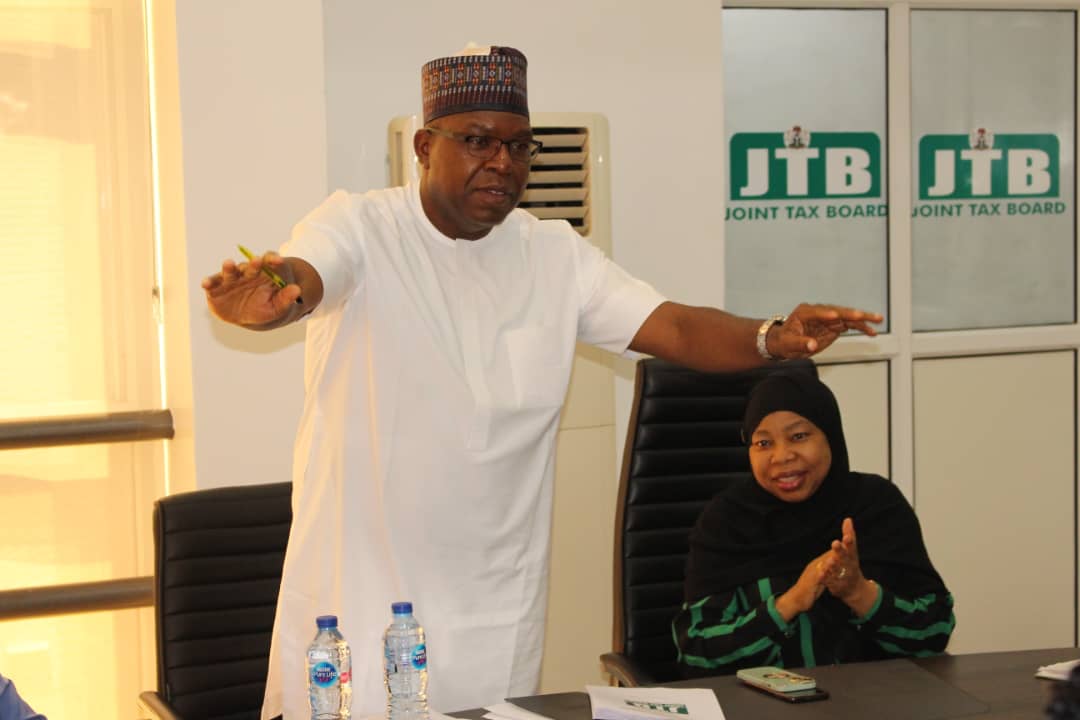
Olusegun Philip Adesokan, Executive Secretary of the Joint Revenue Board (JRB), disclosed this on Wednesday at the 160th meeting of the board in Kaduna, where stakeholders assessed one year of tax reforms under the theme, “One Year of Tax Reform: Assessing Progress and Addressing Challenges.”
Adesokan said the Model Taxes and Levies Act, when domesticated by all 36 states, would establish common principles for taxation and levy administration across the country.
“By the time we accomplish the entire 36 states, we will have a Taxes and Levies Law containing the same principles and provisions, and implementation will commence across the board,” he said.
He said the new framework prohibits cash collection of taxes and levies, as well as the erection of roadblocks along transport corridors for the purpose of collecting taxes, levies and rates.
The measures, he said, are designed to tackle multiple collections and other practices that increase the cost of doing business and undermine the credibility of the tax system.
Adesokan also disclosed that all states had adopted the Personal Income Tax Guidelines issued by the Federal Government, while uniform Presumptive Tax Regulations had been introduced for operators in the informal sector.
The regulations, he said, would provide a common basis for taxing informal-sector businesses while incorporating reliefs for eligible taxpayers.
He said the reforms were in line with President Bola Tinubu’s tax policy of taxing prosperity rather than poverty and profits rather than capital, insisting that the objective was not to impose additional burdens on Nigerians.
“The reforms have not increased taxes,” he said, describing the current phase as a transition from policy development to implementation.
According to him, the new revenue administration framework seeks to make taxation fair, equitable, accountable and transparent by clearly defining who should pay, what should be paid and how collections should be administered.
Adesokan stressed that sustained public awareness would be critical to the success of the reforms, particularly in helping taxpayers distinguish legitimate taxes from illegal and multiple collections.
He said the JRB was deploying traditional and social media platforms to improve awareness and compliance, noting that knowledge of the reforms remained uneven across communities.
“If you want to cover the mass of the country, you have to keep going at it every day,” he said.
Kaduna’s IGR growth
Meanwhile, Kaduna State has attributed its rising Internally Generated Revenue (IGR) to the digitalisation of tax administration and a strategy of concentrating collection efforts on high-yield taxpayers.
Jerry Adams, outgoing Executive Chairman of the Kaduna State Internal Revenue Service (KADIRS), said the state’s revenue growth was organic and sustainable rather than the result of one-off gains.
He said the administration of Governor Uba Sani inherited a lean financial position but responded by approving the Pay Kaduna Portal, which centralised revenue payments and simplified tax compliance.
According to Adams, the digital platform also gave KADIRS a business-style dashboard for tracking revenue performance by revenue line and area office, enabling the agency to identify weak areas and respond more quickly.
The service, he said, simultaneously addressed staffing gaps, staff motivation, provision of work tools and capacity development.
A major component of the strategy was the application of the Pareto 80/20 principle, under which KADIRS focused more attention on the 20 percent of taxpayers with the capacity to generate about 80 percent of revenue.
“The figures that are coming up now are organic. They are not just windfalls, they are not one-off situations, they are not just a fluke hike,” Adams said.
“This is just the starting point, and there is serious light at the end of the tunnel.”
Adams linked the improvement in revenue collection to government spending on infrastructure, healthcare, peacebuilding and education, arguing that visible utilisation of public funds was strengthening taxpayers’ confidence in the system.
He cited skills acquisition centres established across Kaduna’s three senatorial zones, which he said had recently graduated 4,050 youths.
“Government alone cannot employ everybody. So why not we learn skills? It is what is developing in the world now. You become self-reliant, and you become an employer of labour,” he said.
Adams described the process as a “merry-go-round” in which tax revenue finances infrastructure, improved infrastructure attracts investment and supports small businesses, while expanding businesses create a broader future tax base.


