

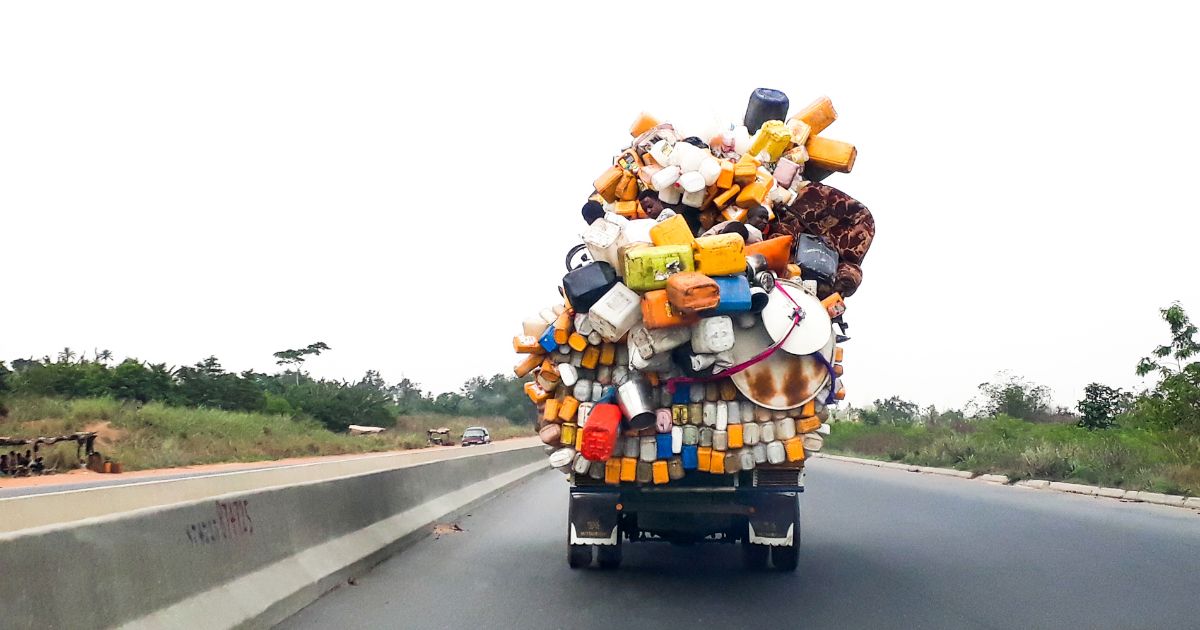
Stakeholders in Nigeria’s transport sector have called for stronger enforcement of road safety regulations and joint liability for truck owners, cargo owners and drivers as part of efforts to curb overloading and unsafe loading practices.
The call was made at the National Breakfast Policy Dialogue and launch of the National Movement for Safe Loading and Safe Roads, organised by the Federal Road Safety Corps (FRSC) in partnership with BusinessDay Media Limited.
Shehu Mohammed, Corps Marshal of the FRSC, said overloading should no longer be treated solely as a traffic offence, noting its implications for road safety, infrastructure and the wider economy.
He said responsibility for unsafe loading must extend across the transportation value chain to cargo owners, shippers, loading agents, transporters, fleet operators, drivers, regulators and government.
“Those who order, determine, load, authorise and transport cargo must accept responsibility for its safety consequences,” Mohammed said.
According to him, cargo owners and shippers must accurately declare weights and ensure safe loading, while operators should comply with approved weight limits and maintain their vehicles. Drivers, he said, should also refuse unsafe, improperly mixed or inadequately secured loads.
The Corps Marshal said overloading compromises braking, steering and vehicle stability, increases crash risks and accelerates the deterioration of vehicles and roads.
He also raised concerns over mixed loading, particularly the combination of passengers and cargo, incompatible materials and poorly secured or unevenly distributed loads.
“The inappropriate combination of passengers and cargo, incompatible or dangerous materials, as well as poorly secured or unevenly distributed loads, creates serious risks to drivers, passengers and other road users,” he said.
Adetokunbo Ade-John, Senior Special Assistant to the President on Transportation and Mobility, called for greater public awareness and stronger enforcement of road safety regulations.
Ade-John said road users must recognise that reckless driving and overloading could affect not only those directly involved but other road users and their families.
He also called for stricter controls around driver licensing and enforcement, stressing the need for drivers to be properly tested before being licensed.
Ade-John said government agencies and stakeholders should strengthen collaboration on road safety and ensure that regulations are implemented rather than merely introduced.
Representing Dangote Group, Abraham Ozovehe, Fleet Safety Lead, Dangote Cement Transport, said overloading amounted to sacrificing long-term economic interests for short-term gains.
He said businesses involved in road transportation must take responsibility for the condition and weight of vehicles leaving their facilities.
“When it comes to overloading, I describe it as hitting your future today,” Ozovehe said.
He said Dangote had installed weighing bridges and was ensuring that the facilities were maintained and calibrated so that trucks and consignments leaving its facilities were weighed and kept within approved limits.
Ozovehe also called on law enforcement agencies, transport unions and other stakeholders to hold both drivers and owners of overloaded consignments liable.
“If the drivers or the owners of those consignments think that it is only the drivers that will be held liable, they will keep pushing it,” he said.
He argued that extending liability to cargo owners would create an incentive for them to comply with loading requirements.
“If they know that they as well, as the owners of the consignments, will be held liable for a vehicle being overloaded, they will change their mind and they will start acting right,” he said.
Ubung Udo, Managing Director of ASR Africa, said public safety should remain central to policy and development efforts, noting that roads are a public resource used by virtually every segment of society.
Udo said ASR Africa was prepared to support the FRSC through partnerships aimed at improving road safety.
He said sustainable partnerships between government and the private sector were necessary to address challenges affecting the country’s development.
Mohammed said enforcement alone would not eliminate overloading, adding that the FRSC would strengthen public education, stakeholder engagement, intelligence-led operations and the use of technology and data to improve compliance.
He said the Corps would also focus on weighing infrastructure, axle-load management and data sharing as part of a shift from reactive enforcement to preventive road safety.
The FRSC chief said the National Movement for Safe Loading and Safe Roads should involve government, industry, transport operators, drivers, regulators, professional bodies, civil society, development partners and the media.
The dialogue is expected to culminate in the adoption and signing of the Abuja Declaration 2026, which Mohammed said should contain clear responsibilities, measurable commitments, timelines and mechanisms for monitoring implementation.
He said the success of the declaration should be measured by reductions in overloaded vehicles and crashes, improved cargo-weight declaration, elimination of unsafe mixed loads, greater compliance by operators and better protection of road infrastructure.
“Our roads must carry Nigeria’s goods. They must carry our people. They must carry our economic aspirations. But they must not carry an avoidable death,” Mohammed said.


