

Unlock the Editor’s Digest for free
Roula Khalaf, Editor of the FT, selects her favourite stories in this weekly newsletter.
Water companies have breached official guidance on discharging sewage at 65 popular swimming sites in England since the start of the bathing season, risking public health at the busiest time of year for coastal areas.
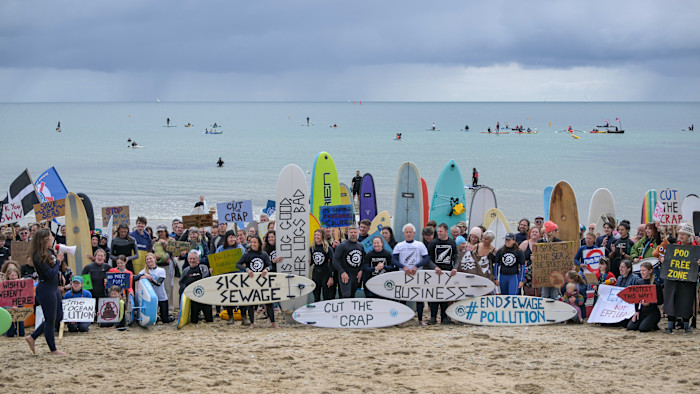
Effluent was released for a total of 117,001 hours from 1,165 combined sewage overflows located close to popular swimming areas between mid-May and July 21, according to Surfers Against Sewage (SAS), which uses real-time discharge data provided by water suppliers.
Some 129 of the overflows affecting 65 bathing waters had breached guidance from the Environment Agency, the pollution watchdog, which allows two spills for a site to be classed as “excellent” or three for the beach to be deemed “good”, “sufficient” or “poor”, the campaign group said.
The overflows come as tourists flock to beaches across the country for summer holidays and will add to pressure on privatised water companies, which have been accused of paying excessive dividends to shareholders and salary packages to executives while failing to invest in infrastructure.
More than 80 per cent of the public support water company renationalisation, according to a YouGov poll this year, and Prime Minister Andy Burnham has vowed to increase “public control” of the sector without providing more detail.
Kirsty Davies, community water quality manager at SAS, said: “Supposedly ‘excellent’ water quality doesn’t mean a thing if a water company continues to dump sewage, breaching guidance and showing a total lack of care for people or the environment.
“Even in the most well-used recreational hotspots, water companies are polluting without punishment,” she added.
The single worst-performing sewage overflow pipe is owned by Yorkshire Water and situated near Whitby beach. Despite being classed as “excellent” by the Environment Agency, 21 spills have been recorded there since the bathing season officially started on May 15.
The EA routinely monitors water quality at designated bathing sites across the country between May and the end of September.
The two next worst-performing sewage overflow pipes are owned by South West Water and discharge near Readymoney Cove in Cornwall.
Two combined sewage overflow pipes have spilled 36 times in total this bathing season for 7,720 hours, six times more the level allowed by the EA, which deems Readymoney Cove to be “good”.
Southern Water also performed poorly, with seven of the combined sewage overflow pipes near Cowes on the Isle of Wight breaching the watchdog’s guidance.
There were a total of 37 spills and 2,871 hours of sewage released since mid-May, despite the bathing site being classified as “excellent” by the EA.
The data collated by SAS suggests that water companies are on track for a significantly higher number of sewage discharges this bathing season compared with last year. Between May and September 2025, there were 6,780 spills, although not all breached EA guidelines.
SAS said it had received 275 reports of people falling sick during the swimming season so far, including 149 at bathing waters rated excellent or good.
On the back of public anger, the EA has sought to crack down on sewage dumping. This month Southern Water was fined £7mn for releasing effluent illegally off the Kent coast between 2019 and 2021, after a prosecution brought by the watchdog.
The EA said it had “fundamentally strengthened its approach to tackling water pollution, bringing more people, better data, stronger powers and unprecedented scrutiny to drive change”.
“It is vital that improvements to the sewage system are sustained over the long term, and the Environment Agency will continue to hold water companies to account where performance falls short,” it added.
The Department for Environment, Food and Rural Affairs said the government had “taken swift action against water companies who are failing to perform” and was “upgrading outdated bathing water regulations for the first time in over a decade, prioritising public health”.
Yorkshire Water said it did “not agree with how Surfers Against Sewage have interpreted our data. The overflow they have identified does not impact a bathing water and has discharged five times in the period mentioned.”
Pennon, which owns South West Water, said a £760mn storm overflow reduction programme had begun, adding there was “work under way to reduce tidal infiltration and increase treatment capacity.”
Water UK, the industry body, said: “No sewage spill is ever acceptable, and water companies are investing £24bn to improve the environment by 2030, prioritising action at bathing waters and other sensitive sites.”
Southern Water did not immediately comment.
