

…Innoson, Bobtrack show pains over FG importation policy sommersault
The bubble of the rice revolution which Nigeria enjoyed in past few years seems set to burst due to steady importation of foreign rice at cheaper prices.
Consumers may be rejoicing but investors are wailing, saying jobs may perish as they could no longer compete with foreign rice.
Now, Local producers in key sectors from rice processors, automobile makers, and agric equipment manufacturers were said to have met in Abuja in the week with key government sectors including the House of Reps, the Senate, the presidency, etc. where they were said to have poured lamentations over their plights in the face of imported versions of what they produce with huge loans.
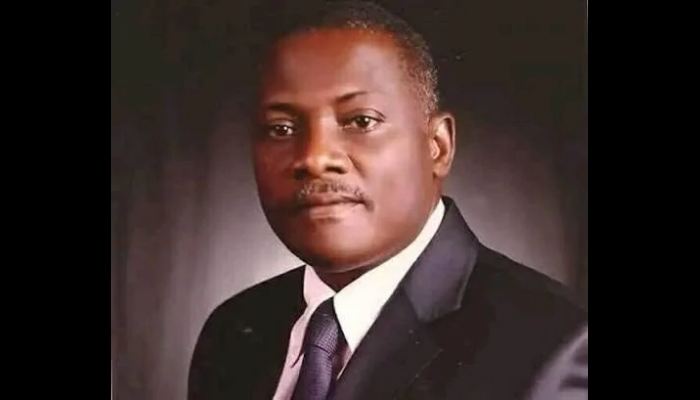
Apart from rice processors, others like Innocent Chukwuma of Innoson Ltd and Ibifiri Bobmanuel of Bobtrack Ltd were said to have spoken vehemently against importation that is killing the local effort.
The lamentations of Bobtrack and Innoson in Abuja were said to be same in other sectors, raising same questions from sensible Nigerians.
The manufacturers wondered where Nigeria was headed, saying it’s like once the leaders take care of their own interests, anything can happen because they will just throw the next person under the bus.
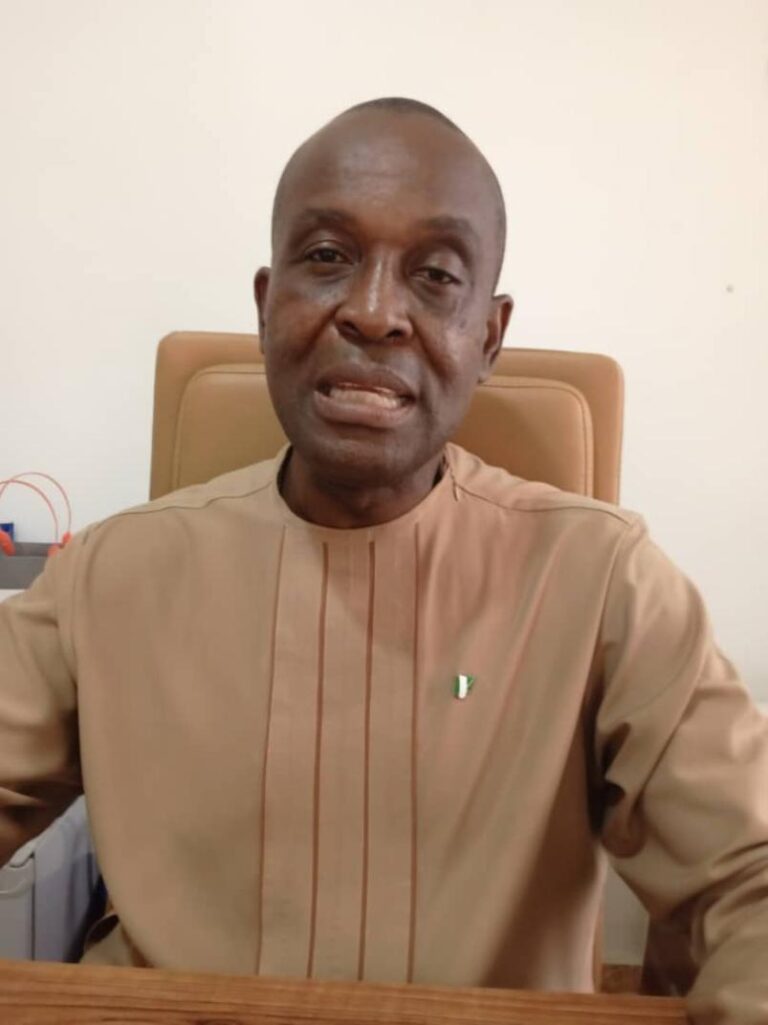
Bobmanuel told BusinessDay in Port Harcourt after the Abuja how his group fought hard for deregulation to come and for fuel subsidy to be removed. He says he does not know if he was right after all.
He however, said: “Till today, I’m still in support of that action. In fact, that action made endeared me to the President when he came in. This is because we need a president that has the impetus to take the difficult decisions.
“This is because these difficult decisions come in difficult times; but at the end of the day, the country would be better for it. So, when the late president, Muhammadu Buhari, was in office, when Goodluck Jonathan was in office, I had always said we needed to deregulate. And I was the strongest voice on deregulation in Nigeria because I organised seminars at the Investors Forum supporting the government and urging the government to man up to deregulate. Eventually, this President came, and on first day, he just switched off that drain pipe called fuel subsidy when he said; “This is the last day we are going to have anything like subsidy. Subsidy is gone.”
He said that Mr. President said it and meant it, and he followed it through. “Today, whether you like it or not, all those extra drain pipes are gone. We had been selling crude oil to import refined fuel. Today, we export crude oil and we also refine crude here. And because we have our products here that is being refined by the private sector, we buy products even in Naira as against buying in foreign currency. We know that Dangote is being forced by economic measures to want to sell in Dollar. He cannot be selling fuel in naira when the is pressed by economic situations. We know he is trading on private funds. So, he must protect it because any glitch on that pipeline, that whole business collapses, and it collapses on his head. These are the issues facing every local manufacturer.”
Dollar: Don’t kill Dangote refinery:
Bobmanuel went on: “You have a Dangote that refines crude. In fact, today Dangote has one of the largest refineries in the world. He serves the largest market in the jet fuel sector. It means that a chunk of the global Jet A1 fuel is being purchased from Dangote Refinery in Nigeria.”
From government perspective, he said, if you have such a big investment in your country, you must prioritize your policies to suit him; not just to suit him but to suit the sector so that the sector would continue to experience growth. That’s what you need to do.
“In that case your policies should be protectionist, not to allow everybody from any part of the world to jump into it. It should be encouraging, it should be enhancing, and most importantly, it should have that environment that will be enabling enough for even further funds to come into that space.
“What it simply means is that we have comparative advantage in this sector, so for that reason, we must keep protecting and guarding it for it to grow. But you find out that Dangote had been fighting with all manner of interests up to date as we speak.
“That is just Dangote and one sub sector called refinery. There are millions of Dangote in Nigeria. Dangote has gained economy of scale and people see his investment in all of Africa and the world. But there are millions of Dangote in Nigeria that the government is deliberately working to kill, to stifle.
“And I ask myself, why is it that a government that ordinarily should be working to protect such industry is rather the one working round the clock to stifle them? And it boils back to the fact that you begin to ask the questions like, where is our patriotism? In the corridors of power, my question to us to answer today is, where is our patriotism? Where do we have our patriotism, especially from the people that are running the economy of Nigeria?”
The tears of rice processors
Just yesterday, we had a sit-out with Rice processors, the ones that are very key in the sector. These are people that are about moving Nigeria to another level by processing rice at home. The rice sector had been down because Nigeria did not process rice to get international quality. This made Nigerian rice to be either substandard or to be exported as raw material (paddy rice) very cheap.
“Now, these people came together and got huge loans and help from the FG to step up in processing. The lack of local processing made the farmers not to scale production. The paddy rice that was always exported never came back to Nigeria but they would bring in warehoused rice (expired rice) to Nigeria and send our fresh and nutritious rice to top countries at very high price. Nigeria ended up farming huge rice but not eating its rice. Nigerian rice thus went to premium markets. But the policy of creating local processing boosted local farming. It gave confidence to farmers that if they invested more into it, they had a future. They invested in world class processing facilities and machines.
“Now, what is the government doing in the rice industry? The local processors just woke up to find that the FG has opened its doors for foreign rice that has come at cheaper prices. They are rice that have stayed up to 10 years in warehouses, not fresh.”
By this, he said, the FG has decided to throw all advances and gains in the sector under the bus by giving preferential licenses to people that are now importing rice into the country.
“Now, the reason for doing that is simply because the cost of rice at a point went up because the government put up a protectionist policy.
“They forget that before you make an omelet, you must crack an egg. Such policies come with high costs but later the benefits start coming in. See the case of mobile phones and lines. Some persons procured lines at N38,000 in the beginning, but now, some lines are free. Even President Olusegun Obasanjo never expected the boom in telecom to be as huge as this. Thank God he stuck to his guns then. The gains are here today. That’s free market economy for you.
“Is it very difficult for us to understand this? Now, with the twist in rice policy, all those people that have invested in the rice mills system and so on are going to be extinguished. All their workforce is going to be extinguished because they can’t compete in an economy where you have people bringing in grains that are 10 years in silos to come and compete with them that just got to the market from the farm.
What they import into Nigeria is called chaff. They do it to clear out the silos. They’ve made all the money they want to make. “
He said the premium societies have ways of testing rice coming into their places to ensure quality but any quality can come into Nigeria. We have fundamental problems here.
More tears from automobile industry
Now, he went on, look at the automobile sector and see look at the amount of funds that have been pumped into the sector. Yesterday, I was with Innocent Chukwuma, the managing director/chief executive officer of Innoson Vehicle Manufacturers (IVM) or Innoson Motors. He was at the chambers of the National Assembly to make a case for the protection of the automobile sector and to conserve the gains of the past years. It’s only a layman or a dumb man that would not understand where this man (Innoson) is coming to and what is his pain.
He has invested so much in the auto industry today, he sells vehicles all over Nigeria and outside. What the government needs to do is to protect that market; that Nigerian market advantage. Yes, his vehicles may be slightly more expensive but it is the teething stage of it.
Innoson
In a three-minute presentation to federal lawmakers and policy makers by Innoson at a legislative business breakfast which BusinessDay accessed, Chukwuma said bringing sector leaders to discuss their challenges with leaders of the NASS was a very good idea that would accelerate Nigeria’s economic growth.
The Innoson CEO began with a question: “Permit me to ask one simple question: If we all agree that Nigeria must industrialise, shouldn’t government procurement become one of the strongest instruments for achieving that goal?”
He said: “I come from Nnewi, a town where manufacturing is more than a business—it is a way of life. Through Innoson, and together with thousands of dedicated Nigerian workers, we have invested in manufacturing for more than four decades because we believe Nigeria’s greatest resource is not what we import, but what we are capable of producing ourselves.
“Our experience has shown that Nigerian businesses can compete, innovate and create jobs when supported by the right policies. Making it easier to do business is not only about reducing regulations; it is also about creating markets for Nigerian businesses. In that spirit, permit me to respectfully suggest three practical legislative actions that can strengthen Nigerian manufacturing and accelerate economic growth.”
He gave short suggestions: “First – make local procurement work”.
He said: “Government procurement is one of the strongest drivers of industrial development. Federal Ministries, Departments and Agencies procure thousands of vehicles every year. Where Nigerian manufacturers meet the required standards and specifications, they should be given first consideration. I respectfully urge the House to strengthen legislative oversight to ensure the effective implementation of the Nigeria First Policy.”
Next, he said, measure compliance. “Require Ministries, Departments and Agencies to publish annual reports on the procurement of locally manufactured goods. What gets measured gets implemented. This will promote transparency, accountability and compliance with government policy.”
Finally, he said FG should create predictable demand. “Establish a National Government Fleet Procurement Framework that provides predictable demand for Nigerian manufacturers. This will encourage investment, expand production capacity, deepen local supply chains and create more jobs for Nigerians.”
He said: “These recommendations are not about Innoson alone. They are about creating an environment where every Nigerian manufacturer can thrive, compete globally and contribute more to our national development.
“The private sector is ready to invest more, employ more Nigerians and partner with government to build a stronger economy. We respectfully ask the House to continue using its legislative and oversight responsibilities to ensure that government procurement becomes a strategic instrument for national development.
“Every government procurement decision that supports Nigerian industry is an investment in Nigerian jobs, Nigerian enterprise and Nigeria’s economic future. If we build Nigerian industries today, Nigerian industries will build Nigeria tomorrow.”
Tractors and Bobtrack
The pains of Innoson and Rice Leaders are said to be same with agric equipment and tractor manufacturers. Bobmanuel said: “This is the same with Bobtrack Ltd where we are investing heavily in billions of Naira in manufacturing of electric cars (EVs). As we speak, we have an electric car in the showroom downstairs that is made by Bobtrack. That’s the first prototype we have.
“We’ve spent this much, we’ve exposed ourselves to huge amount of loans to invest this much in it. Now, all of a sudden, the government wakes up and they tell you, no, they want everybody to import from anywhere and bring into Nigeria for little or no duty paid.”
FG policies make Nigerian manufacturers look foolish
Then I would see myself as a very stupid man as I’m seated here, and Mr. Innoson sees himself as a very stupid man for his factory to still remain open when he can as well just travel abroad, buy those cars, get them to do the manufacturing there, and just import it for Nigeria at low cost and sell in the market.
The end losers are the FG of Nigeria, our job seekers, our young men and women that go out of their way to try to make ends meet by eking a legitimate job for themselves. Imagine the number of jobs that this particular policy is going to enhance in the economy. From Innoson alone, I know he runs his job direct and indirect job workforce should be running into thousands. From Bobtrack alone, our direct and indirect jobs will be running into about the same. So, where are we going to? That is just in the auto sector.
Let us go to the agro sector. Agriculture seems to be the key sector that drives growth and drives inflation in Nigeria. Bobtrack is the largest agricultural equipment manufacturers in Nigeria today, and indeed in West Africa, the fastest growing.
Now, I was in a seminar two days back and I was near some topmost government officials and somebody was telling the crowd how his agency had bought 4,000 tractors. I don’t want to name the agency. They have bought 4,000 tractors all from abroad. And I asked him, “Where is your patriotism?”
So, I ask these government officials, where are their patriotism as Nigerians? Where is their loyalty to the Federal Republic of Nigeria that even endeared the President to even appoint them as members of his cabinet in whichever form? Do you know what 4,000 agricultural tractors would have cost, the dent it would have caused in our economy? You take all of those jobs, you share send it out, you buy tractors, bring them into the country. Do you care about the local technology? We’re not even talking about the Naira figure now. We should be paying more attention to the local technology that would produce 4000 tractors. We must protect the local technology we have. That’s why countries like America are practicing the same protectionist policies that they say a big no-no to anybody bringing in anything into their American.
As we speak, you can’t take a fully built vehicle from any part of the world into America, especially some parts of the world that you don’t pay. If it’s from China, you must pay 100percent duty. This is because if you want your labour to be in your country, no problem. Keep the labour in your country, but you must have to pay 100percent to the Nigerian government for the Nigerian government to use that as subsidy to grow the Nigerian investors that are investing in the same space with you.
That’s the only way economies grow. But in our case, our government officials would rather hobnob with those foreign manufacturers and throw the economy open to them to flood it in with all sorts of jargons that will not stand the test of time. So, how can the economy grow? It can never grow. So, the government needs to go back home and ask itself, “Do we want to fix this economy or we want to just play lip service to it?” They have to tell us so we know whether to also help them destroy it by joining in importing instead of suffering as manufacturers. That’s my question to them and my call.
If they want to fix the economy, then they need to begin to buy Nigeria, they need to promote Nigeria, they need to protect made in Nigerian product, and they need to extol made in Nigerian products.
Today, we’re not just producing tractors, our tractors are all across Nigeria. They’re all across every major entry point or exit point in Nigeria where you will see our tractors. Our electric cars are on display. You will see the first electric car that is made in our facility, and you see the quality of what we have. And you imagine all of this could just evaporate in one day if the government does not call itself back from this policy.
The hint we got is that oh, election is around the corner. I say, it has nothing to do with elections. Elections will always come. If you put an election ahead of an economic policy of yours, that policy had already failed right from ab initio. So, you imagine now the huge grounds you would have lost because of elections. You want rice to come into the country as against the efforts of the processors you have in the country.
If election and political decisions were very important, why not subsidise the processing for a period. After elections, you can remove the subsidy. This way, price of rice will crash and it’s a win-win. You needed to exhaust local options.
But the most important thing is that you must believe in your setup, in your country, in your policies. You must not be doing inconsistent policies, half way in, half way out.
Nigeria is not short of good policies but short of proper implementation of those policies.
The moment Nigeria fixes its way of implementing policies, not just America, but China and every other serious country will wake up to realise that there is an emerging industrial power called Nigeria. We just have to wake up to this.


