

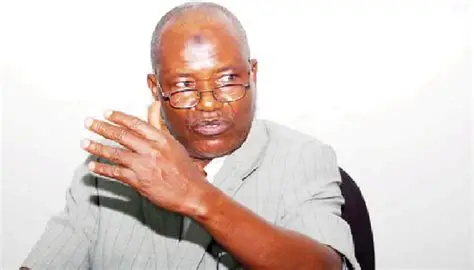
Education remains the major foundation for economic growth and development. And, it is not education for its sake but for quality. Achieving quality education in a country like Nigeria requires massive funding and focused reforms. The Minister of Education, Tunji Alausa, since taking up the job, has made many off-hand policy statements that require in-depth discussion, analysis, and erudition. Education is at the core of every country’s programme, and projects for growth and development do not require piecemeal policy statements to drive their activities, but a comprehensive, research-backed plan or strategy.
Investments in education or human capital development today will yield multiple outputs for the long term and possibly forever. When the revolution in China was conceived in the 1940s, it was placed on the plank of education and agriculture. The need for the biggest population in the world to feed itself so as to be less dependent on other countries, and the need to develop the education sector to produce skilled manpower and become technologically advanced to compete effectively with countries in the “first world”.
To achieve these, the Chinese government sent everybody to the farm to produce food and even closed universities for almost a decade, but was engaged in sorting out the brilliant minds for scholarships in foreign lands where technology was available, as well as carrying out reforms of the education sector for maximum outputs and benefits. Comprehensive agricultural reforms and educational reforms were carried out separately, well discussed, and well documented.
The government has started funding an important aspect of tertiary education through NELFUND. Through a loan, it has made it possible for many would-be dropouts to have an education at the highest level. It is one of the best policies being executed by this government, but it needs to be institutionalised through approval by the National Assembly. Albeit, funding education in Nigeria has to start from the primary school level to the tertiary level and needs to start from providing a conducive environment to putting in place quality physical infrastructure, to appropriate remuneration for teachers and allied staff in schools.
Using public primary and secondary school premises for elections has exposed the world to the kind of school environment where our children study. We do see fading paints, dropping ceilings, dilapidated buildings, and white chalkboards in a country with financial resources that can provide everything in a global-standard form. Visits to public secondary schools, even a large number of private schools, would show how empty laboratories are and how inadequate library facilities exist, in addition to crowded classrooms where students take notes standing on edge. How students are able to absorb what they are taught in those classes remains a mystery!
TETFund actually helped in infrastructural development in the tertiary institutions. If TETFund buildings for classrooms, laboratories, libraries, and hostels are removed from the landscape of some of the institutions, it would show the emptiness of many public tertiary institutions. And TETFund is contributed to, like the Education Trust Fund, by the private sector. That is why some of the institutions are referred to as TETFund polytechnics or universities. Allocations from the public budget often go into recurrent expenditure for salaries and emoluments. Yet, the salaries are not enough to provide incentives to attract and retain teachers in schools or in teaching jobs.
The high quality of education in the past made Nigerian academics from the public universities interact and excel among their colleagues. There was hardly any research team working on global or continental issues, whether in science, technology, social science, or humanities, where one would not find a Nigerian. And, they produce outstanding outputs. We are not sure of the same feat today because the quality has gone down due to the diversion of funds from education and health to servicing and paying debts, enjoying cosy travels, including health tourism, and stacking up secret funds for future survival.
There is the need to discuss issues of promoting CBT over essay writing in secondary schools’ examinations; the issue of rolling back education from 6-3-3-4 to 12 years of basic education of the past, irrespective of new terminologies and focal points; improvement required in curricula at different levels of education – primary, secondary and tertiary; and the issues relating to the roles and operations of TETFund and NELFund, et cetera.
It is important to recall that the 6-3-3-4 education framework was not implemented as expected in the policy document. There was supposed to be a technical aspect whereby some of the graduating students at the secondary school level would have basic skills in one vocation or another. Actually, by the time the students are moving into SS 1, we would have three categories, namely science, commerce, and technical, where the students are allocated based on their interests and results from junior secondary levels.
At the initial stage of implementing the policy, many secondary schools were equipped with technical equipment that was either looted or allowed to rot away. One of the major problems then was the inability to get technical teachers for various vocations. That problem is still there today, particularly when technical education is virtually destroyed with inadequate attention and motivation for technical education, even at the tertiary level. Personal visits to most technical colleges in Ogun State show that most of the equipment was purchased and installed in the 1990s. Nationwide, polytechnics also suffer the same fate as engineering faculties in the universities.
While lecturers and students in social and management science faculties can generally rely on online information for research, those in humanities faculties, science, medicine, engineering, technology, and other science-related disciplines require modern-day equipment to function optimally and produce research outputs for implementation. What is being advocated here is that there should be comprehensive reforms in the education sector arising from well-thought-out symposia, workshops, and specified, organised fora.
