

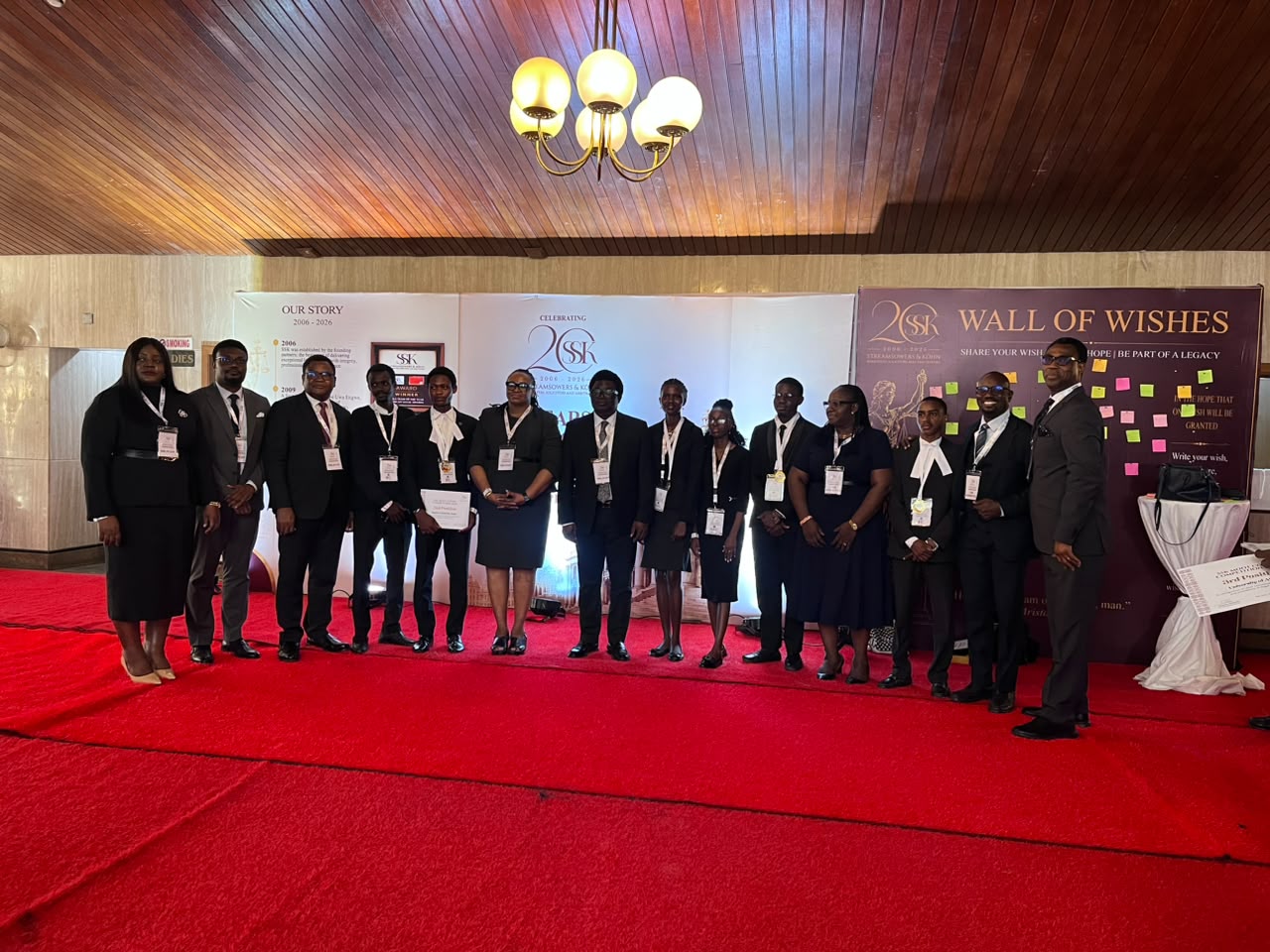
Nigeria’s legal education system requires greater exposure to practical courtroom advocacy to better prepare aspiring lawyers for professional practice, according to Etigwe Uwa Etigwe, SAN, founding partner of Streamsowers & Köhn (SSK), as Obafemi Awolowo University (OAU) emerged winner of the firm’s inaugural Moot Court Competition held in Lagos.
The competition, organised to commemorate SSK’s 20th anniversary, brought together law faculties from across the country in an advocacy contest designed to test participants’ legal research, written advocacy and oral argument skills.
Seventeen universities from Nigeria’s six geopolitical zones participated in the competition by submitting written memorials on a hypothetical legal dispute spanning multiple areas of law. Following a blind assessment conducted by independent legal academics, five institutions advanced to the final stage.
The finalists were the University of Calabar, University of Lagos, University of Abuja, Bayero University, Kano, and Obafemi Awolowo University, with OAU and BUK progressing to the championship round.
The final featured an oral advocacy session before a panel of judges, where students argued opposing sides of a mock case in a courtroom setting. Although the judges found Bayero University to have presented the stronger arguments on the merits of the case, OAU secured the highest aggregate score to emerge overall winner of the competition.
OAU’s lead counsel, Ase Hephzibah Adiamologi, was also named Best Advocate for her performance during the final.
Speaking on the rationale behind the initiative, Etigwe said exposing students to real courtroom settings before they enter legal practice helps bridge the gap between academic learning and professional experience.
“We were empowered when we started our careers through mentorship and guidance from senior lawyers. Creating opportunities like this is one way of giving today’s students similar exposure while inspiring them to pursue excellence in advocacy,” he said.
According to him, appearing before experienced judges in a simulated courtroom environment offers students a more practical understanding of advocacy than conventional classroom exercises.
The organisers said the competition was designed to ensure fairness throughout the selection process. Tamuno Atekebo, a partner at SSK, explained that all written memorials were assessed anonymously by independent senior law lecturers drawn from different universities.
“The assessors had no way of knowing which institution submitted any particular memorial, ensuring that the evaluation was based solely on merit,” he said.
The competition assessed participants on legal writing, research, analytical reasoning and oral advocacy, skills increasingly regarded as essential for lawyers entering a rapidly evolving legal services market.
Chinasa Unaegbunam, SAN, another partner at the firm, said the standard demonstrated by the finalists showed that Nigerian law students continue to exhibit strong advocacy potential when provided with the right opportunities.
She noted that while oral advocacy remains a defining feature of legal practice, the quality of the written memorials submitted during the competition was equally impressive.
Other partners described the initiative as part of the firm’s corporate social responsibility efforts aimed at supporting legal education and nurturing future members of the legal profession.
Vincent Owhor said the competition provided students with an opportunity to exchange ideas, interact with peers from other institutions and gain practical advocacy experience before joining the Bar.
Blessing Omono Omaghoni added that effective legal representation requires more than sound legal knowledge, noting that courtroom advocacy also demands communication skills, professional conduct and confidence before the Bench.
Modupeola Olusoga, the firm’s chief operating officer, said the initiative was conceived to expose students to courtroom procedures and judicial feedback that are often unavailable in conventional moot court exercises within universities.
According to her, more than 30 universities were invited to participate, with 17 eventually submitting entries before the field was narrowed to five finalists through the memorial assessment stage.
Participants described the competition as a valuable learning experience that expanded their understanding of different areas of law while exposing them to the realities of courtroom advocacy.
Adiamologi, who emerged Best Advocate, said the recognition would motivate her to continue improving her advocacy skills, while other contestants said the competition offered an opportunity to engage with judges, legal practitioners and fellow students from across the country.
As law firms, universities, and professional bodies continue to explore ways of strengthening practical legal education, moot court competitions are increasingly becoming an important platform for developing advocacy, analytical reasoning and courtroom skills among future members of the legal profession.


