

Investors could generate between $4 and $6 for every $1 invested in rangeland restoration, experts behind a new report have said, urging the private sector to see degraded rangelands as an investment opportunity rather than a charity project.
The report, titled “Rangelands Rising: Investing in Sustainable Management and Restoration” is jointly published by the International Livestock Research Institute (ILRI), GIZ, the Economics of Land Degradation Initiative, UNCCD and the International Union for Conservation of Nature (IUCN), and was launched on the sidelines of COP17 in Mongolia on Wednesday.
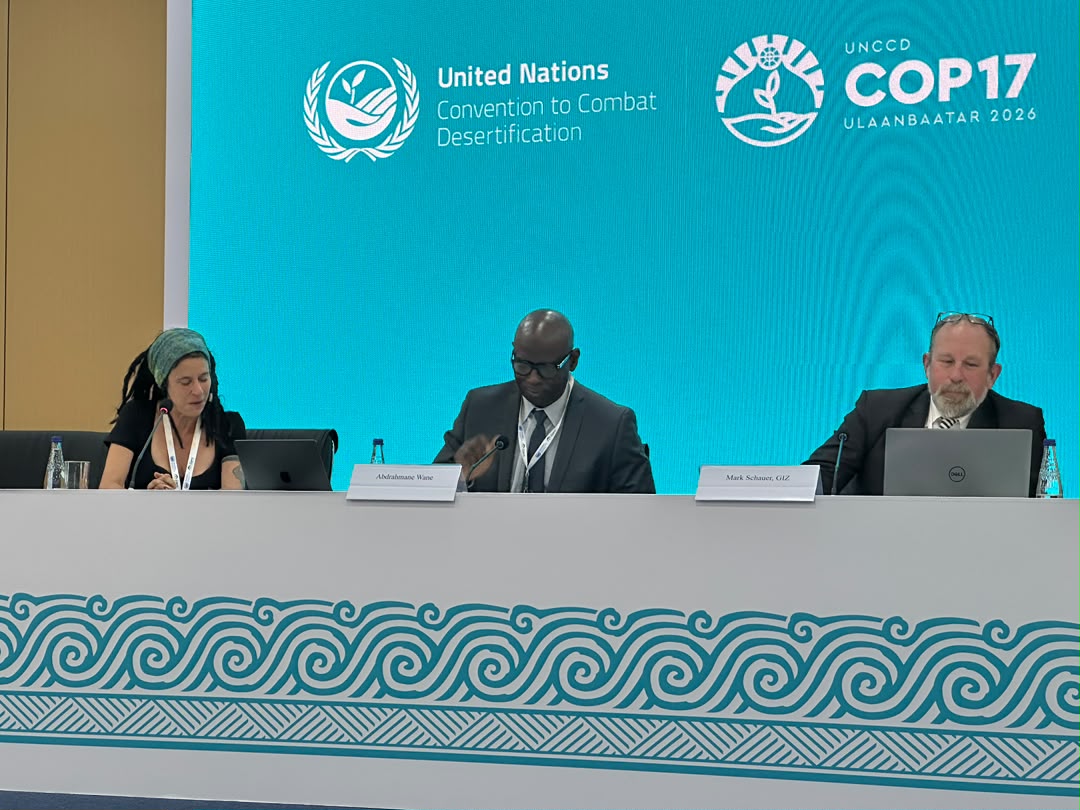
The experts, Mark Schauer, a Senior Programme Officer at GIZ and Abdrahmane Wane, Regional Director for West and Central Africa, ILRI, made the case for increased investment in rangeland restoration during a presentation of the new report on Rangeland investment at the ongoing 17th session of the United Nations Convention to Combat Desertification (UNCCD COP17) in Ulaanbaatar, Mongolia.
According to them, the economic returns from restoring rangelands provide a strong business case for governments, development institutions and private investors to commit more resources to sustainable rangeland management.
According to the researchers, the report argues that successful restoration should be measured not only by the number of hectares restored or the amount of vegetation recovered, but also by improvements in the livelihoods and resilience of communities that depend on rangelands.

Responding to PREMIUM TIMES’ questions about why investors should invest in rangeland restoration, one of the experts said the findings demonstrate that the sector has a clear economic rationale.

“From $4 to $6 can be generated if we invest with one,” Mr Wane said, explaining that the finding demonstrates that investment in rangeland restoration “is not just about charity” but makes economic sense.
He said the report drew on case studies from different parts of the world, including Brazil, West Africa and Mongolia, to demonstrate how restoration could deliver environmental and economic benefits.
More than restoring landscapes
Beyond restoring degraded landscapes, the expert said investments must contribute to healthier ecosystems, higher and more diversified incomes, and lower vulnerability among populations living in rangeland areas.
They said the approach is particularly important because pastoralists and other communities living in rangelands have accumulated valuable knowledge about managing their ecosystems over generations.
“Recognise the front-line custodians as personalities, because they are living there. For generations, they have been paying to maintain,” Mr Wane noted.
The report therefore makes a case for investors and policymakers to recognise pastoralists not simply as beneficiaries of restoration programmes but as critical actors in maintaining rangeland productivity.
On his part, Mr Schauer said businesses whose value chains depend on rangelands also have a direct incentive to invest in restoration because healthier landscapes reduce risks to their operations.
“If you have businesses who are depending on these rangelands, investments into improved rangelands is also decreasing the risks for their businesses,” he said.
“We want them to invest in sustainable rangeland management, in restoration, to maintain these value chains and their line of work.”
Public money can unlock private capital
During their presentations, these experts acknowledged that private investment alone cannot address the scale and complexity of rangeland degradation.
Insecure land rights, weak governance, the marginalisation of pastoralists and high transaction costs can make rangeland projects difficult to finance and scale, they argued.
They consequently called for public investment to reduce risks and create conditions that can attract private capital, including through blended finance.
“Public investments need to be done to decrease risks and provide an option for crowding capital,” Mr Wane said.
The report examines several innovative financing mechanisms that could help channel investment into rangeland restoration, including blended finance and debt-for-nature swaps.
The experts said placing an economic value on rangelands could provide policymakers with a stronger argument for mobilising both public and private finance.
“Economics can be some kind of language” through which the value of rangelands can be communicated to decision-makers and investors, one of the presenters said.
Africa can benefit
The findings are particularly relevant to Africa, particularly in Nigeria/ West Africa, where large populations depend directly on pastoralism and other rangeland-based livelihoods, while degradation, climate change and land-use pressures threaten the productivity of these ecosystems.
At the ongoing COP17 negotiations in Mongolia, the theme of this year’s conference is “Restoring Land, Restoring Hope”, and conversations in most meeting rooms have centred on rangeland restoration and sustainable finance mechanisms.
This convening coincides with the International Year of Rangelands and Pastoralists, highlighting the urgent need to heal degraded drylands and protect the livelihoods of pastoral communities worldwide.
The experts explained that investment must go beyond restoration activities to include access to water, healthcare, climate information, finance, insurance, improved livestock genetics and secure land and resource rights.
ALSO READ: ANALYSIS: COP17: Top issues dividing, shaping ongoing negotiations in Mongolia
“There is no successful investment without also taking into account an improvement of pastoral livelihoods,” one of the experts said.
They also stressed the need to protect pastoral mobility, which they described as an important adaptation strategy in increasingly unpredictable climatic conditions.
The experts said indigenous knowledge remains essential but must be complemented by scientific research as climate change alters environmental conditions.
For instance, changing temperatures, water availability, and extreme weather events can render traditional management practices insufficient in some locations, requiring pastoralists to have access to up-to-date climate and scientific information.
With the report estimating returns of up to $6 for every $1 invested, the experts said the message for investors is increasingly clear: restoring rangelands can be both an environmental necessity and a viable economic opportunity.
Discover more from Premium Times Nigeria
Subscribe to get the latest posts sent to your email.
