

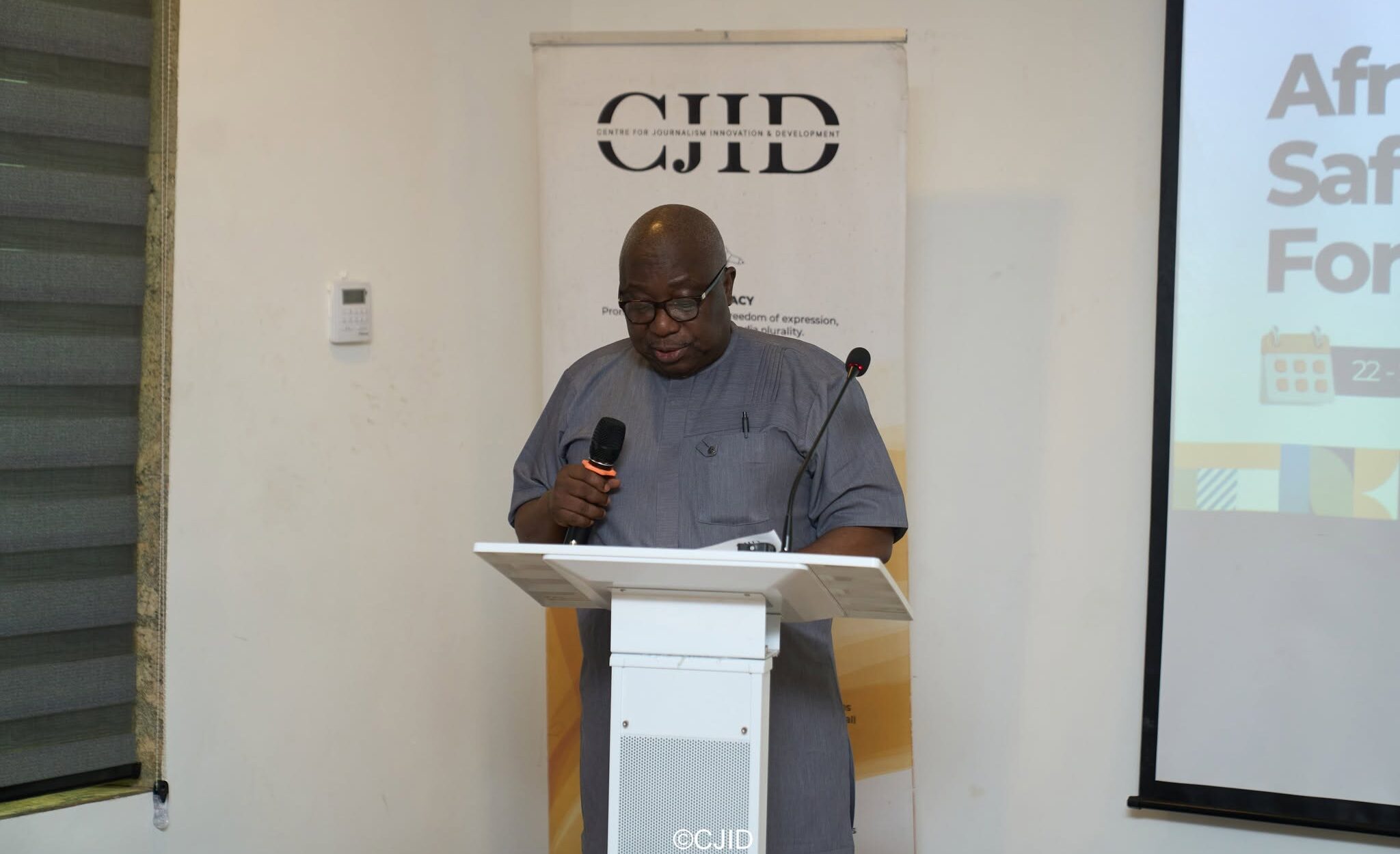
PREMIUM TIMES publisher Dapo Olorunyomi on Thursday encouraged journalists to take cognisance of the narratives they push to the public.
Mr Olorunyomi said this is important because “narratives have now become a weapon; the same pen that records testimony can distort it.” He said this at the Premium Times Academy training for journalists in Abuja.
Premium Times Academy is the capacity-building arm of the Premium Times Group. It began a two-day training on peace- and conflict-sensitive reporting for journalists from various media outlets across the country on Wednesday.
It brought together top academic and media experts to lead sessions aimed at improving conflict reporting in the country.
For over a decade, Nigeria has faced conflicts that have affected all its geopolitical regions. These include the Boko Haram attacks in the North-east, banditry and kidnapping in the North-west, communal crises in the North-central, militancy in the South-south, kidnappings, farmer-herder clashes in the South-west and agitations of secession in the South-east.
Mr Olorunyomi encouraged journalists to report conflict with utmost sensitivity. “Language can shape a situation; misnaming and appropriate naming are important,” he said, while stressing that poor narratives have devastating consequences, including deaths, displacements, and tearing families apart.

Mr Olorunyomi also stressed the importance of providing context while reporting conflict. “Suffuse your work with a lot of contexts; it weakens the harm and danger events could lead to.”
News gathering and writing in era of hate speech
Similarly, PREMIUM TIMES’ Editor-in-Chief, Musikilu Mojeed, led the conversation on how the media could gather news and write in the era of hate speech.
Mr Mojeed said journalists must frame their stories to foster peace. “Peace is important. If you stoke a crisis, you might not know how it will end.”
He said media houses should not amplify hate propagandists but should portray them for who they are and ensure sufficient context condemning their claims.
He noted that hate speech undermines social cohesion, fuels division, and legitimises extremism, therefore, journalists must learn to distinguish legitimate criticisms from hate-filled rhetorics.
Danger of ethnic profiling
The Executive Director, International Centre for Investigative Reporting (ICIR), Dayo Aiyetan, also said that the media “plays an important role in conflict.”
“By doing our job, we can contribute to the resolution of conflict and not worsen it,” the ICIR boss said.
While discussing the danger of ethnic profiling, Mr Aiyetan said ethnic profiling is irresponsible journalism. “If an individual commits a crime, is the factor of ethnicity relevant to the report?”
He urged the media to avoid using identity to explain behaviour. While he noted that journalists may reference ethnicity to tell a story when backed by evidence, he strongly condemned using it to fuel collective blame and criminality.
“A careless description can travel much farther than the original story,” Mr Aiyetan emphasised.
READ ALSO: CJID, NHRC sign MoU to strengthen press freedom and journalists’ safety
Verifying social media posts in the era of AI
The Research and Digital Investigations Manager, Centre for Journalism and Innovation Development (CJID), Silas Jonathan, taught participants how to spot and verify AI-related content sharing tools and experiences.
During the session, Mr Jonathan raised a critical question that can help journalists identify AI content: “What narrative is the content trying to push?”
He explained that this is vital because AI accelerates the creation of disinformation, lowers the cost of fabrication, and can potentially escalate conflict.
Mr Jonathan encouraged media personnel to only “verify the people using AI to mislead the public.”
Discover more from Premium Times Nigeria
Subscribe to get the latest posts sent to your email.
