

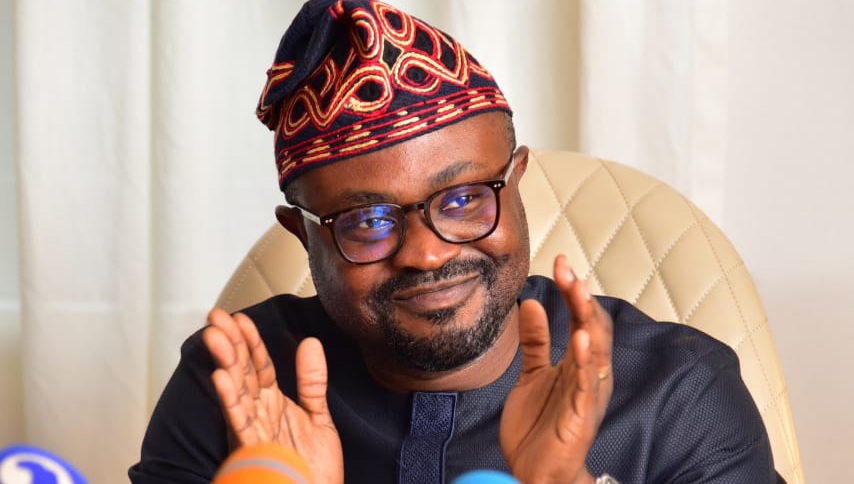
Israel Fagbemigun
For decades, renewing a Nigerian passport was synonymous with frustration. The process often involved repeated visits to immigration offices, hours spent in queues, uncertainty over timelines, and in some cases, allegations of unofficial payments to fast-track applications.
For Nigerians living abroad, the experience could be even more demanding, requiring long-distance travel to embassies or high commissions, hotel expenses and time off work just to complete what should have been a routine administrative procedure.
Yet across the United Kingdom, a growing number of Nigerians now speak of an entirely different experience, one that would have sounded unrealistic only a few years ago.
From Birmingham and Coventry to Essex, London, Newport and Leeds, Nigerians living in these locations said that they can now renew their passports from the comfort of their homes and have their travel documents delivered directly to their residential addresses in a matter of days.
The development has become one of the most visible outcomes of the contactless passport renewal system introduced by the Ministry of Interior, Olubunmi Tunji-Ojo under the administration of President Bola Tinubu.
For many beneficiaries in the UK, the reform is not merely about convenience. It represents a complete reimagining of how government services should function in the digital age.
A System That Once Tested Patience
Before the reforms, renewing a Nigerian passport in the UK often required applicants to travel to the Nigerian High Commission in London regardless of where they lived.
For residents of cities such as Coventry, Birmingham, Leeds or Cardiff, the journey could consume an entire day and involve considerable transport costs.
Applicants frequently complained about lengthy waiting periods before securing appointments and even longer delays before receiving their passports.
Birmingham-based Nigerian community figure, Timileyin Gbenga, said he experienced the old system personally.
“I was applying for my passport through the normal process. From the application time when I applied online to the time I got my passport, it took me more than six months.
“I had to travel from Birmingham to London to the Nigerian High Commission for biometrics, “ he said.
According to him, the difference between the old process and the new contactless system is difficult to overstate.
“But when I used the contactless process for a family member, it took less than two weeks from the day we applied to the day the passport was delivered.”
For many Nigerians abroad, stories such as Gbenga’s are familiar. The inconvenience of travelling hundreds of kilometres for biometric capture, only to repeat the journey later for passport collection, had become an accepted reality. That reality has now begun to change.
A Passport Without Leaving Home
The most celebrated aspect of the new system is not necessarily the speed of processing but the ability to complete the entire process remotely.
Applicants can upload required documents, complete enrolment, make payments and track progress online before receiving their passports through delivery services.
For Essex resident, Adiku Adeola Victoria, the process represented a dramatic improvement over previous experiences. “I renewed my passport last month and it was quite easier. I had it renewed right from within my house and I got it after a few days — let’s say like one week after,” she said.
The experience was convincing enough that she encouraged a friend who intended to travel to London for renewal.
“My friend had planned to travel to London to renew her passport. I told her I’ve done mine and I explained the whole process to her.
“So, she went ahead to do hers as well. And within two weeks, it was also sent to her home.”
In Newport, South Wales, Adiku Adeyemi recounted a similar experience involving his wife.
“It was delivered back to our house just in a very few days after we registered for it,” he said.
Such testimonies have become increasingly common among members of Nigerian communities across the UK. For many applicants, the arrival of a Nigerian passport at their doorstep is more than a logistical achievement. It is symbolic proof that public service delivery can be efficient.
Five Days Instead of Six Months
Perhaps the most remarkable aspect of the reform is the reduction in processing times.
Engineer Rufus Idowu, an automation engineer with Royal Mail and a member of the Nigerian community leadership in Coventry, said some applicants had received their passports in as little as five days.
“We’ve had some of our members that collected their passports within five days. They processed everything in their room and it came through to them.”
Similarly, Adebayo Segun of Leeds described the turnaround time as unprecedented.
“I applied for my son and I got that passport within four days, which has never happened before in the history of Nigerian government.”
For diaspora Nigerians accustomed to waiting several months for passport renewals, such timelines represent a fundamental transformation.
The contrast is particularly significant because passport delays have historically generated some of the loudest complaints among Nigerians abroad.
In the past, many travellers missed planned trips or endured prolonged uncertainty because of delayed passport processing. The new system appears to have substantially reduced those concerns.
Matching Global Standards
For Dr. Adekunle Shonola, President of Nigerians in Coventry and a senior lecturer in Artificial Intelligence and Data Analytics at Coventry University, the reform demonstrates Nigeria’s ability to embrace global best practices.
“I could remember in those days, we used to travel all the way from Coventry to London just to capture biometrics, then go back again just to get a passport.
“It takes roughly more than six months. But nowadays, I’ve seen members of our community get their passports within one week.”
Shonola, who also holds British citizenship, said the experience increasingly resembles the efficiency associated with government services in developed countries.
“The Nigerian government, in terms of obtaining passports, has been able to level up with the UK and the Western world in that regard.
“This is a very welcome development.”
His assessment is echoed by Coventry resident Gbenga Ogunderu.
“Back then, a couple of years before this government, we were experiencing a very funny process — analog, backwardness.
“But now we are experiencing something very remarkable. You can be in the comfort of your home and make applications and get it at your doorstep without stress.”
According to him, the reform reflects what modern governance should look like.
“This is 2026. We should be doing this, not the other way around.”
Shonola believes the next stage of reform should focus on universal access.
“If they can collaborate with other departments in charge of networking and making sure the system and database integrate and work very well, that would be helpful.
“It should be uniform — not only for Nigerians in the UK, but for everyone obtaining a Nigerian passport regardless of where they are.”
His comments reflect a broader sentiment among diaspora Nigerians who view the UK experience not as an end point but as proof of what is possible.
For Ahmed Oyelade, another Coventry resident, the significance of the reform extends beyond passports.
“What they have been saying is there is a large improvement in the system. Now they can stay in their various homes to make an application for their renewal and under two to three weeks they will get their passport renewed without going through the previous stress.”
He said the development has helped restore confidence in government institutions.
“The Minister of Interior is not just there again for announcing public holidays.
“Now we have seen the reforms working.”
Sustaining The Momentum
While applauding the reforms, beneficiaries also caution that sustaining the gains is just as important as achieving them.
Idowu said consistency would determine whether the progress becomes permanent.
“The Western world that we see today moving faster — there is nothing more than sustainability.
“If they can sustain it, we will soon get to our promised land. If we start a good thing, we shouldn’t be distracted.”
For now, the stories emerging from the UK represent a rare example of Nigerians praising a government service not merely for improving, but for exceeding expectations.
