

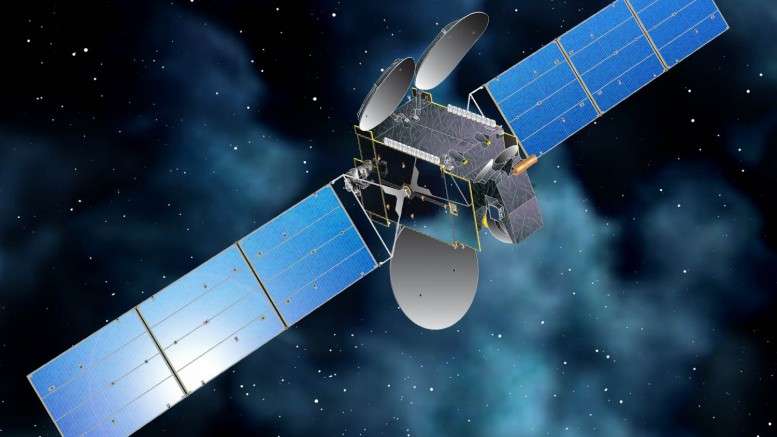
The Federal Government has approved the next phase of Nigeria’s plan to expand its satellite capacity with the acquisition and deployment of NIGCOMSAT-2A and NIGCOMSAT-2B.
The approval by the Federal Executive Council (FEC) clears the way for Nigeria Communications Satellite Limited (NIGCOMSAT) to proceed with the two next-generation communications satellites.
The satellites are expected to improve internet and communications services, particularly in areas where building traditional telecom infrastructure is difficult or too expensive.
NIGCOMSAT said the new satellites will provide additional capacity for broadband internet, broadcasting, business communications and government services.
They are also expected to improve access to digital services in underserved and hard-to-reach communities.
Jane Nkechi Egerton-Idehen, managing director and chief executive officer of NIGCOMSAT, described the FEC approval as a major milestone for the company and the country.
“NIGCOMSAT-2A and NIGCOMSAT-2B will strengthen our national satellite capacity, expand connectivity and support critical communications across the country,” she said.
She added that the company’s focus would be on ensuring that the investment delivers measurable benefits to Nigerians and strengthens NIGCOMSAT’s position in the global satellite and digital economy.
The satellites will complement existing terrestrial broadband networks by providing coverage in locations where conventional telecom infrastructure may not be commercially viable.
Beyond internet access, the additional satellite capacity is expected to support services in education, healthcare, agriculture, financial services, broadcasting and government.
The project is also expected to strengthen communications for critical national needs, including security and defence, while reducing Nigeria’s dependence on foreign satellite infrastructure.
NIGCOMSAT said the project could also create opportunities for local businesses in areas such as telecommunications, broadcasting, satellite terminals, ground infrastructure, technical support and systems integration.
It is expected to contribute to the development of local expertise through technology transfer, professional training and the growth of skills in satellite engineering, network operations, cybersecurity and other space-related technologies.
Following the FEC approval, NIGCOMSAT will move into the next stage of the project, which includes engaging technology partners, finalising contracts and undertaking the technical planning required for the manufacture, launch and deployment of the satellites.
Thales Alenia Space of France and Israel Aerospace Industries (IAI) will deliver the satellites, while NIGCOMSAT will oversee implementation in collaboration with the Federal Ministry of Communications, Innovation and Digital Economy and other relevant stakeholders.
The government said the investment is part of its broader effort to expand digital infrastructure, improve national connectivity and increase the use of satellite technology in Nigeria.
For Nigerians, the main expected benefit is wider access to reliable communications, particularly for communities that remain poorly served by conventional telecom networks.
NIGCOMSAT, a federal government-owned satellite communications company, manages and commercialises Nigeria’s communications satellite assets and provides services for broadband, broadcasting, businesses, government and other strategic users.


