

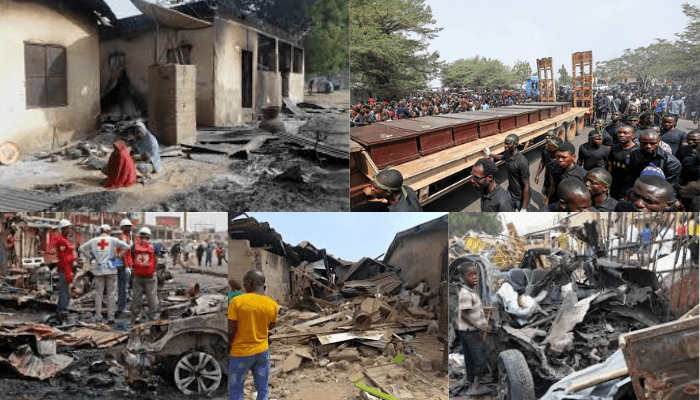
Nigeria’s security crisis is showing signs of a worrying geographic shift, with parts of Niger and Kwara states emerging as new areas of terrorist activity and forcing residents in some border communities to flee into neighbouring Benin Republic.
The development is raising concerns among security analysts and residents that the threat traditionally associated with the North-East and, more recently, the North-West, is gaining a foothold in the North-Central region.
Borgu Local Government Area of Niger State has become a particular concern following a series of attacks in communities around the Dekera axis, where residents have reportedly been killed, abducted and displaced.
Security analyst Charles Pen said the development suggested a gradual movement of the epicentre of insecurity towards Niger and Kwara states, warning that the government needed to prevent armed groups from establishing deeper operational networks in the area.
“What happened in Dekera village is utterly disturbing,” Pen said. “This community shares a boundary with the Benin Republic, and most of our displaced persons fled to the Benin Republic. It has a grave security implication for Nigeria.”
He said the authorities needed to act quickly to secure communities in the area and restrict the movement of armed groups.
“There is a gradual shift of the epicentre of insecurity from the North-East to the North-Central,” Pen said. “In the North-Central, particularly in Niger and Kwara states, before it used to be Benue and Plateau, but it is gradually moving to Niger and Kwara.”
Residents flee to Benin
The latest attacks have heightened fears among residents of Borgu, a vast local government area whose location along Nigeria’s border with Benin gives the security crisis implications beyond the immediate communities affected.
Residents have reportedly begun abandoning villages following repeated attacks by armed groups.
About two weeks ago, at least 40 bodies were reportedly buried after an attack in which hundreds of villagers were abducted in Dekera and neighbouring communities in Borgu.
The victims reportedly included traditional and religious leaders and Muslim worshippers.
Pen said the attacks had already triggered displacement, with some residents crossing into Benin Republic while others moved to larger communities in Niger and Kwara states.
“The last attack completely decimated the entire community, and a lot of them left the community and moved out of the country,” he said.
He said some residents had started returning to their communities before another attack during Friday prayers forced them to flee again.
The attack reportedly targeted worshippers and residents in Dekera and three adjoining communities.
A vast and difficult terrain
The security challenge is compounded by Borgu’s vast landmass and its proximity to major waterways, forests and international borders.
Borgu covers roughly 11,000 square kilometres, according to figures cited in the report, making it substantially larger in land area than Lagos State and several states in the South-East.
Its size and location create significant challenges for security agencies seeking to monitor movement across remote communities and border areas.
The area also includes terrain around the Kainji Lake region, further complicating efforts to maintain effective security coverage.
For analysts, the concern is not simply the occurrence of individual attacks but the possibility that armed groups could exploit large areas with limited state presence to establish operational and logistical networks.
The wider North-Central region is particularly important because it serves as a corridor linking northern and southern Nigeria.
A sustained deterioration in security across the region could therefore have consequences beyond the communities directly affected, particularly for agriculture, road transport, trade and cross-border commerce.
Insecurity threatens farming and trade
The spread of violence is already disrupting economic activity in affected communities.
Farmers who abandon their fields risk reducing agricultural output, while insecurity on roads can increase the cost and risks associated with moving goods between production centres and markets.
Residents also face restrictions on movement as communities become increasingly dependent on security alerts and informal warnings about attacks.
Murtala Dantoro, the African Democratic Congress candidate for Borgu/Agwara Federal Constituency, called on President Bola Tinubu and the Federal Government to establish a permanent security presence in the area.
Dantoro said residents were living under growing pressure from killings, kidnappings, displacement and restrictions on farming and movement.
“We are not asking to be rescued after the fact. We are asking for security before the fact,” he said.
He also raised concerns about the destruction of a major bridge linking Borgu with the Republic of Benin, Kebbi and Sokoto states, saying the infrastructure was an important economic link for the area.
According to him, the loss of the bridge had disrupted movement and trade, worsening the hardship facing residents already affected by insecurity.
Amnesty calls for rescue of abducted worshippers
Amnesty International has also raised concerns over the abduction of worshippers in the area, urging Nigerian authorities to secure their release and address the broader rise in attacks on rural communities.
The organisation said worshippers were abducted during Friday prayers in Kpenya, Dekera District, Borgu Local Government Area, on August 21.
Amnesty said residents had reported that more than 80 people may have been taken, while other estimates of the number abducted were higher.
The rights group said the incident underscored the growing vulnerability of rural communities in northern Nigeria, where armed groups have repeatedly carried out mass abductions.
It called on the Nigerian authorities to do more to prevent further attacks, rescue victims and bring those responsible to justice.
Amnesty also said at least 2,000 people from the Dekera district had fled into neighbouring Benin Republic following the attacks, underscoring the scale of the displacement.
A widening security map
Nigeria has battled Boko Haram and Islamic State West Africa Province insurgencies in the North-East for more than a decade, while banditry and kidnapping have become major security threats across parts of the North-West.
The emergence of new attacks in Niger and Kwara states raises a different concern: the possibility of greater overlap between previously distinct theatres of insecurity.
Security analysts say the availability of large, difficult-to-monitor spaces, weak infrastructure and proximity to international borders can provide opportunities for armed groups to move, recruit, hide or establish supply routes.
The challenge for the government is therefore no longer limited to responding to attacks after they occur.
It is also about preventing armed groups from consolidating their presence in communities where insecurity remains relatively recent.
For Niger and Kwara, the stakes extend beyond security.
A prolonged deterioration could force more farmers from their land, disrupt trade routes, increase transport costs, deepen displacement and weaken economic activity in communities that depend heavily on agriculture and cross-border commerce.
The movement of residents into Benin Republic is an early warning of how quickly a local security crisis can develop into a wider humanitarian and economic problem.
For the Federal Government and security agencies, the priority will be to prevent the Niger-Kwara corridor from becoming another established theatre of Nigeria’s prolonged fight against terrorism and organised insecurity.


