

Linus Aleke in Abuja
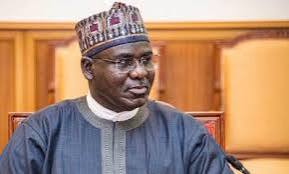
A new book authored by Dr Mohammed Abubakar has offered a scholarly assessment of the leadership reforms and institutional changes implemented in the Nigerian Army during the tenure of former Chief of Army Staff, Lieutenant General Tukur Yusuf Buratai (Rtd), between 2015 and 2021, a period marked by insurgency, banditry and widespread security challenges.
Titled Military Transformational Leadership in Action: The Buratai Era and published by Sprezzatura Publishing Ltd, the book examines what the author describes as “transformational leadership in action,” focusing on how military doctrine, training, troop welfare, morale, logistics and civil-military relations were deliberately restructured to respond to Nigeria’s evolving security environment.
Drawing on military records, policy documents, interviews and extensive analysis, Dr Abubakar explores three key areas: the adaptation of the Nigerian Army’s operational doctrine to confront asymmetric threats posed by Boko Haram and ISWAP, reforms in training, logistics, equipment and command structures aimed at building a more professional and responsive force, and the impact of leadership decisions on troop morale, regimentation and public trust.
According to the author, the Buratai era serves as a case study in crisis leadership, highlighting the choices, innovations, trade-offs and lessons that can inform future military and national leadership. He argues that the lessons from the period extend beyond the battlefield, offering insights into institution-building, sustaining morale under pressure, reforming systems during crises and strengthening public confidence in state institutions.
Dr Abubakar further noted that the book provides a valuable reference for students of leadership, governance and security studies who seek to understand how leadership is tested during periods of national uncertainty.
The book will be formally presented on 16 September 2026 at the Transcorp Hilton Hotel, Abuja, during an academic discourse featuring retired senior military officers and professors who will critically examine its findings and draw lessons for Nigeria’s security sector and leadership development.
