
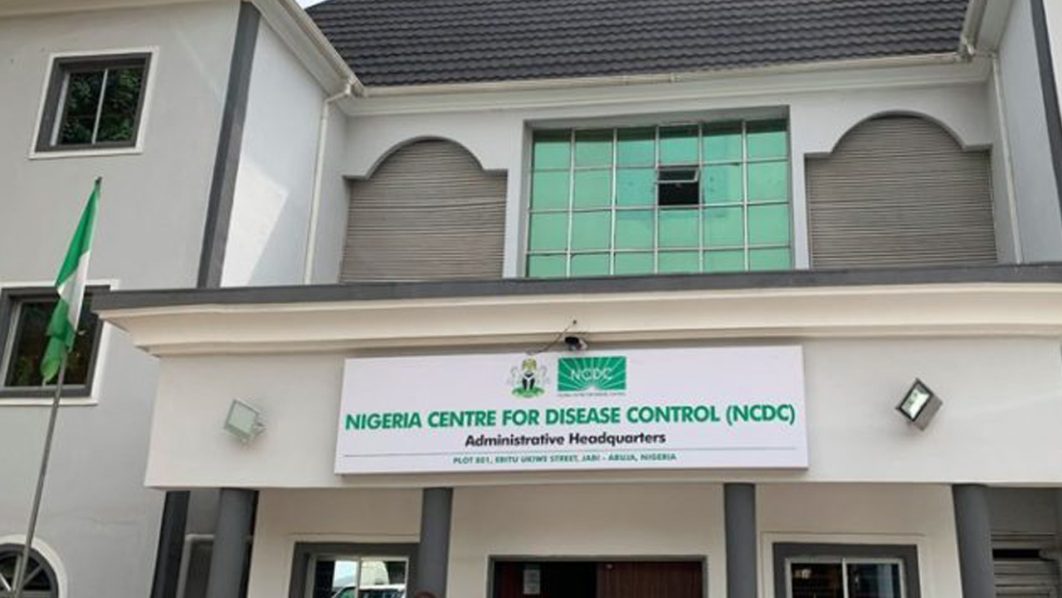
The Nigeria Centre for Disease Control and Prevention (NCDC), in partnership with Resolve to Save Lives (RTSL), has launched a guide to help Nigerian states review and strengthen their public health laws.
The Nigeria Public Health Legal Reform Guide was launched on Wednesday in Abuja.
It provides a structured approach for states to identify gaps in existing legislation, develop appropriate legal reforms and navigate the executive and legislative processes required to enact them.
Speaking at the launch, the NCDC Director-General, Jide Idris, represented by Everistus Aniaku, Deputy Director and Head of the Subnational Readiness Strengthening Division, said the guide was developed in response to lessons from recent public health emergencies.
“Recent public health emergencies have reinforced a critical lesson: effective public health action depends not only on strong institutions, skilled personnel, and adequate resources, but also on clear, modern, and enabling laws,” Mr Idris said in his welcome remarks.

“Where mandates, powers, and coordination arrangements are unclear, delays in decision-making can occur, with serious consequences for lives, livelihoods, and national security”
Need for reform
The NCDC DG said the guide is intended to help states modernise their public health legal structures to keep pace with “emerging disease threats, evolving institutions, technological advances, and Nigeria’s obligations under the International Health Regulations (2005).”
He urged state governments, Houses of Assembly, Ministries of Health and Justice, public health institutions and development partners to take ownership of the guide and translate its recommendations into practical reforms.
The Attorney-General of the Federation and Minister of Justice, Lateef Fagbemi, who was represented by Piribonimibo Harry, Assistant Chief State Counsel in the Federal Ministry of Justice, also described law as an essential component of public health preparedness.
Fagbemi said public health security required legal frameworks at both the federal and state levels.
“The law provides the authority for public institutions to act, defines institutional mandates and responsibilities, establishes mechanisms for coordination, protects individual and community rights, and provides the foundation upon which public resources and governmental powers may be lawfully deployed,” he said.
He commended the NCDC’s Subnational Legal Reform Programme for bringing together state Ministries of Health and Justice, legislatures, public health institutions and other stakeholders to assess existing legal frameworks and support state-led reforms.
RTSL speaks on assessment
The Executive Director of RTSL, Nanlop Ogbureke, said the launch builds on work that began with a 2019 national legal assessment, which highlighted the need for deeper subnational legal assessments and reforms.
Ogbureke said the assessment underscored the shared responsibilities for health across Nigeria’s three tiers of government and the need for legal frameworks.
She said the organisation’s collaboration with the NCDC had since involved State Ministries of Health and Justice, State Houses of Assembly, public health institutions and other stakeholders in reviewing existing laws, identifying gaps and developing reforms.
According to Ogbureke, the significance of the new guide is that it translates those experiences into a practical and actionable resource, providing governments with a pathway from legal assessment to reform and ultimately to implementation.
She stressed that public health legal reform requires the involvement of public health professionals, policymakers, legislators, regulators, communities and other stakeholders.
Ogbureke also said some states had already made progress in developing new legal instruments for health security. However, there is still a need to expand and accelerate such reforms nationwide.
She identified the incoming World Bank Health Security Programme as an opportunity to scale up subnational public health legal reforms, noting that legal preparedness was a key intervention for strengthening health security systems.
“Our collective responsibility is to ensure that it becomes more than a publication on our shelves. We must use it, adapt it, share its lessons, and support states and institutions to translate its guidance into stronger laws, stronger institutions, and better public health outcomes,” she added.
Reform process
The guide is designed to help states move from identifying weaknesses in their laws to developing and implementing reforms.
A review of the guide shows that the reform process involves five main stages: legal assessment, validation, drafting, stakeholder review and consensus building, and executive and legislative engagement.
It also contains practical tools, including a Subnational Legal Assessment Tool, a Legal Mapping Tool, a Model Public Health Security Bill, Guiding Questions for Drafting Public Health Laws, and a Gender Gap Assessment Tool.
Public health laws outdated in some states
The need for the guide, according to its overview, is partly linked to gaps identified in Nigeria’s Joint External Evaluation (JEE) of its capacity to prevent, detect and respond to public health threats.
Nigeria conducted its first JEE in 2017 and a second in 2023. Legal instruments were among the areas assessed. The 2017 assessment identified the need to strengthen legislation, regulation, and policy to support the implementation of the International Health Regulations at the federal, state, and local government levels.
Although Nigeria has since enacted legislation, including the NCDC Act 2018, the 2023 JEE showed that further work was required, particularly at the subnational level.
The guide noted that some states were still relying on public health laws enacted several decades ago, before the development of systems and practices now central to health security, including Emergency Operations Centres, electronic disease surveillance, modern laboratory systems, data protection and One Health coordination.
The COVID-19 pandemic further exposed some of these gaps, including questions around institutional powers, disease reporting, data sharing, movement restrictions, coordination and emergency financing.
Existing reforms
The NCDC said the guide was developed from several years of work with states rather than as a theoretical framework.
According to the guide’s overview, NCDC, through its Legal Unit and in collaboration with Resolve to Save Lives, has worked with states to assess their laws, identify gaps, validate findings and support reforms.
The methodology and tools have been used to develop model public health laws for Kano and Nasarawa states.
The document also noted that Kaduna, Kano and Jigawa states have enacted new public health legislation, while other states are at different stages of reform.
Fagbemi said the experience demonstrated the importance of federal and state collaboration in strengthening public health systems.
He urged government institutions to treat legal reform as an ongoing governance responsibility rather than an exercise undertaken only after a crisis exposes weaknesses.
“Legal reform should not be regarded as an occasional exercise undertaken only when a crisis exposes deficiencies in our laws. It must become an integral part of institutional governance,” he said.
Discover more from Premium Times Nigeria
Subscribe to get the latest posts sent to your email.
