

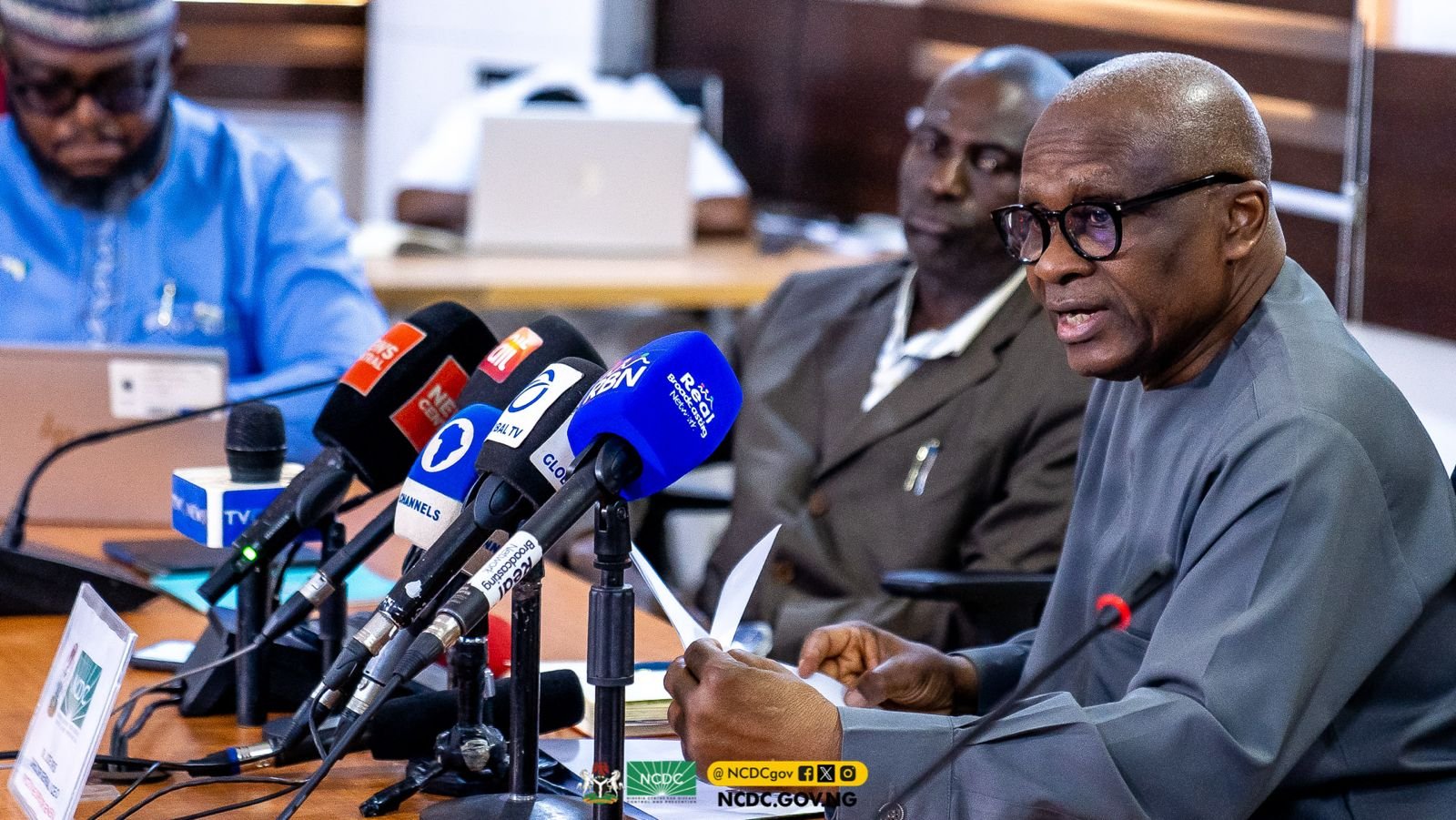
The Nigeria Centre for Disease Control and Prevention (NCDC) has expanded its health declaration requirement for international travellers after confirming an Ebola case in the Federal Capital Territory (FCT).
The agency’s Director-General, Jide Idris, announced the decision during a media briefing in Abuja on Sunday.
Mr Idris said the requirement initially applied to international travellers but was later restricted to passengers arriving from selected countries linked to the Ebola outbreak, including the Democratic Republic of the Congo (DRC) and Uganda.
“But with this case, we have reversed that directive,” he said.
He said the NCDC had sent advisories to the Federal Airports Authority of Nigeria (FAAN) and the Nigerian Civil Aviation Authority (NCAA), and expected further instructions to guide implementation in collaboration with airlines.
Airport screening
Mr Idris said Nigeria’s preparedness measures had focused on five international airports: Lagos, Abuja, Enugu, Kano and Port Harcourt.

He said Port Health Services was working with aviation personnel, immigration and customs officials to strengthen preparedness and screening at the country’s points of entry.
According to Mr Idris, the NCDC needs to coordinate with aviation authorities because it does not independently control airport operations.
He said agencies were working together to implement the required measures, while immigration and customs officials were involved at land borders.
Mr Idris also acknowledged operational challenges at Lagos airport, where ongoing construction had created difficulties. He said the NCDC would engage FAAN and the NCAA to address issues affecting Port Health Services’ work.
He added that access to restricted airport areas must follow established security procedures.
Ebola response
The revised screening measures form part of Nigeria’s response to a confirmed case of Ebola disease caused by the Bundibugyo virus in the FCT on 20 October.
As PREMIUM TIMES reported, the patient is a 42-year-old Ugandan woman who travelled to Nigeria from Uganda on 3 October. She developed symptoms on 6 October and sought medical attention before her infection was confirmed.
At Sunday’s briefing, Mr Idris said health authorities had identified 53 primary contacts linked to the patient. These comprise 44 people associated with the health facility where she received treatment and nine additional contacts, including household members. They attended to her at another facility and were members of the FCT team that collected samples.
He said contact tracing was ongoing and that officials were monitoring the identified contacts.
ALSO READ: Ebola: NCDC urges hospitals to act before laboratory confirmation
Health officials are following up with contacts for 21 days, the maximum incubation period for Ebola, to identify any symptoms that might indicate infection.
Mr Idris appealed to Nigerians identified as contacts to cooperate with public health officials, stressing that being identified as a contact does not mean a person has Ebola.
The NCDC is also strengthening infection prevention and control measures in healthcare facilities, supporting laboratory capacity and providing public health information to counter rumours and misinformation.
The agency urged Nigerians to rely on verified information from authorised public health sources and cooperate with response measures as investigations continue.
Discover more from Premium Times Nigeria
Subscribe to get the latest posts sent to your email.
