

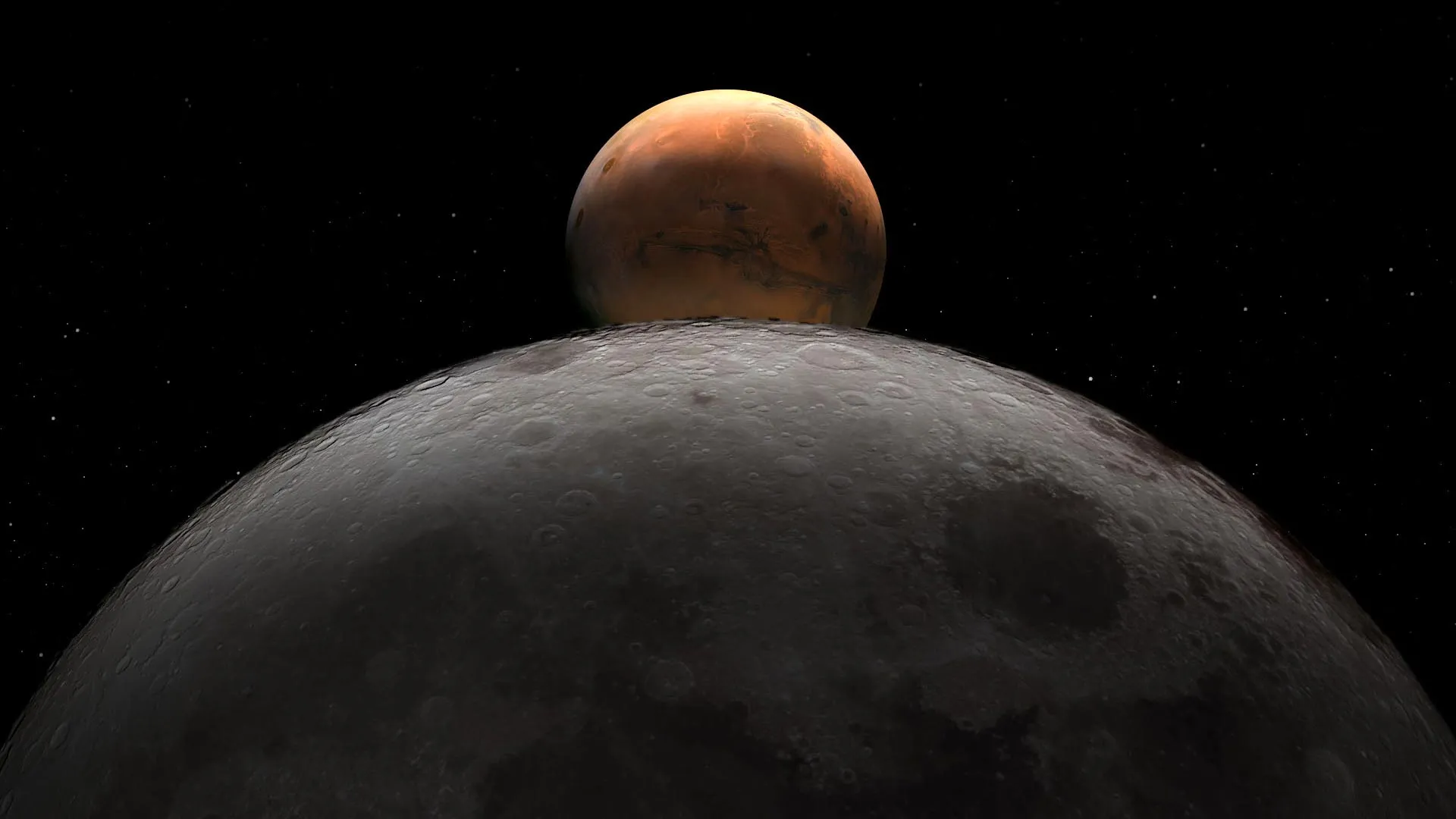
NASA has chosen 41 technology proposals from 37 American companies to help develop the capabilities needed for future missions to the Moon and Mars. The selections are part of the agency’s 2025 Announcement of Collaboration Opportunity (ACO), which is designed to accelerate innovations in areas such as space transportation, planetary surface operations, and infrastructure for long term exploration on the Moon.
“We are empowering American industry to become active partners in NASA’s missions to the Moon, Mars, and beyond,” said Greg Stover, director, Advanced Research and Technology Division in the agency’s Research and Technology Mission Directorate at NASA Headquarters in Washington. “By tapping into commercial industry, NASA can rapidly develop key capabilities to support its most ambitious missions while fostering the nation’s robust space economy.”
NASA Collaboration Program Supports Space Innovation
Rather than providing direct funding, the ACO creates partnerships that allow companies to work alongside NASA using the agency’s facilities, hardware, software, and technical expertise. In return, businesses can speed up development of technologies that may serve both commercial customers and future government space missions.
Since the program began in 2015, NASA has supported more than 110 projects through these collaborations. The agency estimates it has contributed about $30 million in resources, while participating companies have invested an additional $32 million. Individual agreements are expected to last between 12 and 24 months, with final timelines negotiated separately.
For the 2025 round, companies proposed technologies in areas identified by NASA as high priorities for public private partnerships. These include propulsion components, guidance and navigation systems, landing technologies, in space servicing, assembly and manufacturing, and energy management systems.
New Technologies for Moon and Mars Exploration
The selected projects cover a wide range of technologies that could strengthen future exploration missions.
Power generation
Lockheed Martin plans to advance a compact, modular power system designed to generate electricity in the Moon’s permanently shadowed regions, where sunlight never reaches. The technology is intended to help astronauts and equipment endure the extended lunar night. The company also will continue developing a wireless power transfer system that uses fiber lasers and a space based heat rejection system to improve the durability of power beaming technology.
In space logistics
Kall Morris Inc. will further develop Asteria, a supplemental payload attachment system designed for use with older, current, and future spacecraft. The system relies on a non destructive, controlled release adhesive that attaches without requiring built in mounting hardware. NASA says the technology could improve spacecraft maneuvering, object tracking, satellite protection, data collection, and mission life extension.
Dust mitigation technology
Moonprint Solutions, a small business, is developing flexible protective covers that shield equipment from the Moon’s highly abrasive dust. Because the covers can conform to complex shapes, they could protect a wide variety of components, including rovers, robotic joints, hoses, and other moving hardware. The technology could also support long term operations on both the Moon and Mars.
Supporting the Commercial Space Economy
NASA says the selected projects have the potential to benefit more than future exploration missions. As the technologies mature, they could strengthen the commercial space sector by opening new markets, reducing costs, expanding customer choice, and introducing entirely new capabilities for space operations.
