

“They’re making great progress,” Isaacman said of Blue Origin. “So plan A is very much still to launch the Mk. 1 on New Glenn. They are very committed to getting back in the business of launching New Glenn before the end of the year. And Plan A is looking a lot better today than it was weeks ago, just based on the progress that the Blue Origin team is making.”
NASA considering its options
However, he added that prudence demands that NASA should also study alternative launch vehicles for the Endurance mission as well as Blue Origin’s lander for Artemis III. Options include SpaceX’s Falcon Heavy or United Launch Alliance’s Vulcan rockets.
So NASA is closely watching Blue’s recovery. Isaacman said he receives daily updates from his team.
“We’ve got time into 2027 before we’re getting nervous,” Isaacman said. “If we start tracking towards mid-2027, that has implications for the Artemis III mission, and for uncrewed landers, and that would be more concerning.”
Cranes enter the picture
Also on Wednesday, Limp provided additional information about the company’s plans to return to flight.
“We continue to actively investigate the cause of the anomaly,” he wrote. “The vehicle is highly instrumented with extensive data from multiple camera angles and sensors, giving us confidence in our ability to identify and correct the root cause. Early analysis points to the aft section of the first stage.”
During the test anomaly, Blue Origin lost the lightning tower at its launch site as well as the massive transporter-erector, which moved the rocket from a nearby integration hangar out to the launch site and lifted it vertically for takeoff.
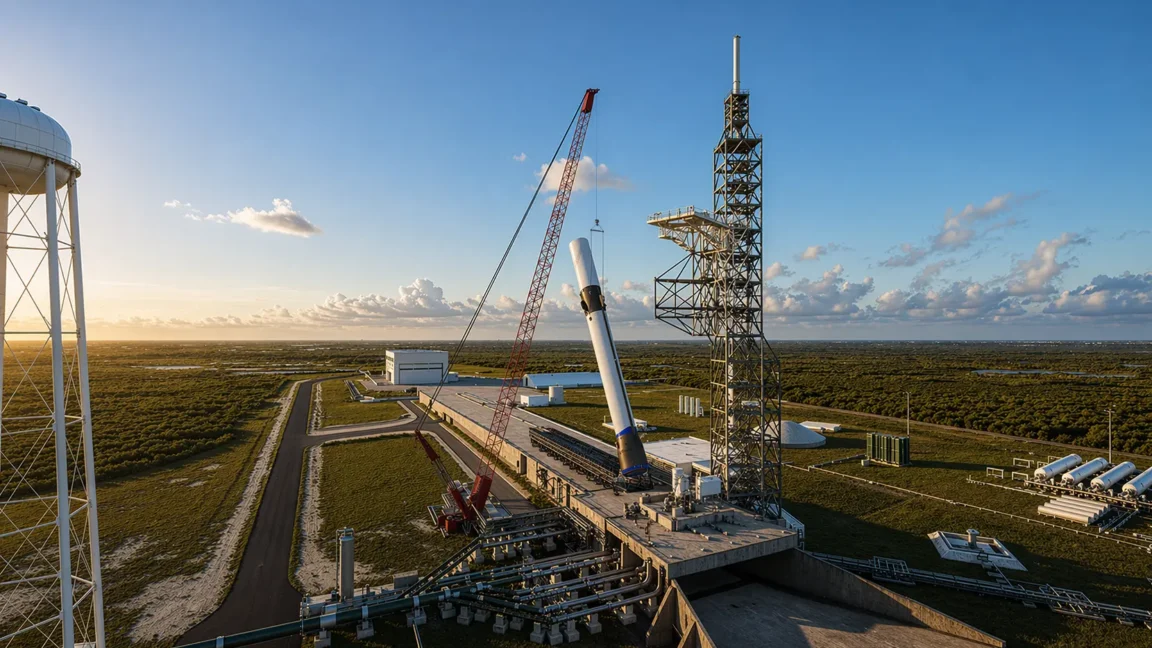
To expedite a return to flight, Limp said, the company is not rebuilding the same pad and is skipping construction of a new transporter-erector (which would take a long time). The company released a video showing how its engineers envision this process working. It involves using a crane to lift the integrated first and second stages onto the launch mount. Once there, and after pre-flight testing, a payload fairing would be placed atop the vehicle ahead of launch.
Isaacman lauded Blue Origin for this transparency as it moves toward returning to flight, noting the broad interest within the space community in this topic.
