
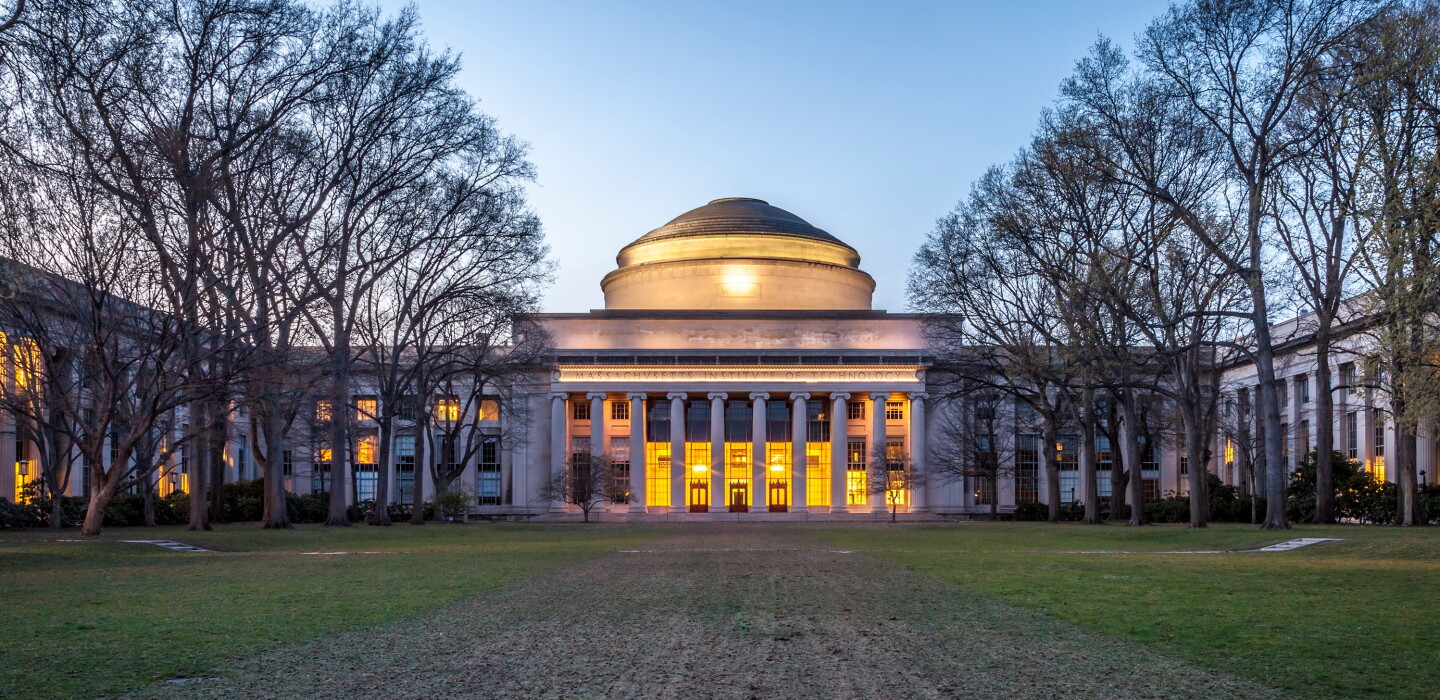
Millions of students attend schools where opportunities to study advanced math, computer science and other hands-on STEM subjects remain limited, data from the U.S. Department of Education shows. The Massachusetts Institute of Technology (MIT) is looking to narrow those gaps by taking some of its existing education programs nationwide.
This week the university announced MIT for America, an initiative to provide STEM workforce training programs for students in kindergarten through community college. According to a recent news release, students will have learning opportunities in three critical areas: math and problem solving, “constructive engagement” with artificial intelligence, and design and hands-on learning.
The news release cited “a critical national need” regarding STEM workforce training for students. Indeed, a 2022 report by the National Science Foundation (NSF), an independent federal agency, found that STEM occupations had grown faster than non-STEM jobs over the previous decade, while documenting persistent gaps in K-12 math achievement and the underrepresentation of several demographic groups among science and engineering degree recipients.
MIT’s news release pointed to low participation in hands-on STEM and computer science as evidence of the need for expanded training opportunities, citing data from Gallup and the Walton Family Foundation that 29 percent of surveyed middle and high schoolers had built electrical circuits. It also cited 2024 data from Code.org that found more than 60 percent of U.S. high schools offer a computer science course, but just 6 percent of students at the time of the survey were enrolled in one.
“The goal is to provide programs that are both scalable and high-touch, and make an impact across the country,” Professor Eric Klopfer, a faculty co-director of MIT for America and director of the Scheller Teacher Education Program and the Education Arcade at MIT, said in a public statement.
The MIT for America initiative expands upon one of the university’s existing programs, the MIT for America Calculus Project, wherein MIT students and alumni volunteer to facilitate in-person, high-dosage calculus tutoring to students nationwide. According to a 2023 survey by the RAND Corporation, only 60 percent of American high schools offered AP Calculus at that time.
The new initiative will emulate the MIT for America Calculus model, which the release said has been growing in footprint and overall impact.
Secondly, the news release said MIT for America will offer programs that target AI responsibility and ethics. The initiative will build off of an existing project, MIT Responsible AI for Social Empowerment and Education (RAISE), which provides educators with resources for incorporating AI into instruction while helping students build skills alongside the technology.
According to the news release, approximately 1 million students participated in MIT RAISE’s Day of AI event in July 2026, learning about AI and its responsible use in society.
“RAISE is about providing materials and training for teachers that helps them have conversations and productive activities around AI,” Klopfer said in a public statement. “It’s about understanding how AI works and discussing what the values are in your school. It has to be active, involving the students. If you try to force things about AI one way or the other, that will fail.”
A third focus will be expanding access to hands-on STEM learning through design, fabrication and other project-based experiences. MIT said that could include efforts based on its Regenerative Futures Challenge, which gives students opportunities to develop solutions to climate and sustainability problems, and on the Fab Foundation’s network of 300 U.S. fabrication labs, which provide learners with tools and curricula for hands-on design.
Together, the three focus areas reflect MIT for America’s broader goal of taking programs already underway and exporting them to more students and communities across the U.S.
“We live in an innovation-driven world, and it’s important to have an education that gives you access to it, whether that’s so you can be a fully engaged citizen or have the opportunity for economic mobility,” Cynthia Breazeal, a media arts and sciences professor and faculty co-director of MIT for America, said in a public statement.
