

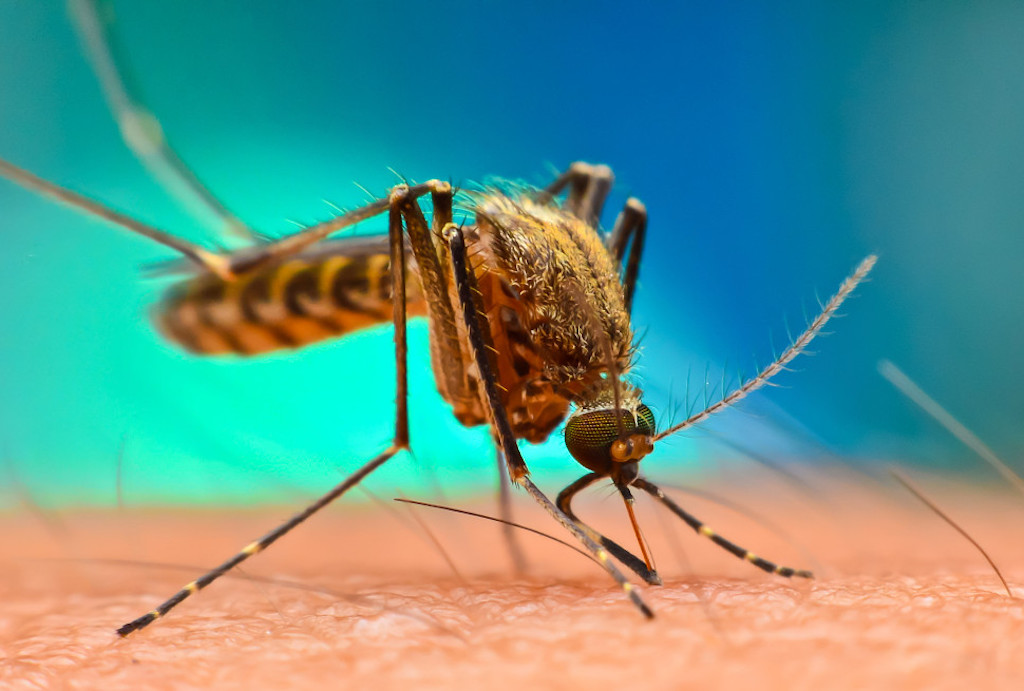
A worker at Frankfurt Airport in Germany has died of malaria in a rare outbreak believed to have been caused by infected mosquitoes brought into the country on an aircraft.
Five other airport workers have also contracted the disease and are receiving medical treatment, according to the BBC.
The airport operator, Fraport, confirmed the death on Wednesday. “Sadly, we must confirm that one employee has died as a result of the infection,” a Fraport spokesperson told the BBC.
The outbreak is being investigated by Frankfurt’s Public Health Department, with officials trying to establish how the workers became infected.
The BBC reported that the six infected workers are men who work in different areas and perform different jobs at the airport. None is known to have travelled to a country where malaria is common.

German health authorities believe the infections may have been caused by mosquitoes brought into Germany on an aircraft. Mosquito traps have now been installed at the airport, while captured mosquitoes are being analysed to determine their species and origin.
Rare outbreak
The cases are described as “airport malaria”, a rare form of transmission that can occur when an infected mosquito is transported on an aircraft or in luggage and later bites people at or near an airport.
Germany’s Robert Koch Institute (RKI), the country’s federal public health and disease control agency, said the first four workers became ill between 4 and 6 July.
The institute said malaria cases in Germany exclusively involve people who were infected while travelling to malaria-endemic areas, making transmission at a German airport unusual.
READ ALSO: WHO, Africa CDC warn of widening malaria funding gap in Africa
The last documented case of airport malaria at Frankfurt Airport was in 2023, the RKI said.
Frankfurt’s public health authorities have said the risk to the general population remains very low because malaria is not transmitted directly from person to person. It is spread through the bites of infected mosquitoes.
Malaria remains a major public health concern in Nigeria, although recent data show signs of progress.
In July, Malaria Consortium reported that malaria prevalence in Nigeria had fallen from 42 per cent in 2010 to 15.2 per cent in 2025.
Despite the decline, the organisation said Nigeria continues to carry one of the world’s heaviest malaria burdens, with children under five and pregnant women disproportionately affected.
Malaria is caused by parasites transmitted through the bites of infected mosquitoes. It is preventable and curable, but can become severe or fatal when diagnosis and treatment are delayed.
Discover more from Premium Times Nigeria
Subscribe to get the latest posts sent to your email.
