
This column today begins an occasional series to examine governance issues on the continent of Africa.
Africa is the richest of the seven continents in the world, and the second largest continent by land mass, though you would not guess that fact from looking at the distorted cartography of the globe that is used to put the continent down. Despite Chinua Achebe’s giant literary effort, through ‘Things fall apart’ , to debunk Joseph Conrad’s and Hugh Trevor-Roper’s wholesale labelling of the land as a ‘Dark Continent’, with no history or self-awareness before the advent of the white man, an aura of dark mystery and negative expectation still pervades any discussion about Africa.
A lot of developments on the continent since countries began to achieve independence from colonial rule have encouraged the narrative. Despite the colourful aura of the early generation of leaders such as Kwame Nkrumah, Mwalimu Julius Nyerere and Mzee Jomo Kenyatta, among others, who were inspirational arrowheads of anti-colonial struggles in their countries, things have not played out in a manner to match the optimism of the early days. In many cases the ‘fathers’ themselves have proved to be all too human in their psychological frailties. The attributes required to lead a successful ‘liberation struggle’ have looked somewhat different from what it takes to lead poor, uneducated masses, through the rituals of faulty ‘democracy’, on the path to national growth and rapid development. Many of the countries have descended further into poverty and strife, despite – and sometimes because of, the exertions of their ‘founding fathers’.
A blame game of sorts has ensued. The target has ranged from a purported intrinsic, perhaps genetic, inability of the black race to govern itself, as reflected in the alleged racist trope of the apartheid icon PW Botha, to projection of the responsibility onto the much hated, and much aped, Western world, as depicted eloquently in the classic anti-colonial volume ‘How Europe Underdeveloped Africa’.
Developing the nations of Africa was never going to be a stroll in the park. 1.59 billion people, living in the true geographical centre of the world, with a land mass of 30.37 million square kilometres, covering 20% of Earth’s surface, average among the lowest Human Development Indices in the world, despite flashes of brightness represented by tiny outliers like Seychelles and Mauritius. The continent holds 20% of global reserves of mineral resources and 14% of global total oil reserves.
The owners and inheritors of such a rich continent have no business with poverty. It is an anomaly that the leaders of the 54 nations on the continent are all too aware of. In many cases, they are making determined efforts to change the narrative.
It is interesting, therefore, to take a random spot view, akin to a slice of an image from a patient’s CT scan, of a few places, and see what is going on, and if there is anything new in prospect.
Take Namibia.
Namibia is a sparsely populated African country with a land area of 825,615 square kilometres and a population of only 3 million people or so. It is racially diverse, with 87% of Namibians being black, 6% white, and 7% of mixed race. The official language is English, though Afrikaans, German and some local languages are also spoken. It gained independence from South Africa in 1990 after a struggle led by the South West African Africa People’s Organisation (SWAPO), and supported by the international community. It is a country with a troubled history, which includes genocide committed by Germans against the local Herero and Nama people between 1904 and 1907 for resisting their colonial oppression.
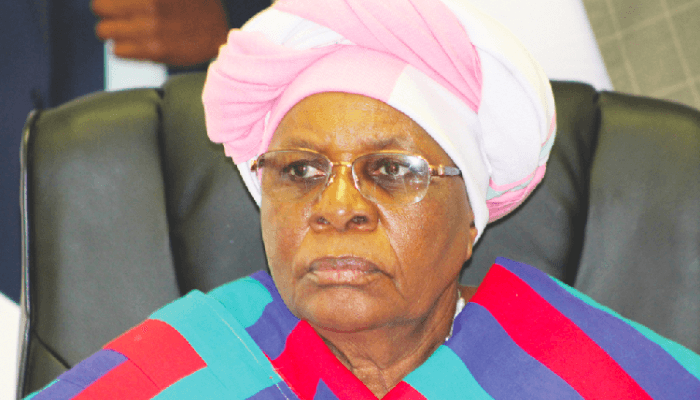
Netumbo Nandi-Ndaitwah, whose nickname is NNN, has been in office since 21st March, 2025. She is the fifth President of Namibia, and the first female. She had earlier served as Vice President, and before that as Minister of Women’s Affairs.
Namibia’s Liberation struggle brought it historically into close affinity with Cuba and the Eastern Block of nations, and many SWAPO stalwarts, like the President herself, received their education in Russia during the Cold War.
With a background in gender activism which is focussed on female education, equality and empowerment, and embedded in a traditional value system that is reticent about LGBTQ and abortion issues, NNN has always been an outspoken lady. Namibia is ranked as an upper middle-class country, but the wealth is in the hands of a small minority, predominantly white, and poverty is rife. She tries to draw a fine line between the racial harmony of Namibia and the situation in South Africa.
It is early days to speak of achievements in the office of President, at barely one year old. As Minister of Women’s Affairs, NNN had pushed Equality Laws and the combating of domestic violence. She had been an active voice internationally on Women, Peace and Security. As President she is driving a close relationship with the private sector to boost job creation, and powering a National Youth Fund dedicated to skills training, apprenticeship and support for Small Scale Enterprises led by youths. She has promoted community empowerment through grassroots programmes for after school and general development. She has decided to offer free education targeted at the poor in public universities and technical colleges. There is a vigorous land reform process in the works. National minerals, which with agriculture form the mainstay of the country’s economy, are to undergo local processing instead of being exported raw. Historical disparities leading to glaring inequities are in focus. There is a push to increase housing for the poor and increase investment in deprived regions.
Hifikepunye Pohamba, one of her predecessors as President, won the prestigious Mo Ibrahim Foundation prize for exemplary African leadership, commitment to democracy and peaceful exit from office in 2014.
Those are big shoes to step into. It would be interesting to watch NNN, and developments in Namibia, over the next few years.


