

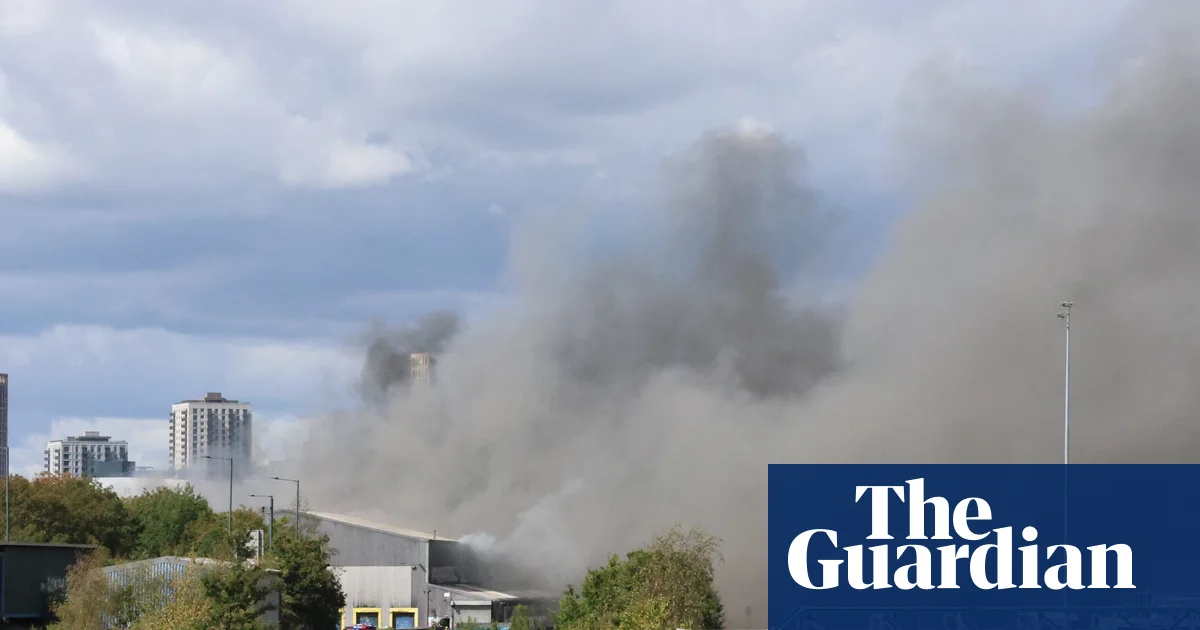
A large fire has broken out at a waste facility close to Wembley Stadium in north-west London, disrupting tube and train lines in the area.
Twenty fire engines and about 125 firefighters were sent to tackle the blaze at a mixed-waste facility on an industrial estate in Neasden, less than a mile from the venue.
There was no service on the entire Metropolitan line, which runs close to the blaze, and no service between Wembley Park and West Hampstead on the Jubilee line, with severe delays on the rest of the line, Transport for London said.
Rail services into London Marylebone were also disrupted.
A nearby Amazon warehouse, separate from the industrial unit involved, has been evacuated, according to PA Media.
A London fire brigade assistant commissioner, Andy Pennick, said: “The brigade was called at 11.36[am] to reports of a fire on Hannah Close, Neasden. Upon arrival, firefighters were met by a well-developed fire involving a waste transfer facility.
“Recognising the scale of the fire, the initial officer in attendance immediately requested 20 fire engines be mobilised to the scene.
“An industrial unit, approximately 100 metres by 150 metres, was alight. At the height of the fire around 125 firefighters were in attendance.”
Pennick added: “This is a protracted incident that will see crews on scene for the remainder of the day as they work to fully extinguish the fire.”
LFB earlier said that the blaze was under control by about 5pm. Its cause was not yet known and was under investigation, the LFB added.
after newsletter promotion
It is the third major fire at a recycling centre in London this summer.
Earlier this month, about 100 firefighters responded to a blaze at a facility in Deptford, which involved about 50 tonnes of stored household waste.
Fires at recycling centres caused by wrongly discarded lithium batteries, such as those found in vapes, are occurring at the rate of more than 10 a week, according to figures from the Environmental Services Association.
Battery fires at waste facilities are estimated to cost £1bn a year and are causing growing frustration among fire chiefs.
