

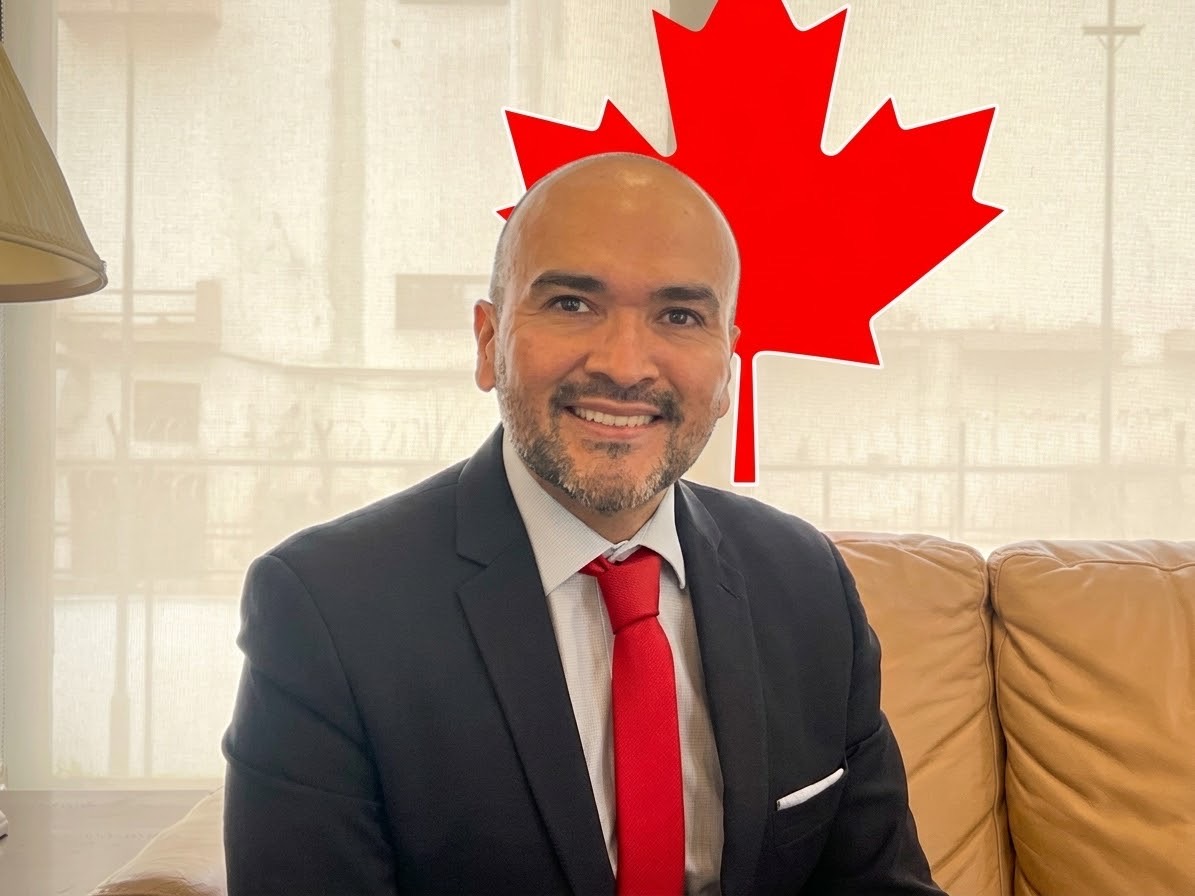
As Carlos Rojas-Arbulú concludes his assignment as deputy high commissioner at the Deputy High Commission of Canada in Lagos, he reflects on a two-year tenure marked by efforts to deepen trade, investment and business ties between Nigeria and Canada. In this exclusive interview with TAOFEEK OYEDOKUN, Rojas-Arbulú discusses the planned direct Lagos-Toronto passenger and cargo flights expected to begin in the second quarter of 2027, the prospects of doubling bilateral trade from about $3 billion to $6 billion, the planned resumption of negotiations on a Foreign Investment Promotion and Protection Agreement, and the role of the Nigerian diaspora in strengthening commercial links between both countries. He also reflects on his experience in Nigeria, Canada’s development partnership with the country, and why he believes the relationship has significant room for growth. Excerpts
Nigeria and Canada recorded about $3 billion in bilateral trade last year. Which sectors are driving this trade, and how would you assess the quality of the trade relationship over the years?
First of all, thank you very much for your time. I appreciate the interest. With regards to our bilateral trade, I start by saying that Nigeria is currently our second most important trading partner on the continent, followed by South Africa. But in any given year, that changes. Sometimes Nigeria comes first, or sometimes South Africa. So all this is to say that it is significant from the perspective of Canada.
That has been a bit of an evolution because, as you can imagine, the more we get to know each other, the more there may be interest in specific areas.
Traditionally, one of the areas where our trade has focused has been oil and gas because Canada is also an oil and gas country, like Nigeria. As a result, there is quite a bit of interaction between primarily Western Canada, the province of Alberta, and Nigeria, given the similarities, the same interests, and the ecosystem and suppliers in that space. So that is clearly an area where there has been real interest.
I think the second part is that you have a number of other sectors where we have seen interest in pushing the agenda further and creating greater opportunities for exchange. That goes from technology at large, we can talk about clean technology, fintech, app tech and other things.
That has been very interesting because we also know that Nigeria, particularly Lagos, is a hub for tech. Naturally, there are areas where more can be done in terms of innovations and technologies that can serve both countries, whether it is for the banking sector, the agricultural sector or renewable energy projects that we are seeing across the country.
Read also: Nigeria’s startup ecosystem draws Canada as both seek deeper business ties
There are also traditional sectors where there has been interest and focus. That varies depending on the opportunity and the time of the year. When it comes to agriculture, Nigeria is exporting some of its agricultural products, while Canadian companies are exporting manufactured goods. The same goes for conversations around infrastructure, mining and the creative industries.
We have had, and continue to push, the agenda of the creative sector, including film, music and food. Hopefully, we will be getting into fashion and other aspects of the creative economy.
If there is one element that is helping to connect the dots across these sectors and across our countries, it is clearly the very important Nigerian diaspora.
We can see that because Nigerian-Canadians or Canadian-Nigerians understand both countries and can see the opportunity, either for imports, exports or investment. They are better positioned to do that. For us, it has been a blessing and an important part of pushing the agenda forward.
What will it take to move the relationship from $3 billion in trade to a significantly higher number within the next five to ten years?
I would absolutely love to see our trade relationship double in the next five to 10 years. I think it is absolutely possible, and there are some factors that are key.
I made a point about the diaspora because it is so important to see some of these companies pushing forward. They understand both continents and cultures. They are perhaps a little bit more bold in terms of engaging with emerging opportunities.
Clearly, there is something we can do better to support and work with that diaspora that is moving the needle in terms of trade and investment and beyond.
The second thing is that while we have the conditions for growth, we have to raise awareness of the importance of this relationship as well as the opportunities that can come out of it.
Specifically, we need to do the necessary work to advise Canadian companies on what to expect in West Africa and Nigeria and how to do business in Nigeria. Our objective needs to be expanding the pool of Canadian companies that become more aware, more comfortable and take action, visiting the market, inviting Nigerian companies to come to Canada and connecting with the ecosystem here.
The same applies to the Nigerian side. In the last year, we have probably had about six trade missions to Canada with different objectives and sectors. Yet there is still a vast section of the Nigerian private sector that only knows Canada for education, which is already great, or immigration and visa-related matters.
We need to bring to their attention that if they are looking to expand internationally, they can expand into Canada. If they are looking to invest internationally, they can come to Canada. Canada can be a partner of choice.
If they are looking for a partner to help penetrate the Canadian market or with business opportunities and investment proposals, Canadian companies can potentially do that.
Those are two or three things that I find are key and that, together, can help us get to that doubling of trade. But it needs to be done with commitment, attention, focus on action and opportunities.
As the senior trade commissioner, what role do you play in connecting Canadian businesses with Nigerian businesses and investments? Is it simply a matchmaking role?
That is a really good question because the how is as important as the why.
To be very practical, we have a number of organised business delegations that come to Canada throughout the year. Whether it is to attend a defence-related show, an agricultural conference, an oil and gas forum, or sometimes specifically because we have tailored an agenda to enable them to meet Canadian companies, entrepreneurs and, in some cases, investors, that is one side of the equation.
For example, we have a delegation coming to Toronto in the renewable energy space, jointly with the Nigerian Renewable Association. They are going to Toronto specifically to connect with companies in renewable energy, cleantech and other areas to identify specific business opportunities and connect Nigerian and Canadian companies.
In June, we had another delegation of more than 35 companies in the oil and gas sector going to the Global Energy Show in Edmonton. Aside from exhibiting at the show and participating in conference programmes, we organised business-to-business meetings and focused conversations on Nigeria to raise awareness of what the business environment looks like here.
We have done the same for other sectors with specific intentions.
The other way around, also in June, we were able to put together the first Canada-Africa Business Conference at the Eko Hotel. Jointly with our partners in Canada, we had 31 Canadian companies visit the market.
The intention was to expose them to the market, inform them and match them with Nigerian companies so they could explore opportunities that would allow them to connect further to this market.
Our work is, of course, to connect the private sectors for investment, business and commercial opportunities, but we also work at the government level. That is important because governments provide the backdrop and set the stage to make things easier.
One of the things that I believe is going to make things easier is that we have now concluded negotiations to expand our air transport agreement, which leads to direct flights.
For the first time ever, we are going to have direct flights starting next year between Lagos and Toronto, both for passengers and cargo.
Having a direct link can generate more business visits. You are able to export more to Canada directly and more cheaply and import as well. It generates synergies that we can now achieve directly rather than having to send things or travel for a day and a half to get to Canada, or potentially pay more because you have to send goods through Europe or the United States before they reach Canada.
All of that, working with the private sector and government, is at the core of what we do to bring our countries together for the purpose of advancing shared prosperity.
When will the Lagos-Toronto direct flight arrangement begin?
The ball is now in the court of the companies.
On the Canadian side, we will have Air Canada and Cargojet, while on the Nigerian side, we will have Air Peace and United Nigeria. It is now up to them to submit their applications, get the permits, put representatives in place and establish the partnerships required with suppliers and other vendors needed to support the operation.
Based on what I understand, probably sometime in the second quarter of next year is when these flights would start, provided they put all of these things in place.
The agreement provides for 14 flights per week, seven on the Nigerian side and seven on the Canadian side. I imagine they would start with one or two flights a week and then build. But I think the airlines understand that the demand is there.
We have 120,000 members of the diaspora in Canada and 25,000 Nigerian students. People would also come to Lagos and from Lagos go to the rest of West Africa. I think there is enough demand for passenger flights and cargo.
Cargo has 10 separate flights, five for Nigeria and five for Canada. I can anticipate that from next year it will certainly have an impact on the numbers.
We were talking about growing trade. I believe there is an opportunity, but it takes commitment, intention and work to make sure that we are pursuing it.
Nigeria is implementing major reforms in areas such as foreign exchange, taxation, trade and investment. From your perspective, have these reforms improved Canadian businesses’ confidence in the Nigerian environment? What more needs to be done?
Based on our experience and our appreciation of what Canadians do globally and internationally, I think clearly at the top is stability, predictability and transparency.
If you put yourself in the shoes of a Canadian company, or frankly many other international companies that have options for investment internationally, they would want to go to a location that provides a certain level of certainty.
That is why I talk about predictability, stability and transparency in terms of policies, regulations, the business environment and processing.
Just like Nigeria, we compete with the world to attract investment into Canada. We try to set ourselves up in such a way that we make our market as attractive as possible, providing the right framework, incentives and options to attract investment.
If you flip that into the Nigerian story, clearly Nigeria is working very hard, and I can see it because we are talking to many stakeholders, including the Minister of Trade. They are working very hard to advance conversations around investment.
We have seen that they are working towards improving the environment that will make Nigeria even more attractive.
I have been a number of times to the free economic zones, whether it is the Dangote refinery, Lekki Free Zone or Lagos Free Zone, and you have some world-class facilities.
I say that because I have been to at least five other countries where I have also seen manufacturing sites and free zones. They are world-class.
Clearly, there is something that is working well. The question is how Nigeria raises further awareness that there are opportunities where you have something strategic in terms of facilitating the establishment of manufacturing plants and companies from overseas.
Overall, it is always helpful to have predictability, stability and, perhaps, information.
By information, I mean that sometimes you need data, analysis and intelligence about the market, sector and project to inform the decision-making of a Canadian investor.
If one of the states wishes to attract a Canadian company in the automotive, mining or technology space, the company will do its own due diligence. But it is also important to provide data, statistics and analysis of what that market can offer in terms of potential, which will be weighed against other markets investors are considering.
It does not suffice to say, “We have the resources and we have the location.” That is a similar pitch that many others make.
What is the differentiator that makes Nigeria, that state or that local community unique and gives it an additional level of attractiveness?
The other issue is the ease of doing business, the ability to transfer funds from Canada to Nigeria and from Nigeria to Canada, the ease of setting up a business, obtaining permits, hiring local talent and ensuring that you have the right legal protections.
If you have your own business and are investing in Canada, you want to make sure that your investments are protected.
One of the instruments that can provide that reassurance is the Foreign Investment Promotion and Protection Agreement, which Canada has with a number of different countries, including in Africa. It ensures that should there be a conflict or disagreement, there are legal provisions to address it.
The Agreement is also key because it sends a signal to Canadian investors that, in addition to the attributes, stability and geographic location, governments have agreed that their investment is protected.
If other countries in the region do not have that, then it becomes an advantage for those that do.
Canada has historically supported Nigeria through development assistance in healthcare, education, youth empowerment and women’s empowerment. How do you ensure these social investments translate into improved lives and economic opportunities?
In addition to the business, trade and investment conversation, Canada has been a partner with Nigeria on the international assistance side.
That is where the Minister was able to confirm this additional partnership of $30 million. It is connected to the priorities of this country.
Whether it is women and girls, who are often among the most vulnerable in emerging economies, health, education, entrepreneurship, agriculture or other areas, those funds are dedicated to supporting priorities that the government has established or communicated to the Government of Canada.
We work with Nigerian and international organisations, including UN agencies that are present here, to support and address areas that have been identified as requiring support.
That explains why, when the minister came to Nigeria, both in Abuja and Lagos, he visited different projects focused on the education of young women, for instance.
That touches upon labour and livelihoods, women and girls, skills development, education and beyond.
One thing I have been particularly interested in is how we find a symbiosis between the development agenda, the international assistance agenda, and trade and economic objectives.
That is where perhaps we are looking at how Canada can be more proactive in entrepreneurship because it deals with development, skills development and education, but it also provides opportunities for scaling a startup and positioning a business or project in a way that creates greater economic benefits for the individual, community and family.
We are trying to advance the conversation in terms of both objectives, the trade and business side as well as development and international assistance.
This is not necessarily new. This may have been one recent announcement, but if you look at the history of our countries, Canada has traditionally been present in Nigeria, supporting priorities from education to agricultural entrepreneurship, women and girls and beyond.
That partnership has allowed us to grow the relationship, and we are trying to build from there.
As you prepare to leave Nigeria, what achievement or moment are you most proud of during your assignment? Is there anything you wish you had accomplished before leaving?
That is a tough question because clearly I am proud of everything we have done.
If I think about a few examples over the last couple of years, clearly direct flights is one. I think we have moved the needle on the Foreign Investment Promotion and Protection Agreement, and hopefully we are going to restart those negotiations in the coming months.
We have also had a very interesting engagement in the wines and spirits sector, and there is a story behind that.
I think the one thing that connects all of them is the fact that we have increased our ability to communicate, convey, host and facilitate platforms where people can come together, whether literally in this room or the chancellery, through trade missions or incoming visits, including senior-level visits.
I am very proud of the fact that we were finally able to deliver this very large business summit earlier this year in partnership with the Toronto-based Canada-Africa Chamber of Business.
It has been a journey where I am proud of it all, but particularly proud to see how much we have increased our engagement in this country in various places.
Specifically, I am really excited about the direct flights and the possibilities they represent.
Almost without exception, when I have spoken to business leaders, government officials and Canadian companies, they all agree that it will open the door to more and more people.
If we can create a culture that helps connect people to increasingly learn about each other’s cultures and countries, it will make business decisions easier.
That investor you are inviting to your event or to visit your client can now say, “It is only 10 hours away.” It is no longer two days away. That increases the chances of business engagement.
Likewise, for the diaspora that is moving the conversation forward and looking at opportunities to connect people and invite people both ways, it becomes a real possibility.
I am also very excited about the cargo component because I think that is the nitty-gritty that is going to push exports and imports further and allow us to grow the relationship.
The Foreign Investment Promotion and Protection Agreement is another thing that makes me proud. The Acting High Commissioner and I were able to engage with government very recently, and we have the commitment that we shall formally restart conversations to get to a place where we can agree to such an important instrument for both countries.
I am proud that once again that door has opened and both sides see the value of it.
Another thing is understanding the power of the creative industries.
Canada has traditionally focused on prioritising sectors of engagement. Those sectors were traditional: energy, agriculture, education and somehow they worked in isolation. I think what the team here and I have been able to do is connect the dots.
For instance, if clean technologies can be applied to mining, oil and gas or agriculture, then we are touching upon our priorities through one common denominator, which is clean technology.
Connecting those dots has been very interesting because I think it has generated greater interest and more precise opportunities.
Likewise, in the creative industries, when we said the creative industries can be a sector of economic or shared economic development, we realised that a film director, an Afrobeats singer or the company behind an Afrobeats artist are also business people at heart.
These individuals may be investing in an energy project, running a family business in real estate or operating a startup.
The creative space can therefore be a platform to bring these individuals to connect with the Canadian ecosystem in the creative space, but also in finance, energy, agriculture and real estate.
If a Canadian or Nigerian creative is having a show in Toronto, Calgary or Montreal, why not extend the visit by a day so we can introduce them to business clients, universities or ecosystems that can discuss business opportunities in addition to the show?
I am particularly proud that, for the first time ever, the HEADIES Award will come to Canada, and right next to the HEADIES there is going to be a business centre where we will be making those connections.
Finally, about 18 or 20 months ago, with our local partners, we started a conversation about exposing Nigeria to some of Canada’s wines and spirits.
I do not think there was initially a full understanding on the Canadian side of the potential for partnership and growth in this market.
Fast-forward 20 months and, through the partnership of local companies, there are now about 25 different brands of Canadian products available in this market, including our signature wine, Icewine.
It took trade missions, Canadian businesses coming to Nigeria and people spending time together and understanding the market to realise that this market has so much potential for wineries, distilleries and others.
What would you tell a Canadian who has never visited Nigeria about Nigeria and Nigerians? And what would you tell Nigerians about Canada?
I have so many things to say.
Let me make it personal because I said before we started the interview that this experience has been transformational for me, my wife and my children.
Because of the way we have been treated, the way we have been welcomed and received, with the utmost respect and openness, what I would tell Canadians is that Nigeria is a beautiful country. Its people have made our experience outstanding. I would love for them to see what we have been able to see and experience.
If they are open and willing to lean forward and say, “We are going to do this. I know nothing about Africa, West Africa or Nigeria,” but trust that they will find some of the virtues and amazing things that we found here, I think it would be an amazing experience for them.
On the business side, now that I have been to and worked in five other markets, this is the sixth international assignment I have done, I have rarely seen, no, I am going to say I have not seen this level of potential.
There is tremendous opportunity if we understand that we need to lean forward, get comfortable with the uncomfortable and be prepared to learn because we realise there is tremendous opportunity. Both sides. Not just in Nigeria, but both sides.
What I would say to Nigerians is, first of all, thank you for treating us so well. Thank you for the love and the amazing experiences we have had.
But what I would say is that Canada can be a partner of choice. Canada can be a partner of choice across multiple sectors and different areas of our economic growth story.
Nigerians also have to shift their thinking that Canada is not only about education or immigration. There is hardcore business to be done. There are opportunities to do business in Canada as well as invest in Canada.
Canada is a global destination for investment. The whole world invests in Canada because we have very sophisticated and developed clusters, from aerospace and defence to agriculture, technology, automotive, pharmaceuticals and beyond.
If you are looking to expand internationally, or perhaps your market is the United States, if you set up in Canada, you are just a step away from the US.
We have the necessary conditions to attract talent and provide government support at the federal, provincial and municipal levels.
We have incentives tax, fiscal and beyond. Look at Canada also as an opportunity and as a partner for that investment.
Know that we can be greater partners in that journey that leads us to doubling trade doubling trade to $6 billion, hopefully in the next five to 10 years.
The conditions are increasingly there: direct flights, the Foreign Investment Promotion and Protection Agreement, the diaspora, and now the HEADIES mobilising all of these ecosystems together.
It is going to be a good period over the next few years.
I am proud, happy and excited that I got to see this firsthand, at least for two years. I know many would have liked me to stay here for four years, and I would have liked to.


