

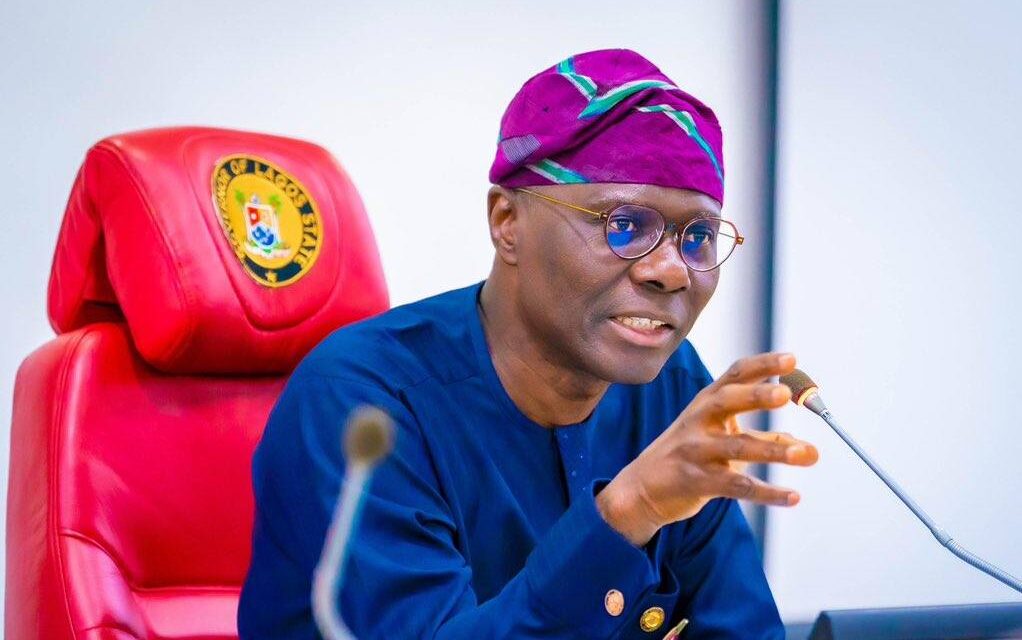
Lagos State Governor Babajide Sanwo-Olu has revealed that the state is facing a shortage of approximately 40,000 doctors and 40,000 nurses, warning that the healthcare system also requires at least N100 billion more than its current budget to adequately cater to the state’s growing population.
The governor disclosed this on Thursday at the opening of the second Eko Health Convention held at the Oriental Hotel, Victoria Island, Lagos.
According to him, Lagos currently has about 7,000 doctors, far below what is required to meet the healthcare needs of residents.
“Lagos needs about 40,000 doctors to serve this population properly. We have about 7,000. We need roughly 40,000 more nurses. Every doctor in Lagos today is, in effect, doing the work of 10,” Mr Sanwo-Olu said.
He identified inadequate manpower and funding as the two major challenges confronting the state’s health sector, noting that dwindling donor support had further compounded the situation.

“The second gap is money. There is a shortfall of at least N100 billion between what our health budget provides and what this system genuinely requires.
“Donor financing, which supported much of our disease control for two decades, is contracting sharply and will not return in its old form,” he stressed.
Addressing manpower shortage
The governor noted that the state government had begun measures to address the shortage of health workers through recruitment, improved welfare packages and plans to establish a University of Medicine and Health Sciences.
According to him, the government recently opened recruitment for clinical personnel across the state’s 29 secondary healthcare facilities.
“We have recruited aggressively, and last month opened clinical recruitment across all 29 of our secondary facilities.
“We have built accommodation for health workers. We are improving conditions to slow the departures and, increasingly, to attract colleagues back,” he said.
The shortage reflects a broader challenge facing Nigeria’s health sector, where the migration of doctors, nurses and other medical professionals to countries offering better pay and working conditions has continued to weaken the workforce.
Recently, the state’s Ministry of Health Commissioner Akin Abayomi had stressed that the state has a shortage of medical doctors.
Health experts have repeatedly warned that the trend is placing increasing pressure on healthcare delivery, particularly in major states such as Lagos.
Health insurance in Lagos
Mr Sanwo-Olu also noted that the enrollment under the Lagos State health insurance scheme, Ilera Eko, had exceeded 1.5 million residents following the implementation of the state’s compulsory social health insurance policy.
“As at the end of May this year, the figure stood at 1,502,994. More than half are women.
“And utilisation is rising, which tells us something important: that coverage is translating into actual care and not merely into cards in wallets,” he stated.
He noted that the enrollment marks a significant increase from previous years as the state expands health insurance coverage to reduce out-of-pocket spending and improve access to healthcare.
The governor added that the Lagos State Health Management Agency’s Assistance in Distress programme had saved 18 lives since it became operational in March by providing emergency care to patients regardless of their ability to pay.
READ ALSO: Customs intercept rifles, cannabis snacks at Lagos port
He said the state was also deploying technology to improve healthcare delivery through the Lagos Smart Health Information Platform, which is being implemented across public health facilities.
According to him, the platform will enable seamless access to patients’ medical records across hospitals, strengthen disease surveillance and improve evidence-based health planning.
Mr Sanwo-Olu added that the government was investing in artificial intelligence and other digital innovations to improve diagnosis, medical imaging and healthcare delivery.
He reaffirmed his administration’s commitment to building lasting health institutions and systems, saying reforms such as Ilera Eko, the health districts and the digital health platform were designed to outlive his tenure.
Discover more from Premium Times Nigeria
Subscribe to get the latest posts sent to your email.
