

Unlock the Editor’s Digest for free
Roula Khalaf, Editor of the FT, selects her favourite stories in this weekly newsletter.
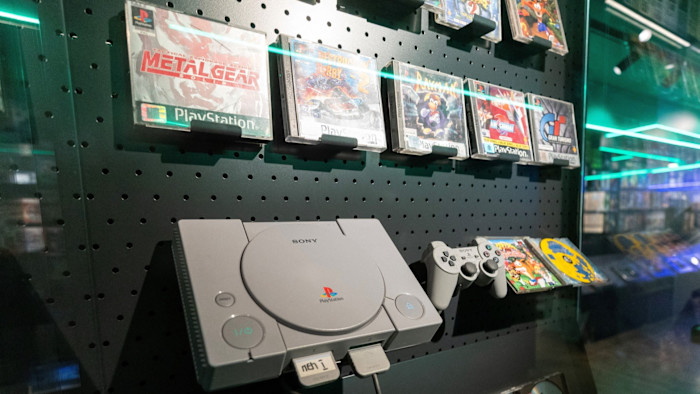
For diehard fans, Sony’s move to call time on physical games for its PlayStation console means game over on a series of treasured habits. No more boxes — aka gamers’ trophies — to line the shelves. No ownership, removing the ability to lend or sell, with potential knock-on effects on second-hand retailers such as CeX of the UK and GameStop in the US.
Conversely, it looks like game on for investors in the Japanese tech and entertainment conglomerate, which counts gaming and network services as its biggest division by revenue. Digital games zap pesky costs for pressing and shipping discs, and mean Sony no longer needs to leave space for retailers to add their cut. Inevitably, games sold through the PlayStation Store will be more profitable.
Sony is presenting the move, which takes effect from January 2028, as zeitgeist rather than greedy rent extraction. Some 85 per cent of its game sales were digital in the quarter ending March 31. The Japanese giant is the first in its field to pull the plug on physical discs — ironically perhaps, for a company that only just stopped production of Blu-ray Disc recorders and reverted to faxes in the wake of a 2014 hack. But others are moving in a similar direction.
The latest instalment of the Grand Theft Auto franchise will be released sans disc. And tittle-tattle in the gaming community has it that rival Microsoft’s next-generation Xbox won’t have a disc drive, suggesting it too is preparing for a wholly digital future. There must be a fair chance the next PlayStation, due in 2028, will not have one either.
Sony shareholders could use a break. The group has had some spectacular fumbles. Its $3.6bn purchase of Bungie, the studio behind Halo and Destiny 2 — a would-be forever game that turned out not to be forever — resulted in mass job cuts and hundreds of millions of dollars in write-offs in recent years. Its stock is down 17 per cent so far this year.
Capturing additional profit on games must be handy for Sony given the high price of memory chips is raising the cost of all sorts of hardware. Fellow Japanese gaming group Nintendo has already flagged lower sales expectations for its Switch 2, which from September will cost an additional $50 in the US. Fatter software margins may allow Sony a little more leeway when it comes to pricing the next PlayStation.
There’s no doubt it’s a bold move; and one that has roundly antagonised the faithful: angst and petitions are proliferating across bulletin boards. Sony will also miss out on the inevitable nostalgia for retro that has seen Gen Zers amass vinyl. But still, this is one Sony shokku that its shareholders should be happy to take.
[email protected]
