

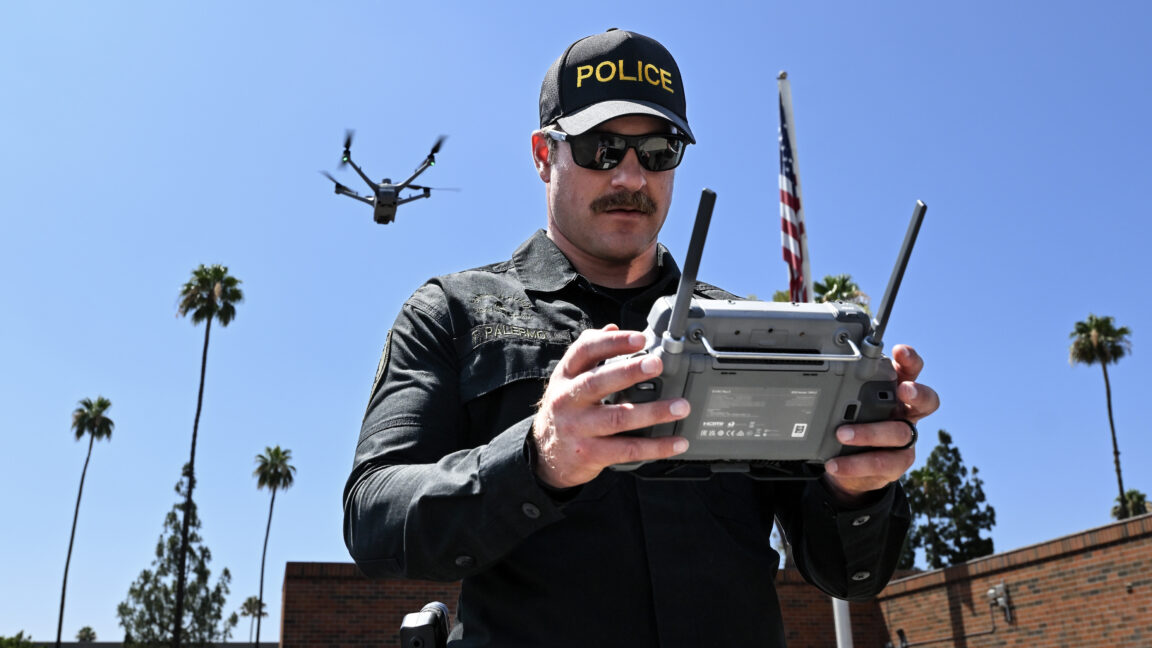
The Riverside Police Department has attributed its increase in citations for illegal fireworks to having deployed drones starting in 2025, according to the Los Angeles Times. The newspaper also listed other California cities such as Downey, Artesia, Brea, San Bernardino, Stanton, Chino, Hemet, and San Jose as deploying drones over the Fourth of July holiday.
California cities may be the most aggressive in using drones to hunt down illegal fireworks so far, but there are examples elsewhere. This year, the Lewisville Police Department in Texas shared footage with CBS News of its drone responding to 19 fireworks incidents on July 4, and reported several instances in which people firing off fireworks decided to stop and clear out once the drone arrived.
Washington state’s Renton Police Department also posted drone video from this past Fourth of July weekend and has deployed drones for the past three years to spot people setting off illegal fireworks in the suburb of Seattle, according to MyNorthwest.
This all fits a broader trend of “drone as first responder” programs growing across the United States, as tech companies pitch law enforcement on drones equipped with a variety of surveillance capabilities. More than 1,800 police departments and sheriff’s offices have operated drones in the United States, according to the Electronic Frontier Foundation’s Atlas of Surveillance database. Such drones “should require clear policies around retention, audits, and use, including when the cameras shouldn’t be recording,” according to Beryl Lipton, a senior investigative researcher at the Electronic Frontier Foundation.
Incidentally, some US communities used drones on America’s 250th anniversary for a very different purpose—supplementing or even replacing official fireworks displays with drone swarms that put on coordinated and colorful shows in the sky. Such displays are both cleaner and quieter than fireworks, while significantly lowering the risk of starting fires in dry summer conditions.
