

Although outside the EU, Iceland is part of the European Economic Area (EEA) along with Norway and Liechtenstein, so it is part of the single market and the Schengen border-free zone.
Reykjavik opened EU accession talks two years after the devastating 2008 global financial crisis, but abandoned them in 2013.
Fishing was the biggest obstacle then, and remains a dealbreaker today.
Fish and marine industries account for almost 40% of Iceland’s exports and many No voters are worried that under the EU’s common fisheries policy they could cede some control of their lucrative fishing grounds.
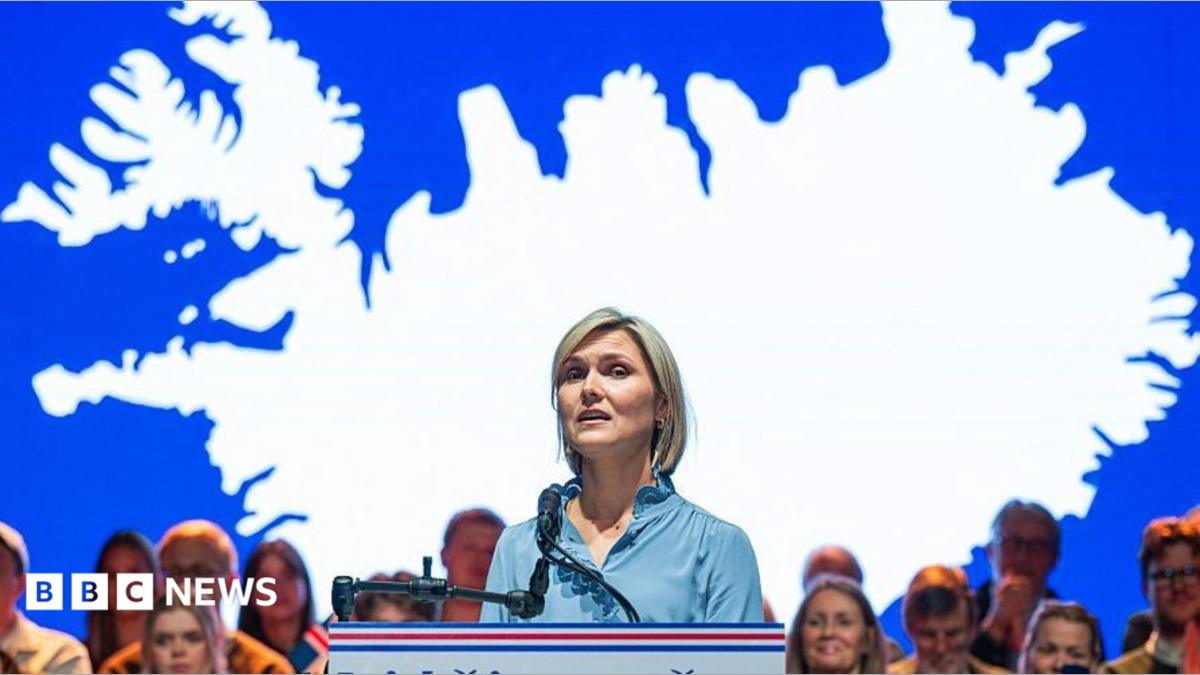
Opposition leader Guðrún Hafsteinsdóttir, who leads the No campaign, vows Iceland’s waters will never be shared.
Fishing is inseparable from Iceland’s culture and political identity, and no politician ever could make that concession, says Prof Bergmann. “They’d be expelled from the country.”
Iceland’s government intends to carve out a “special arrangement” to protect fishing and agriculture, and the finance minister says they are confident of getting “some exemptions”.
Non-EU member Norway succeeded in 1994 even though it did not complete the process, he says, while EU states Finland and Sweden secured special terms for agriculture in the far north.
But Eurosceptics doubt a carve-out is possible.
The head of the Icelandic Farmers’ Association, Margrét Ágústa Sigurðardóttir, is unconvinced: “No member state has been granted a permanent opt-out.”
She fears EU policies will focus on “the interests of 450 million consumers, rather than the specific needs of a country of 400,000 people”.
