

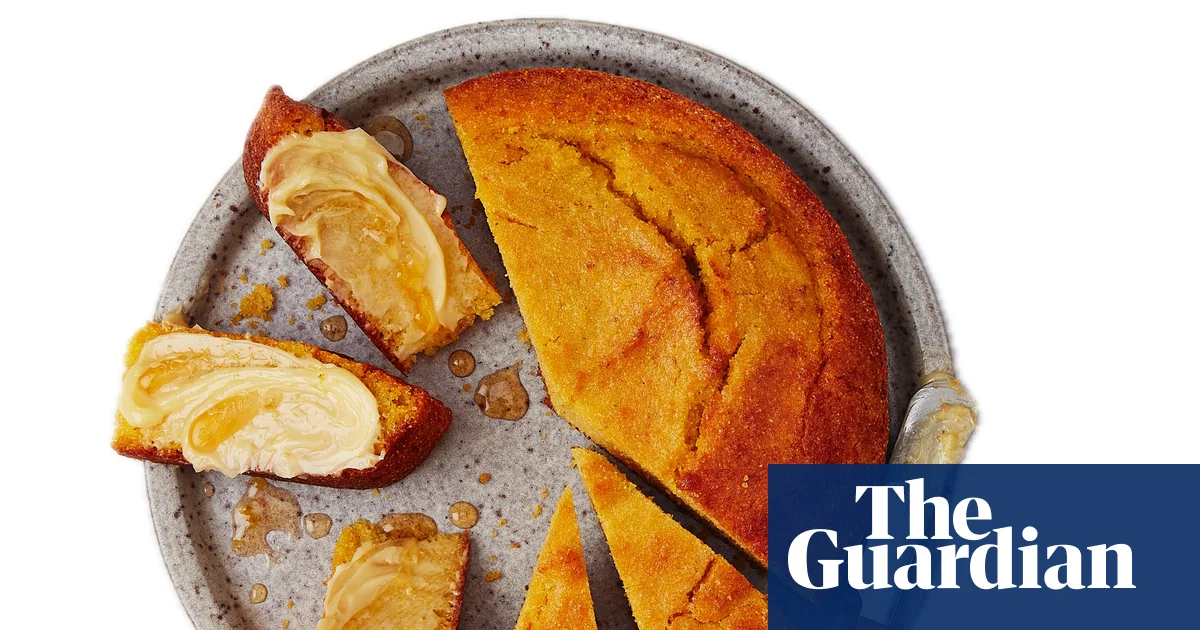
Like banana bread, a rather less ancient North American creation, cornbread isn’t a loaf in the conventional sense. Though it’s perfect for soaking up chilli, brothy bean soups and the like, it’s actually substantial enough to be the main event, rather than something you might reach for to mop the plate after it. (It’s also gluten-free, should that be a consideration.)
Prep 10 min
Soak 2 hr
Cook 25 min
Serves 6
200g coarse cornmeal, or polenta, preferably stoneground
240ml buttermilk (see step 3)
2 tbsp bacon grease, or butter or oil
½ tsp salt
2 eggs, beaten
1 tsp baking powder
¼ tsp bicarbonate of soda
2 tsp soft light brown sugar (optional)
1 A note on the cornmeal
The best, most flavourful cornmeal is stoneground but, depending on where you’re based, it may not be that easy to find, so you may have to compromise on the stoneground element of things. Coarse cornmeal is often found in the world food sections of larger supermarkets, usually from Caribbean brands, but if you do see stoneground polenta, grab that.
2 Toast the cornmeal
Either way, you can enhance the flavour of your cornmeal by toasting it before use. Put a large, dry frying pan on a medium-high flame and, when it’s hot, add the cornmeal and toast, shaking constantly so it doesn’t catch and burn, until fragrant but not browned; this should take only a couple of minutes.
3 Soak half the cornmeal
Tip half the cornmeal into a large bowl and add the buttermilk (if you can’t find buttermilk, use the same amount of milk instead, and add a teaspoonful of lemon juice or vinegar in step 6). Leave to soak for at least a couple of hours, if possible (though you can use it immediately), or overnight if you’re making this for breakfast.
4 Get everything else ready
Once you’re ready to cook, get all the ingredients ready, because, once the bicarb meets the buttermilk in step 6, it’ll get straight to work. Heat the oven to 220C (200C fan)/425F/gas 7. For a really crisp base, you’ll need a roughly 20cm ovenproof frying pan, though you could use a (not loose-bottomed) cake or tart tin, greased with hot fat in step 7.
5 A note on the fat
If you eat pork, cornbread is particularly delicious cooked in bacon fat, so it’s worth saving drippings or even wiping a piece of fat from a rasher of bacon around the warm pan to grease it before adding another fat. Put the drippings, butter or oil in the pan and heat until sizzling and, in the case of butter, browning.
6 Finish the batter
Meanwhile, stir the remaining toasted cornmeal into the bowl of buttermilk-soaked cornmeal, then mix in the salt, beaten eggs, baking powder, bicarbonate of soda and sugar (that last is sure to horrify those from the American South, but, according to Serious Eats, corn used for milling is traditionally ripened for longer, which makes it sweeter and more flavourful, so unless you have some really good cornmeal, a pinch of sugar will help replicate that).
7 Add the fat
Stir the hot fat into the batter bowl, then turn up the heat under the pan. Pour in the batter – it should sizzle as it hits the pan (or quickly grease a tin and pour the batter in there instead) – level it out, then bake for about 20-25 minutes, until golden and firm. Serve warm. Cornbread reheats well in a moderate oven; it’s good to freeze, too.
8 Or flavour with chilli and cheese …
This is a very adaptable recipe. Try stirring 70g grated cheddar or red leicester cheese and two-thirds of a chopped jalapeño chilli into the batter in step 7, then sprinkle 10g more cheese on top, plus the rest of the chilli, before baking (you can also use another variety of mild chilli or jarred pickled jalapeños, if you prefer).
9 … or bacon, beans or veg
Other good things to include: cooked drained beans, crumbled fried bacon, chunks of feta, cured chorizo, drained tinned corn, chopped chives, spring onions or caramelised onions, cooked peppers – if it goes with corn, it’ll probably work here. I especially like to serve mine with room-temperature butter whipped with hot honey (two to four teaspoons per 100g butter).
