

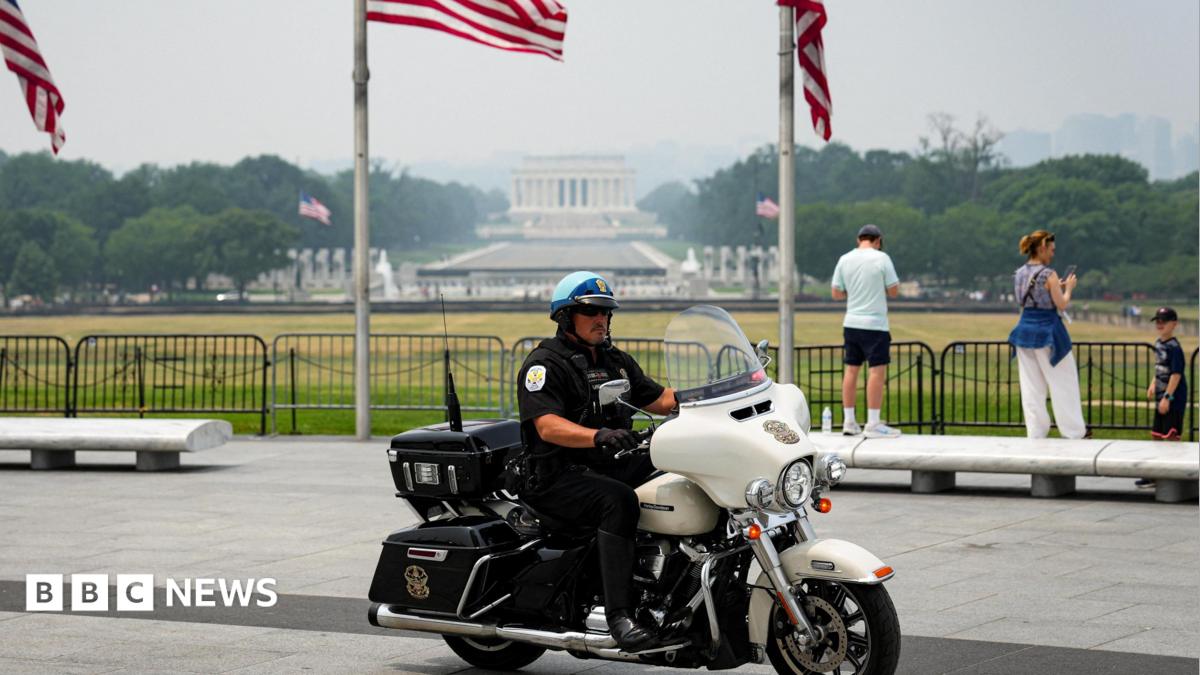
The fires are also reigniting existing tensions between the North American neighbours.
US President Donald Trump on Friday threatened to impose new tariffs on Canada over what he called the country’s “willful negligence” in stopping the wildfire threat.
“The United States is being unnecessarily invaded by filthy, polluted, and unhealthy air,” Trump said, adding he would call Prime Minister Mark Carney over the country not engaging “in basic Forest Management”.
The threat followed complaints by US lawmakers over the wildfires. This week, four Republican lawmakers from Michigan state, which borders Ontario, wrote an open letter to Carney criticising Canada and “demanding immediate action” contain the fires’ impacts.
“American lungs are paying the price for Canadian inaction, year after year,” they wrote. Carney did not respond directly to the claims, but said that both countries had a responsibility to fight climate change.
Canada’s forests are largely controlled by the provinces; not the central government.
Ontario’s premier Doug Ford issued a response to the complaints and pushed back on claims Canada wasn’t doing enough to fight the threat, noting the massive response to the blazes and the region spending more than $1bn in recent years to mitigate wildfires.
On Saturday, Ford said it was “unacceptable” and “a shame” that US politicians were blaming Canada, particularly when Toronto helped them battle wildfires in California just last year.
“That’s what neighbours do,” Ford said. “You don’t get on and start threatening and criticising.”
Experts have told the BBC that blaming Canada for wildfire smoke misses the bigger picture.
“Weather doesn’t care about international borders,” says Patrick James from the University of Toronto. Once smoke reaches the atmosphere, it travels wherever the winds take it – and smoke from major US wildfires has also affected Canada in recent years.
Experts also say many of the current fires are burning in Canada’s vast, remote forests, where fires can be difficult to detect or contain before they become too large.
While better forest management can reduce wildfire risk in some areas, particularly near communities, it cannot prevent fires across an ecosystem of this scale.
