

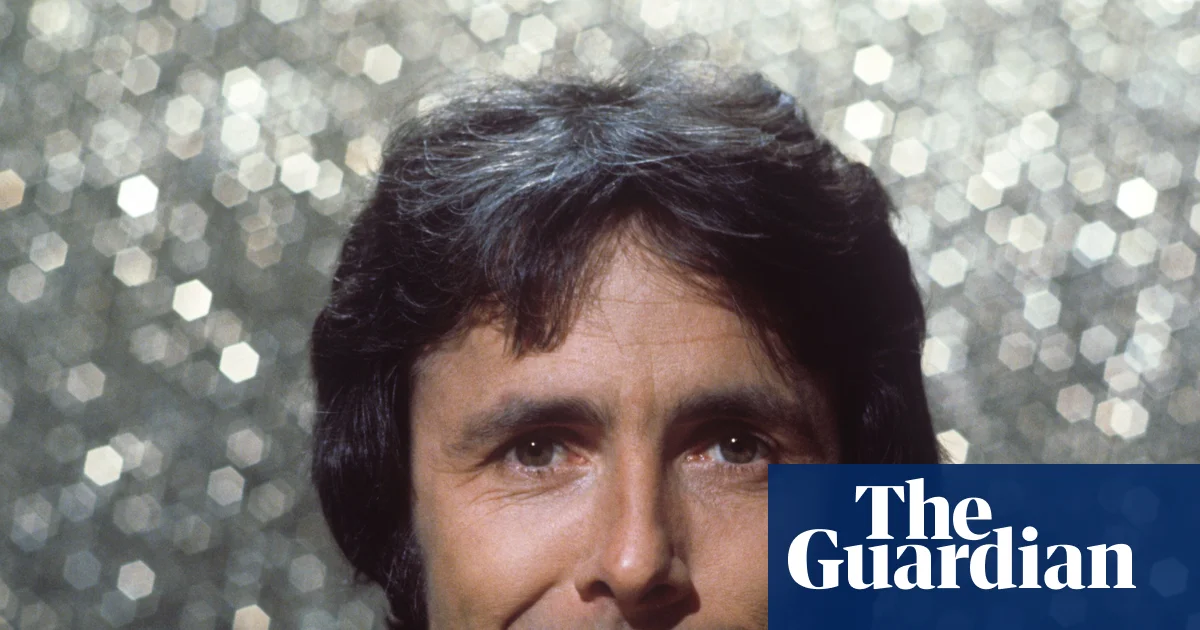
Richard O’Sullivan, who has died at the age of 82, arrived in acting by accident. As a boy, he’d come back from a family holiday in Ireland with a strong accent, and his parents sent him to the Corona Theatre School in London to soften it. This origin story was very much in keeping with his adult self-fashioning: blokey, lovable, down to earth, cheeky – not the kind of guy who would go to drama school for the purposes of drama. But his work as a child star was almost back to back. He filmed his first feature aged eight, as an extra in The Yellow Balloon, and the next role he landed was the lead in The Stranger’s Hand, released the following year (1954). He played Audrey Hepburn’s younger brother in The Nun’s Story in 1959, and Elizabeth Taylor’s in Cleopatra four years later. It’s famously not that easy, making the child-to-adult actor transition, and the higher your profile as a junior the harder it is. It was while straddling the awkward between-years that O’Sullivan appeared in two Cliff Richard flicks, The Young Ones and Wonderful Life in the early 60s, and his facility with that pastel-shaded wholesomeness fed into but only partly described the comic actor he would become.
His first lead role as an adult was opposite Beryl Reid in Alcock and Gander, in 1972. Creators Johnnie Mortimer and Brian Cooke found their muse in O’Sullivan. Man About the House aired the following year, with O’Sullivan playing Robin Tripp, a trainee chef. The setup sounds so unremarkable now that it’s hard to fathom it as a break from any norm: two women (played by Paula Wilcox and Sally Thomsett) are looking for a flatmate. It’s assumed it’ll be another woman who’s all ready to move in; instead, O’Sullivan appears in their bath after a party. It was almost an ET archetype – this alien arrives, this man who can cook, and spices up all their lives, to great merriment – and they can only get him past the landlord by pretending he’s gay.
There was a timeless innocence to it all – the girls insist the flatshare must always be platonic, so there’s a lot of forbidden flirtation, like a Shakespearean subplot. But it was also distinctively second-wave feminist, which is to say, determined to shake up norms and yet the guy, mysteriously, ended up on top. Tripp was a new kind of masculine ideal – handsome, boyish, unthreatening. Happy to pretend to be gay to keep the peace, constitutionally unable to batten down his heterosexual magnetism, always in a good mood. When you put it all together, what’s not to like?
In the spin-off, Robin’s Nest, he’s grown up, but only on paper. Now in a relationship with Vicky Nicholls (played by Tessa Wyatt), he’d love to make an honest woman of her but she’s not having it. This was radical, being as they were the first unmarried cohabiting couple in a British sitcom, and it was O’Sullivan’s plausibly sweet nature that made it work, managing to convey that a new era had arrived, but everyone in it was still basically OK.
O’Sullivan and Wyatt were a couple in real life, which didn’t do any harm – though he’d also been going out with Thomsett during Man About the House. This seems to have been adiaphoron to O’Sullivan fans, who were legion – his on-screen relationships either could or could not have been true in real life. It was taken as given during the 70s that all women, given the chance, would go out with him. He wrote recipe books – Man About the Kitchen, Roastin’ With Richard – and he appeared in adverts for British Gas. He was the ultimate new man, who could suddenly cook, while at the same time laugh at himself.
When Robin’s Nest ended, O’Sullivan took the title role in Dick Turpin. This was a stamp of his universalism, as it’s quite a different vibe, with the derring-do and all that, but no matter – if a main guy was called for, O’Sullivan was that guy. Dick Turpin ran into the early 80s, after which came Me and My Girl. O’Sullivan never tired of the business and would take smaller roles well into the 1990s, but his leading man years were over, and he was in poor health throughout that decade, suffering a stroke in 2003.
He remained the embodiment of the 70s domestic dream – rascally but not roguish, dishy but not macho. It was a transitional era, out of the sitcom past where men were mainly grumpy, into who knew what? Richard O’Sullivan persuaded a nation that, wherever it was headed, it would probably be fine.
