

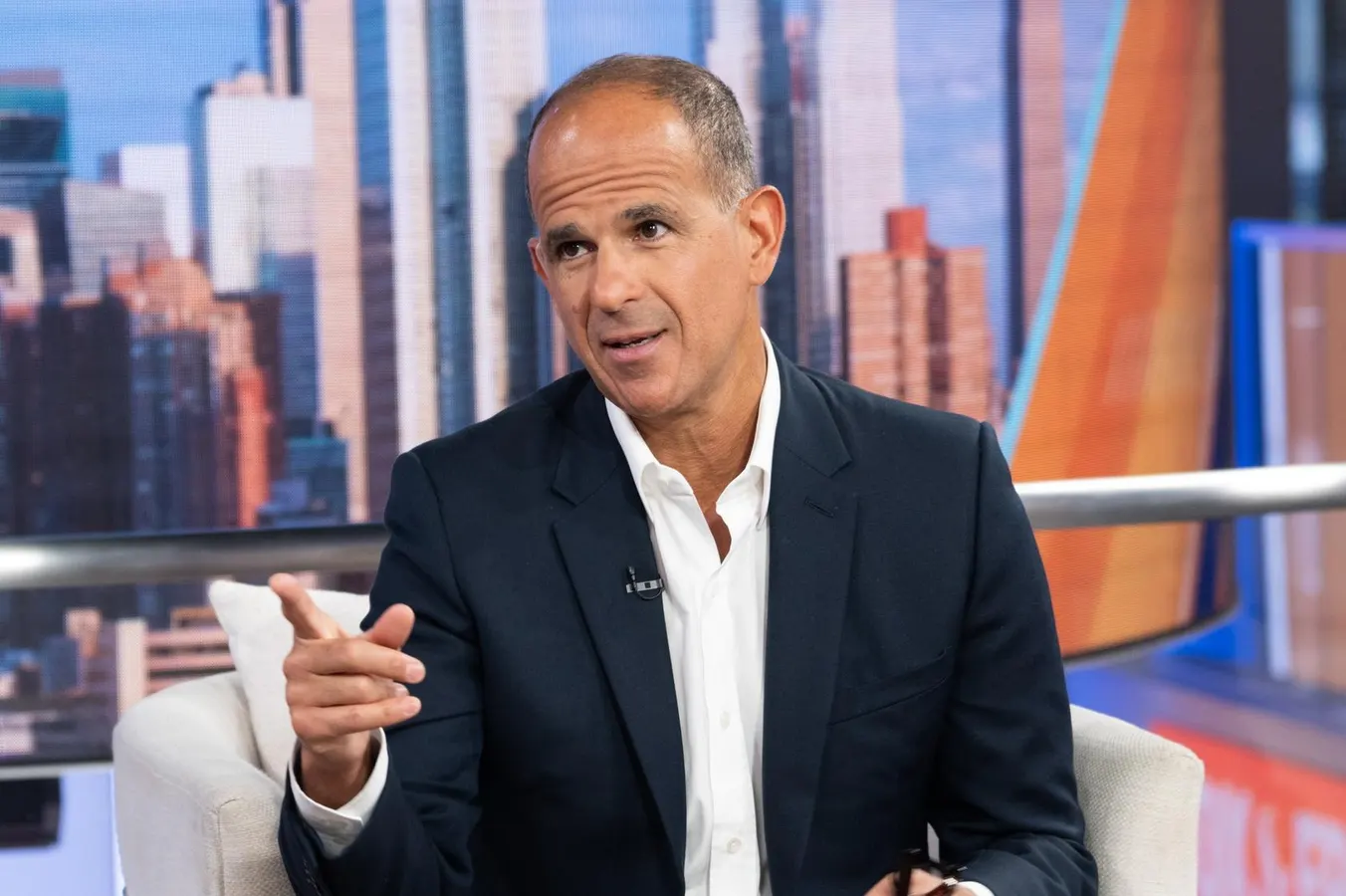
NEW YORK, NEW YORK – AUGUST 08: Marcus Lemonis visits “Fox & Friends” at the Fox News Channel Studios on August 08, 2025 in New York City. Lemonis hosts new FOX show ‘The Fixer’ which airs on FOX Business Network. (Photo by Noam Galai/Getty Images)
Getty Images
The home furnishings market is stuck in place because Americans are stuck in place too. Through the first six months of the year, furniture and home furnishings retail revenues are down 2% as the housing market remains stalled.
Looking more broadly, the Wall Street Journal reports, “Weak home sales are curbing shoppers’ appetite for appliances, cabinets and flooring.” Battered by high mortgage rates, continued inflation and declining consumer confidence, Americans are staying put—repairing what they must but delaying discretionary purchases until the timing feels right.
Following the maxim “Be the change you want to see in the world,” Bed Bath & Beyond CEO Marcus Lemonis isn’t waiting for the market to shift—he is moving his company forward to meet it. He’s relocating corporate headquarters to Nashville, moving the stock listing from NYSE to Nasdaq and changing the company name to Neighborhood Intelligence. This is all to realize his vision of an “everything home” ecosystem built around three interconnected pillars—omnichannel retail, home services and home ownership.
The change he wants to see is to align the company’s strategy to the way Americans move through their lives at home. “The average family stays in a home for roughly eleven years, and we exist to make those eleven years simpler and more affordable,” he wrote in a shareholder letter.
Wherever a family is on its home journey—whether buying, owning, improving or moving—“This company is built to move your family forward,” he asserted.
Picking Up Speed
Bed Bath & Beyond just reported 28% year-over-year growth in the second quarter to $361.2 million, after results of The Brand House Collective (owner of Kirkland’s) were folded in.
Bolstering second-quarter results was the addition of 6.4 million active customers—up 47%—and the number of orders delivered more than doubled—an increase of 2.8 million. On the flip side, net losses increased from $19 million last year to $39.5 million and the reported 53 cents loss per share missed expectations.
More topline growth is coming in future quarters as revenues from recently closed Container Store, Elfa and Closet Works brands flow through. Further out, recently announced acquisitions will add scale, including real-estate services platform Fathom Holdings; F9 Brands, including Cabinets To Go and Lumber Liquidators retailers; and SFV, a nationwide home renovation and installation company servicing Elfa, Closet Works, Cabinets to Go and Lumber Liquidators.
Yet the company faces formidable integration challenges after so many acquisitions in less than a year. “The acid test isn’t whether these acquisitions inflate revenue in the short term—they will—but whether management can turn around a somewhat random collection of brands into a cohesive group capable of generating long-term organic growth,” GlobalData’s Neil Saunders observed.
Lemonis’ nearly 4,000-word shareholder letter is intended to address that question.
Explaining The Transformation
At the center of Lemonis’ vision for the company is a technology and data platform that serves as its functional “operating system,” controlling the company “hardware” and its “software” applications—omnichannel retail, home services and home ownership pillars.
“That system has to span the entire platform so that a customer experiences one relationship with us rather than eight,” he explained. “In the end, our long-term advantage is not simply the brands we own but the operating system we are building.”
That, in a nutshell, explains the company name change from the widely recognized Bed Bath & Beyond to Neighborhood Intelligence and the shift to a Nasdaq listing, considered more appropriate for a technology-driven company.
As he explained, “Neighborhood Intelligence is much more than our new corporate identity, because it encompasses the data we collect, the technology we build, the intelligence we apply, the workflows we redesign, the trusted brands we operate, the financial infrastructure we continue to expand, the blockchain and tokenization capabilities we believe will become increasingly important to the future of ownership, and, most importantly, the people who bring all of those capabilities together every day.”
The headquarters move from Utah to Tennessee is equally strategic: “Nashville is already home to several of our largest businesses and provides an outstanding environment for entrepreneurship, technology, creativity, and collaboration,” he said, adding, “Those decisions are not departures from our past; they are investments in our future.”
Retail Is The Lynchpin
At this stage in Neighborhood Intelligence’s evolution, omnichannel retail is its core pillar. As Lemonis put it, retail is “the essential gateway where we meet the customer, earn trust through value and service and begin a relationship that expands beyond one single SKU transaction.”
Consumers know the brands—Bed Bath & Beyond, The Container Store, Kirkland’s, Lumber Liquidators, Cabinets To Go, Overstock and buybuy BABY—even if many fell on hard times before being acquired.
And the recent integration of Bed Bath & Beyond into Container Store locations shows how the brands can operate as a single retail store front, rather than a portfolio of standalone brands.
Supporting Home Services
The Home Services pillar adds a services dimension to the core retail pillar, anchored by custom-storage services brands Elfa and Closet Works. From there, the services pillar can reach further into home renovation, flooring, carpet, kitchens, garage systems, decorating and through partnerships into home maintenance and landscape architecture.
However, this expansion into home services is not unprecedented. Other home retailers have long provided design services—Crate & Barrel, Pottery Barn, Design Within Reach and more—while Ikea and RH offer a broader range of services. But none approach the “everything home” ambition that Lemonis describes: a unified services platform that supports customers across every stage of home ownership.
Home Ownership Pillar Closes The Circle
What truly differentiates Neighborhood Intelligence is its extension into the Home Ownership pillar, described as “real estate brokerage, cash offer programs, property and casualty insurance, home warranties, credit union services through partnership, and title, including title on blockchain and the tokenization of real-world assets.”
This third pillar closes the loop and is reminiscent of the expansive membership services Costco offers beyond its warehouse walls, including travel, insurance, health care, home installation, automotive and small-business services.
As Lemonis explained, “Retail helps customers create a home they love, Home Services helps them improve, maintain, and protect it, and Home Ownership brings together the financial, transactional, and advisory capabilities that support one of life’s most important investments.
“Individually, each pillar creates value; together, they will create an ecosystem that allows us to serve customers before they purchase a home, while they own it, as they improve it, and when they ultimately decide to sell or transfer it. Every relationship strengthens the next, creating a business that becomes more valuable over time because each pillar supports the others.”
Next Comes The Test
Early this year, the National Association of Realtors chief economist Lawrence Yun predicted that the housing market would improve in 2026 as the “lock-in effect”—life-changing events that push people to list their properties and move on—releases its grip.
By the end of the year, Neighborhood Intelligence will be ready for that moment, when the 11-year homeownership cycle rolls over and a new wave of home buyers move into the market.
“There are more than 85 million owner-occupied homes in this country, a population that grows every year, and each one is on an 11-year journey, needing to be furnished, maintained, improved, insured and someday be sold,” Lemonis wrote.
It’s a vast business opportunity and the question is whether Neighborhood Intelligence will be ready to meet it. The vision that Lemonis lays out in the shareholder letter is just that—visionary and difficult for many to fully grasp—and only time will tell if he’s got it right. GlobalData’s Saunders finds merit in the narrative but is concerned that the vision “is too lofty in aspiration and too lacking in detail and precision.”
Next comes the real test: turning the grand vision into a working reality. “The proof point in whether this vision can successfully come to life will ultimately come from being able to generate sustained top line growth with some good profitably—which will also rely on finding high synergistic cost savings,” Saunders observed.
“This isn’t just important as evidence; it is also needed because the new business model is more complex, riskier and capitally intense than the old asset-light Overstock Model,” he concluded.
See Also:
