

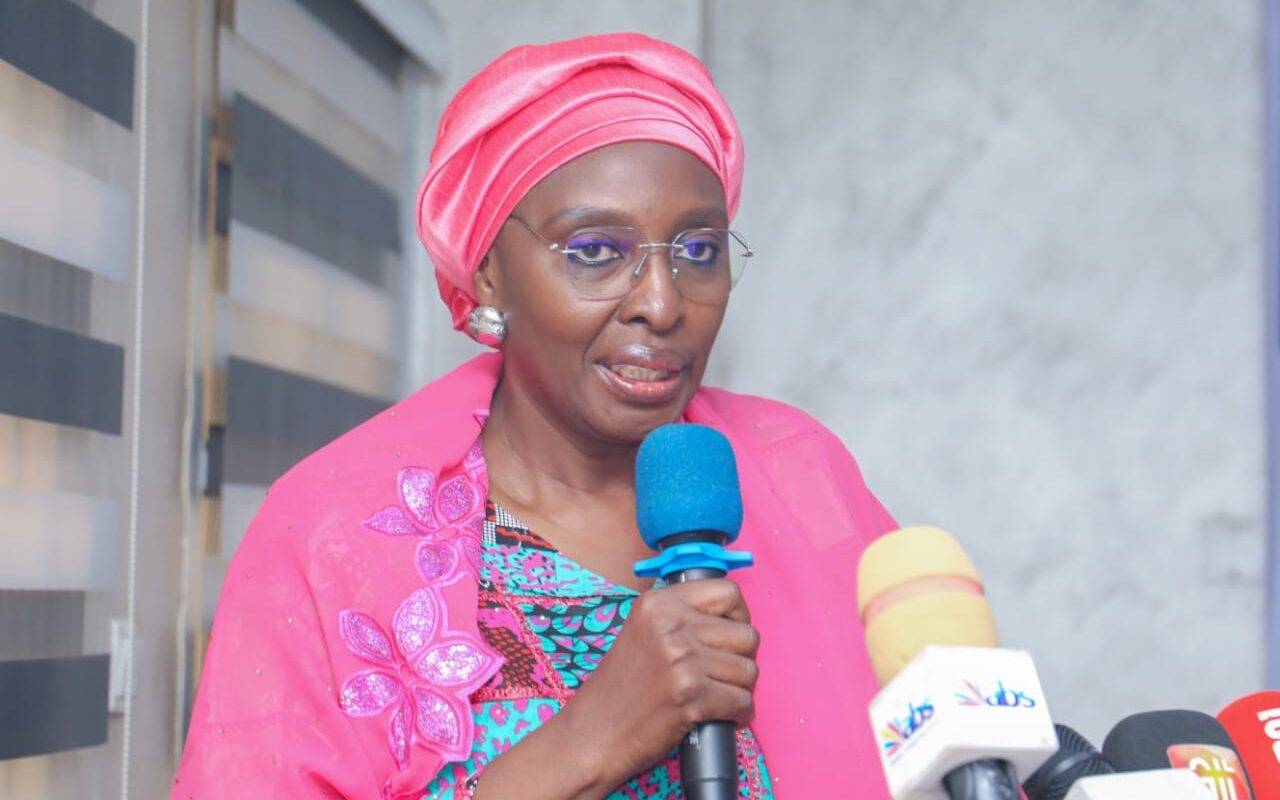
The Federal Government has said it has fulfilled all 41 presidential health sector commitments under the Nigeria Health Sector Renewal Investment Initiative, with improvements recorded in 12 of the 13 indicators tracked under the programme.
The Permanent Secretary of the Federal Ministry of Health and Social Welfare, Daju Kachollom, disclosed this on Thursday at the 10th Annual Health Conference of the Association of Nigerian Health Journalists (ANHeJ) in Abuja.
President Bola Tinubu launched the initiative in December 2023 as part of efforts to improve healthcare delivery, strengthen health financing and improve health outcomes across the country.
The initiative was launched alongside the signing of the Health Sector Renewal Compact by the president, all 36 state governors and development partners, committing stakeholders to one plan, one budget and one report under a sector-wide approach.
“Three years on, all 41 presidential health sector commitments have been achieved, and 12 of the 13 indicators we tracked have improved,” Mrs Kachollom said.
The conference, themed “Nigeria’s Health Sector Renewal Investment: From Policy to Tangible Impact,” brought together journalists, policymakers, healthcare professionals and development partners to examine how government policies and investments could translate into better health outcomes for Nigerians.

Progress in health sector reforms
Mrs Kachollom said 3,526 primary healthcare centres had been revitalised, with another 900 undergoing rehabilitation.
She noted that the proportion of participating facilities supported by the Basic Health Care Provision Fund (BHCPF) in 172 local government areas with at least two midwives or community health extension workers had increased from 12 per cent to 91 per cent.
According to her, maternal deaths declined by 17 per cent, while newborn deaths dropped by 12 per cent between 2023 and 2025 in the 172 LGAs, which account for more than half of maternal deaths in the country.
On immunisation, she said measles and rubella vaccination had reached 100 million children, while more than 17 million girls had received the Human Papillomavirus (HPV) vaccine.
She added that the government had commissioned 10 factories and manufacturing lines to expand local production of medicines, diagnostic products, mosquito nets and medical oxygen.
The permanent secretary also disclosed that states had increased their combined health budgets from N1.97 trillion in 2023 to more than N3.3 trillion in 2026.
She, however, stressed that sustaining the reported achievements would require effective financing, implementation and accountability at all levels of government.
Persistent challenges
Despite the reported progress, Mrs Kachollom acknowledged that several challenges continued to undermine healthcare delivery in Nigeria.
She said childhood stunting remained high, affecting about four in 10 children under five, while only approximately one in 10 Nigerians had health insurance.
She also identified the high cost of healthcare services and the uneven distribution of health workers as barriers to accessing quality healthcare.
The permanent secretary expressed concern over the poor implementation of resolutions adopted by the National Council on Health.
She disclosed that the ministry received only 412 of the 740 reports expected on the implementation of resolutions adopted at the previous council meeting, with 10 states recording implementation scores below 40 per cent.
“A resolution that is never implemented is just another announcement,” she said.
Mrs Kachollom noted that the 67th National Council on Health, held last week, adopted recommendations for a unified national framework to sustain health campaigns through pooled and aligned financing, standardised incentives for health workers and digital payments.
The council also recommended the gradual integration of health programmes into federal and state budgets and annual operational plans.
Strengthening accountability
Mrs Kachollom urged journalists to independently verify government claims by visiting healthcare facilities, assessing their functionality and investigating whether public investments had improved healthcare delivery.
“When we announce a revitalised facility, we expect you to go and look at it,” she said.
“When your state makes a commitment at the council, ask a year later what became of it. Ask what has changed, for whom and how much. If the answer is nothing, tell Nigerians and tell us.”
The permanent secretary said the ministry would continue to make health sector data publicly available through platforms such as the Primary Healthcare Functionality Dashboard and the Joint Annual Review Scorecard.
She also announced that the 2023 to 2024 National Health Accounts would be published to provide information on how much Nigerians spend on healthcare and who bears the cost.
She urged journalists to assess the government’s performance against its Health Sector Strategic Blueprint, noting that 2027 would be the final year of its implementation.
“Let us move the conversation from what government announced to what changed; from how much was invested to what it achieved; and from what facility was commissioned to how many lives are better or have been saved,” she said.
Health journalists pledge stronger oversight
Earlier, the President of ANHeJ, Joseph Kadiri, said the success of government interventions should be measured by reductions in maternal and child deaths, improved access to quality healthcare, affordable medicines and functional primary healthcare facilities.
Mr Kadiri said health journalists had a responsibility to scrutinise government policies, track public investments and amplify the voices of vulnerable populations.
READ ALSO: Lassa Fever: High treatment costs of concern as infections rise for two consecutive weeks- NCDC
“As health journalists, we are not merely reporters of government announcements or institutional activities,” he said.
“We are responsible for asking difficult questions, examining narratives to ensure that they are evidence-backed, tracking public investments, amplifying the voices of vulnerable populations and bringing critical health issues to the attention of policymakers and the public.”
He expressed the association’s willingness to partner with the BHCPF gateways and the Ministerial Oversight Committee to monitor health sector interventions across the country.
He said the association would support accountability efforts through physical visits to healthcare facilities, documenting progress and identifying challenges affecting the implementation of government programmes.
Discover more from Premium Times Nigeria
Subscribe to get the latest posts sent to your email.
