

The script for building a technology company has become remarkably predictable.
A founder raises seed capital, grows quickly, raises another round and repeats the process until an acquisition or public listing comes into view. Venture capital has become so deeply woven into the startup ecosystem that it is often treated as a milestone rather than simply one of many ways to finance growth.
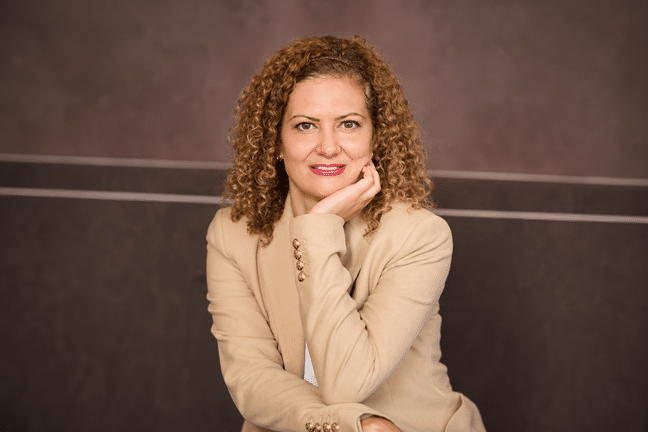
Lilia Stoyanov never accepted that assumption. Long before founding TFY, she had already built a successful international career in financial technology, holding senior leadership positions, including GM & CFO at Skrill during one of Europe’s fastest-growing fintech success stories.
She understood how venture-backed companies scaled, the advantages institutional investment could bring and the expectations that often came with it. When investors showed interest in her business, the decision she made surprised many people.
She declined. Not because funding wasn’t available, but because she wanted the freedom to build differently.
Rather than allowing investment cycles to dictate strategy, she wanted customers to shape the company’s future. Profitability, she believed, would provide resilience. Independence would create room to think long-term. Decisions could be guided by purpose as much as performance.
It was never a rejection of venture capital. Rather, it was a belief that it wasn’t the only path to building an extraordinary company. More than a decade later, that philosophy has become one of TFY’s defining characteristics.
Recognised among the UK’s soon-to-be unicorns and ranking on FT1000: Europe’s Fastest-Growing Companies 2026, the company has quietly grown into a global workforce technology business serving organisations in more than 180 countries while remaining independently financed. Yet, its greatest achievement may not be its growth but the assumptions it has challenged along the way.
Building a connected workforce
When Stoyanov founded TFY in 2015, the conversation around work looked very different. Remote work was still considered an exception. Cross-border hiring remained administratively complex. Building international teams often requires businesses to navigate multiple providers for recruitment, payments, compliance and workforce management.

Victoria Fakiya – Senior Writer
Techpoint Digest
Make your startup impossible to overlook
Discover the proven system to pitch your startup to the media, and finally get noticed.
Stoyanov believed something more fundamental was happening. The world’s talent was becoming increasingly distributed. The companies that succeeded would not necessarily be those with the biggest offices. They would be those capable of bringing together the best people, wherever they lived. That belief shaped TFY from the beginning.
Today, the company helps organisations build connected workforces — global teams of independent professionals with entrepreneurial mindsets who contribute specialised expertise across borders. Rather than stitching together disconnected systems, businesses can manage talent acquisition, contractor management, compliant international payments, workforce analytics and recruitment through a single platform designed for a global labour market.
Stoyanov prefers to talk about independent professionals rather than freelancers, and that distinction matters.
Independent professionals, she notes, bring specialist expertise, commercial awareness and entrepreneurial thinking to organisations that increasingly require flexibility without compromising quality. They are not temporary labour; they are an integral part of how modern businesses innovate and compete.
For TFY, technology exists to help organisations connect with that talent, not to create additional barriers between employers and the people capable of helping them grow.
Ethical AI and the search for human potential
Artificial intelligence is rapidly reshaping recruitment. For many organisations, the appeal is obvious. AI can review thousands of applications in minutes, automate repetitive administrative tasks and significantly accelerate hiring.
But speed alone does not guarantee better decisions. Stoyanov believes the conversation around AI has become too narrowly focused on efficiency. The more important question, she argues, is whether technology helps organisations recognise human potential that traditional recruitment processes often overlook.
That philosophy sits at the heart of TFY’s approach to ethical AI. Rather than using artificial intelligence solely to eliminate candidates who don’t match predefined keywords, the company’s technology looks beyond conventional career paths. It identifies transferable skills, adjacent experience and capabilities that suggest someone could succeed even if their CV does not perfectly mirror a job description.
The difference is subtle but profound. Traditional recruitment software often asks: “Does this person fit this job?”
TFY’s ethical AI asks: “Where could this person’s potential create the greatest value?”
The recruiter remains firmly in control, and artificial intelligence becomes a decision-support tool rather than a decision-maker. That distinction has become increasingly important as organisations seek to balance technological innovation with fairness, transparency and trust.
For Stoyanov, ethical AI should never replace human judgement. It should expand it. Technology should help recruiters discover people they might otherwise overlook, reduce bias by broadening the pool of talent under consideration and encourage skills-based hiring rather than simply rewarding conventional career histories. In other words, ethical AI should unlock human potential.
That philosophy earned Stoyanov recognition as AI Entrepreneur of the Year at the 2025 Allica Bank Great British Entrepreneur Awards and an Innovate UK grant in 2020, reflecting her contribution to advancing responsible AI within workforce technology. More importantly, it illustrates a wider belief that has guided TFY from the beginning: technology delivers its greatest value when it helps more people participate in meaningful work rather than excluding them from it.
Technology that expands opportunity
Long before “purpose-driven business” became fashionable boardroom language, TFY was already asking a different question. What if technology could help people rebuild their lives?
In 2016, as Europe grappled with the Syrian refugee crisis, the company launched Rebuild Lives, an initiative designed to help displaced people access legitimate remote employment and receive compliant international payments. The idea was simple but powerful: while humanitarian aid provides immediate relief, meaningful work restores independence, confidence and dignity.
Years later, when war displaced millions of Ukrainians, that philosophy was tested again.
Rather than withdrawing from the region, TFY retained its team of independent contractors in Ukraine and worked with clients to preserve employment opportunities. The response reflected a belief that had shaped the business from the beginning: opportunity should never depend on where someone happens to live or the circumstances they are forced to endure.
Expansion across Africa
This philosophy also explains why Africa has become an increasingly important market for the company.
As global organisations look beyond traditional outsourcing destinations, countries such as Kenya, Nigeria, and South Africa are emerging as centres of highly skilled talent. Improved digital infrastructure, favourable time zones and growing pools of English-speaking professionals are creating new opportunities for organisations building connected workforces.
For Stoyanov, however, Africa is not simply another growth market. It represents the next chapter in a much larger shift. The future belongs to organisations that recognise talent is distributed globally, while opportunity is not. Technology should help close that gap.
Trust instead of marketing
Ask most founders how they built their businesses, and the conversation eventually turns to marketing budgets. TFY followed a different route.
Instead of investing heavily in advertising, the company focused on building trust. Its referral programme rewards partners with 20% of the net revenue generated by successful referrals for 180 days, creating long-term incentives rather than one-off commissions.
Today, referrals account for the vast majority of new business – a remarkable achievement in an industry where customer acquisition costs continue to rise. Combined with a customer churn rate below 1%, the model reflects something deeper than commercial success. It suggests that sustainable growth is built through lasting relationships rather than constant promotion.
That philosophy mirrors Stoyanov’s approach to leadership. Customers become advocates. Partners become collaborators. Growth becomes a consequence of trust rather than a product of aggressive marketing.
It is another example of the company choosing a less conventional path and finding that, over time, consistency can become a competitive advantage.
Why ethical AI should be available to everyone
The same thinking underpins one of TFY’s most distinctive initiatives. Through its “Give Back to Society” programme, charities, NGOs, and early-stage startups receive free access to the company’s AI-powered applicant tracking system.
For many organisations, recruitment technology remains a luxury. Charities often operate with limited resources while tackling some of society’s most complex challenges. Early-stage businesses face similar constraints, where every hiring decision carries disproportionate importance.
Stoyanov believes that organisations that create social value should not be excluded from modern technology because of budget constraints. Providing free access is not philanthropy in the traditional sense.
It is an extension of the company’s core philosophy. If ethical AI can help large enterprises build stronger, connected workforces, it should also help charities recruit volunteers, humanitarian organisations identify exceptional talent, and startups compete for skilled independent professionals.
Technology creates its greatest value when it expands access, not when it limits it.
Redefining entrepreneurship
There is another reason Stoyanov’s story resonates beyond workforce technology. It challenges assumptions about entrepreneurship itself. Discussions around female founders often begin with statistics about limited access to venture capital.
Stoyanov’s experience was different. She had access to investors. She simply chose another route.
Having worked inside high-growth fintech businesses, she understood both the advantages and the trade-offs of venture capital. She made a conscious decision to build independently, preserving the freedom to make long-term decisions without being driven by successive funding cycles.
That decision also shaped a broader ambition. Stoyanov hopes TFY’s journey will encourage more entrepreneurs, particularly women, to recognise that there is more than one way to build a globally significant technology company.
Venture capital remains an important catalyst for innovation, but it is not the only path.
She believes founders should feel empowered to choose the financing model that best supports the business they want to create, rather than feeling obliged to follow a single definition of success.
Looking ahead, she is fascinated by the prospect of one day taking TFY public as an independently financed, female-founded technology company. Not because an IPO represents the destination, but because it would demonstrate that disciplined growth, customer trust and long-term thinking can compete alongside more conventional startup models.
If the company ultimately reaches a bootstrapped unicorn status, she hopes that achievement will inspire others to think differently about what is possible.
A different measure of success
Artificial intelligence will continue to reshape organisations. The connected workforce will continue to redefine how businesses find expertise. The next generation of entrepreneurs will continue to question assumptions about how companies should grow.
For Lilia Stoyanov, these trends are connected by a single idea. Technology should help people realise their potential.
That belief explains why TFY invests in ethical AI instead of automated decision-making. It explains why the company helps organisations build connected workforces rather than manage contractors. It explains why charities receive free access to recruitment technology and why initiatives such as Rebuild Lives remain central to the business rather than separate from it.
Ultimately, TFY is not trying to automate work out of existence. It is trying to help more people recognise their transferable skills and participate. Perhaps that is the company’s most important contribution.
Not proving that an independently financed company can scale globally. Not even demonstrating that ethical AI can transform recruitment. But showing that technology, when guided by purpose and trust, can unlock human potential on a global scale.
In an industry often defined by funding rounds, automation and rapid growth, that may prove to be the most disruptive idea of all.
