

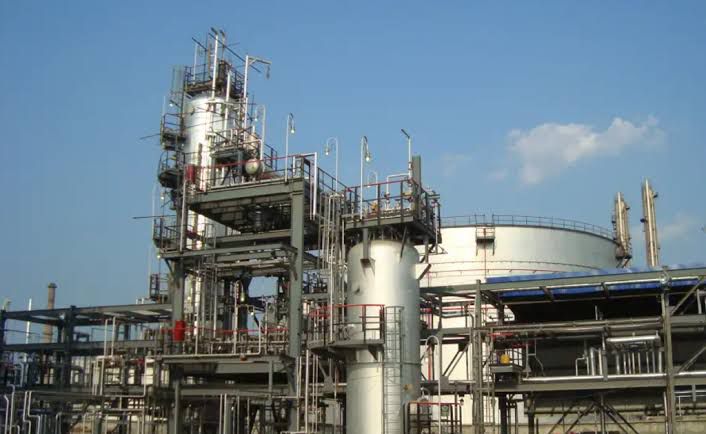
Energy expert Dan Kunjle has urged the federal government to privatise the four state-owned refineries operated by the Nigerian National Petroleum Company Limited (NNPCL).
Mr Kunle made the call in an open letter to President Bola Tinubu on Sunday titled, “NNPC’s Four Diseased Fingers: The Refineries That Must Be Privatised.”
In the letter, he described the refineries—Port Harcourt Refineries I and II, Warri Refinery and Kaduna Refinery—as “four diseased fingers” that have drained public resources for decades without delivering reliable refining capacity.
He argued that continued spending on the refineries diverts scarce resources from critical sectors such as healthcare, education, infrastructure, security and electricity.
He cited the privatisation of the Eleme Petrochemicals complex under former President Olusegun Obasanjo as evidence that government divestment can improve efficiency, attract investment and create jobs.

Mr Kunle urged President Bola Tinubu to direct NNPC Limited to transfer the refineries to the National Council on Privatisation and the Bureau of Public Enterprises for a transparent and competitive privatisation process to be completed within one year.
He said the sale should include full disclosure of bidders, asset valuations, ownership structures and investment commitments, while allowing both Nigerian and foreign investors, including reported Chinese interests, to compete on equal terms.
The energy expert also cautioned against opaque asset transfer arrangements disguised as technical partnerships or memoranda of understanding, warning that such deals could trigger legal disputes and erode investor confidence.
He said the government should privatise, concession or liquidate the refineries where economically justified, arguing that such reforms would enable NNPC to focus on upstream operations while ending decades of waste.
Mr Kunle’s intervention comes amid ongoing investigations by the Economic and Financial Crimes Commission into the alleged diversion of refinery rehabilitation funds.
“The time for endless rehabilitation has passed. The time for decisive reform has arrived. Mr President, this is a legacy decision. Privatise them transparently. Concession them transparently where appropriate. Liquidate those that can no longer be economically justified. Above all, let the law, openness and the national interest guide every decision. The Chinese are welcome to compete. Nigerian investors are welcome to compete,” the letter partly read.
Last week, PREMIUM TIMES exclusively reported that the EFCC recovered more than N38.66 billion, alongside several landed properties, during an investigation into funds released for the rehabilitation and turnaround maintenance of Nigeria’s refineries.
Investigators described the case as one of the agency’s largest probes into refinery rehabilitation spending.
Nigeria has four state-owned refineries with a combined installed refining capacity of 445,000 barrels per day—two in Port Harcourt with 210,000 bpd, the Kaduna Refining and Petrochemical Company with 110,000 bpd, and the Warri Refining and Petrochemical Company with 125,000 bpd.
Despite repeated rehabilitation efforts and billions of naira in public spending, the facilities have remained largely non-operational for decades.
PREMIUM TIMES also reported that the EFCC has charged the immediate past managing directors of the Port Harcourt and Warri refineries, Ahmed Adamu Dikko and Jimoh Olasunkanmi Yisawu, with money laundering over the alleged diversion of funds earmarked for refinery rehabilitation.
As efforts to revive the refineries continue, the federal government and NNPC have pursued strategic investors and technical partners to improve domestic refining capacity.
In May, NNPC signed a memorandum of understanding with two Chinese companies to support the completion, operation and possible expansion of the Port Harcourt and Warri refineries.
Read the full Letter below:
NNPC’s Four Diseased Fingers: The Refineries That Must Be Privatised
An Open Letter to the President and Commander-in-Chief of the Armed Forces, Federal Republic of Nigeria
His Excellency
President and Commander-in-Chief of the Armed Forces
Federal Republic of Nigeria
State House
Aso Rock Villa
Abuja, Nigeria
Good Afternoon, Mr President, Sir.
With the utmost respect and humility, I write this open letter to Your Excellency.
This is my first open letter to you since you assumed office as President and Commander-in-Chief of the Armed Forces of the Federal Republic of Nigeria.
I have chosen to write now because I firmly believe that, after the Almighty God, the Creator and Sustainer of all things, the next greatest earthly responsibility rests on the shoulders of a nation’s President.
The office you occupy carries not only immense constitutional authority but also the sacred responsibility of making decisions that shape the destiny of millions of Nigerians.
It is from that deep conviction, and from my sincere love for our country, that I respectfully seek Your Excellency’s attention on a matter of profound national importance.
I write this as a patriotic Nigerian who still believes that leadership is sometimes proven not by what a President builds, but by what he dares to cut away.
You started by belling the cat through the removal of fuel subsidy and the liberalisation of the foreign exchange market, which no Nigerian President had ever succeeded in doing.
Mr President, NNPC Limited has four diseased fingers attached to the body of Nigeria. These four refineries are government-owned: Port Harcourt Refinery I, Port Harcourt Refinery II, Warri Refinery, and Kaduna Refinery.
For decades, these refineries have failed to deliver dividends to the good people of Nigeria. Since the 1980s, they have consumed money, consumed hope, consumed public patience and consumed the proceeds of our upstream oil and gas sector. Yet they have failed to provide the nation with reliable refining security.
Mr President, these four fingers have become a burden Nigeria can no longer afford to carry.
Every year, substantial revenue is generated from our upstream oil and gas sector. Yet a significant portion of those resources disappears into the endless cycle of maintaining failed downstream assets.
Funds that should strengthen healthcare, education, security, roads, electricity and critical infrastructure are instead swallowed by refineries that continue to underperform.
This cannot continue.
The fifth finger used to be Eleme Petrochemicals. Former President Olusegun Obasanjo demonstrated courage by removing that asset from government control through privatisation.
Today, under Indorama’s management, Eleme has grown into one of Nigeria’s leading petrochemical success stories.
It stands as clear evidence that when the government steps back from running commercial enterprises and allows competent investors to manage them, value is created, industries expand, and jobs follow.
So why is NNPC Limited still holding on to the remaining four dead refinery fingers?
Why are Nigerians still being told the same refinery story after more than two decades of disappointment?
Why do we continue to hear of turnaround maintenance, rehabilitation, technical partners, inspection visits, foreign experts, mechanical completion and yet another promise that operations will begin within the next 24 months?
Why should Nigerians believe another refinery promise when previous promises have consistently ended in silence?
Mr President, God and history have placed before you a rare opportunity. Your journey from humble beginnings to the highest office in our land is remarkable and inspiring. But legacy is not built by avoiding difficult decisions. Legacy is built by taking the decisions others feared to take.
The future of these four refineries is one of those decisions. Mr President, I respectfully urge Your Excellency to direct the leadership of NNPC Limited to transfer these four refineries to the National Council on Privatisation and the Bureau of Public Enterprises for a lawful, transparent and competitive privatisation process to be concluded within one year.
Let the Bureau of Public Enterprises advertise the assets openly. Let qualified transaction advisers be appointed. Let reputable local and international investors compete on equal terms.
Let the valuation be transparent. Let the terms of sale be made public. Let Nigerians know who is buying these assets, what they are paying, what they intend to invest, how they plan to operate the facilities and the guarantees they are prepared to provide.
A practical ownership structure could allocate 85 per cent to core investors, five per cent to the respective host states and retain 10 per cent for the Federal Government.
Such a structure would minimise political interference, attract long-term capital, protect host community interests, preserve a strategic national stake and give investors the confidence required to commit significant resources.
If the reported Chinese partners are genuinely interested, they should participate openly in the bidding process.
Let them compete fairly with every other qualified investor. Let them demonstrate their financial capacity, technical competence, refinery experience and commercial plans before the Nigerian people. But national assets should never be transferred through the back door.
Do not call privatisation a “technical partnership.” Do not call usset transfer an “evaluation.”Do not call control “collaboration.” Do not disguise a concession as a Memorandum of Understanding.
Nigeria has suffered too much from opaque public asset transactions. An arrangement that lacks transparency today may become tomorrow’s litigation. A poorly structured transaction may expose Nigeria to arbitration, prolonged legal disputes and the possible seizure of national assets abroad.
We must not create another avoidable national embarrassment. The lawful route already existsssssss through the National Council on Privatisation and the Bureau of Public Enterprises.
That is the path to transparency. That is the path to investor confidence. That is the path that best protects Nigeria’s long-term interests.
Mr President, NNPC Limited should not continue dragging Nigerians through another endless refinery journey. The corporation has had decades to prove that government ownership can work. It has spent enormous public resources. It has made countless promises.
The refineries remain the verdict. They are not monuments to industrial achievement. They are monuments to failed public management.
Mr President, this is a defining moment.
Release Nigeria from the burden of these failed assets. Allow competent investors to rebuild them. Allow the host states to participate in their future. Allow the Federal Government to retain a strategic minority interest.
And allow NNPC Limited to focus on what it should be doing, expanding upstream production, securing crude supply, protecting national reserves, strengthening pipeline infrastructure and creating value for the Nigerian people.
Nigeria can no longer afford to spend productive upstream revenues sustaining unproductive downstream assets.
Those resources belong in our hospitals, our schools, our roads, our power sector, our security institutions and in creating opportunities for millions of young Nigerians.
The time for endless rehabilitation has passed. The time for decisive reform has arrived. Mr President, this is a legacy decision. Privatise them transparently.
Concession them transparently where appropriate. Liquidate those that can no longer be economically justified.
Above all, let the law, openness and the national interest guide every decision.
The Chinese are welcome to compete. Nigerian investors are welcome to compete.
Investors from all over the world are welcome to compete. But the process must be governed by law, not by administrative discretion.
History will record what is done with these four refineries. Future generations will judge whether this administration finally ended decades of waste or merely prolonged them.
Mr President, the Nigerian people are watching with hope. They look to your administration not simply for another promise, but for the courage to make the decision that others postponed.
Sometimes, healing begins only when a diseased part is removed.
With courage, transparency and fidelity to the law, Your Excellency has the opportunity to remove these four diseased fingers, restore strength to the Nigerian economy and leave behind a legacy of bold reform that generations yet unborn will remember with gratitude.
Respectfully submitted.
Dan D. Kunle writes from Abuja
