

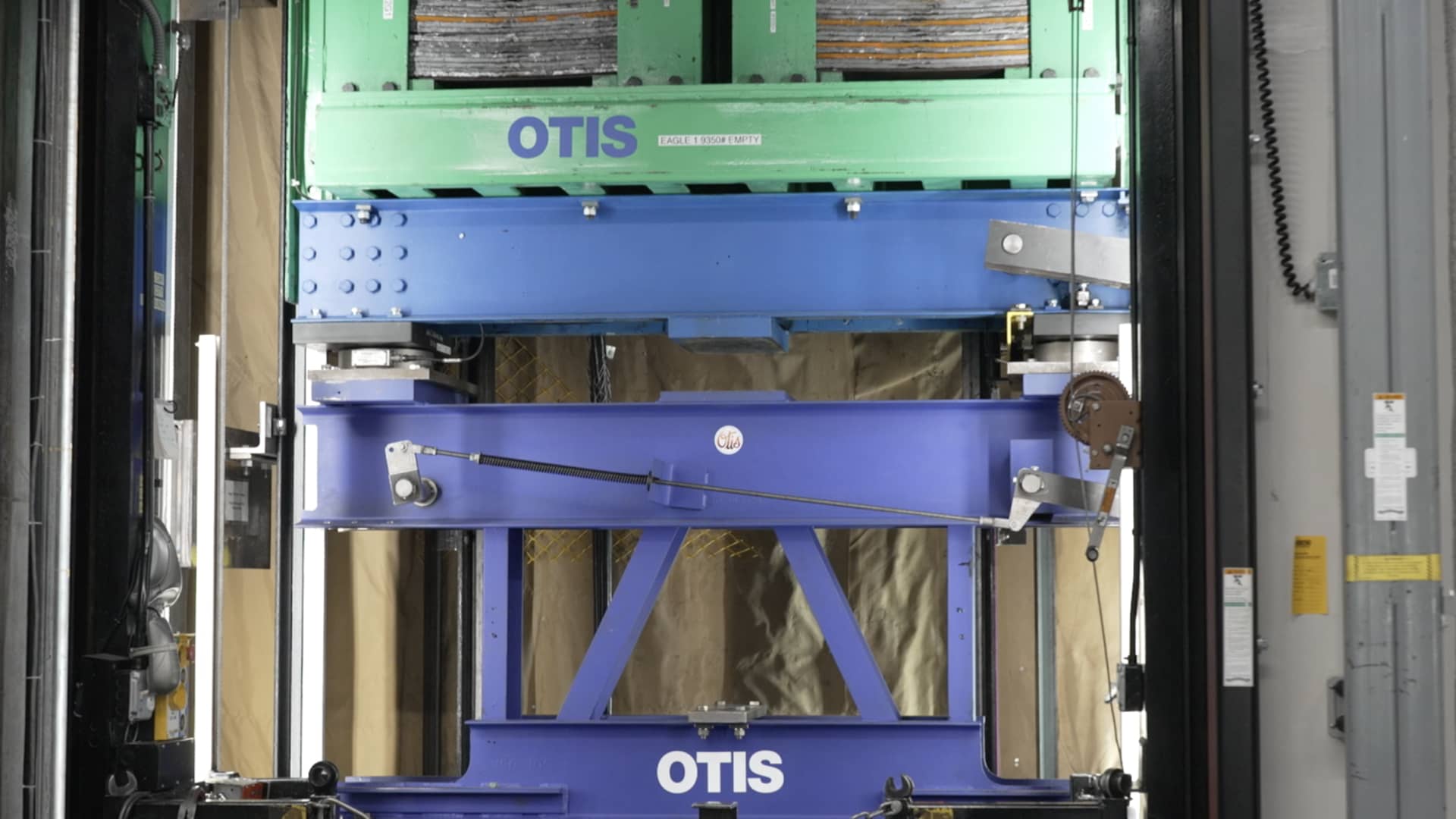
Inside a 28-story testing tower erected in the middle of the suburban town of Bristol, Connecticut, Otis engineers run elevator parts through dust chambers, humidity cells and saltwater fog machines.
“[Elevators] are supposed to work in the extreme conditions of the world. Whether it’s the desert or the Arctic,” said Haran Vela, senior vice president of engineering for Otis. “We try to simulate all of those conditions in this facility so that we know that our designs will work in the real environment.”
Otis is the largest elevator company in the world, operating in 200-plus countries. In 2025, the company generated more than $14 billion in revenue — up roughly 13% since it was spun off from United Technologies in 2020.
Otis’ investment case hinges on the premise of long-term, stable growth, especially in an increasingly volatile market.
But the company’s stock is down about 15% year-to-date, underperforming both the industrial sector and the broader market.
“There’s definitely a wave of money that’s been following along or chasing … the [artificial intelligence] plays,” said Melius Research global machinery analyst Robert Wertheimer.
At the same time, Otis’ own business has been faltering.
“Otis, as a service-led business, had a setback in service,” Wertheimer said. “And they’re fixing it. It’ll get fixed. But that was kind of a stumble at the right time for flow of funds to go in the other direction.”

Otis vs. Industrial sector
The service engine
Building new elevators isn’t an inherently lucrative venture. In 2025, Otis’ operating profit margin on new equipment was just 4.8%.
The real profit driver of the business comes in servicing these elevators once they are installed. Initially, that involves things like maintenance and repairs. Then after about 20 years, the elevator needs to be modernized, which involves partially or fully replacing its parts.
“That’s the engine that allows us to generate over 90% of our profits,” said Otis CEO and Chair Judy Marks.
Otis currently services about 2.5 million elevators worldwide, up from over 2 million units in 2020.
The company has incrementally grown its profit margins on service over the past couple of years, reaching 25.5% by the end of 2025. But service margins fell by 250 basis points in the first quarter of 2026.
That margin decline is a result of a broader issue the company has been working through since the start of last year. Otis saw its retention rate, meaning the customers that renew their service contracts, dropping as it entered 2025.
“They started calling out cost actions they were going to do to fix it, which is simply hiring more people, focusing more on maintenance; less revenue-producing but more customer-pleasing” said Wertheimer. “It’s been an issue that has coincided with a lot of noise around tariffs and some China programs to stimulate growth. … There’s just been a little bit more uncertainty around what is normally a very stable earnings stream.”
Getting back on track
The company said it is making $50 million in incremental investments to its service business throughout 2026.
In Otis’ most recent quarter, service sales were up 11% year over year, but in its earnings call, Marks said the company had not yet seen a significant improvement in retention. The company cut its profit guidance for the year.
Wertheimer wrote in a July analyst note that these investments in the service business should lead to fewer outages for customers, which would, in turn, improve retention. As he puts it: “Renewals are somewhat automatic if no one is unhappy.”
But Otis needs to prove its tens of million of dollars in investments can pay off. It’s banking on long-term predictability to get Wall Street back on board.
“Urbanization, digitalization, aging people who need mobility and infrastructure modernization is not only going to be attractive in the near term, the next few years, versus all the data center expansion that’s happening,” Marks said, “but this has decadelong runs in it.”
Elevator shaft where safety breaks are tested.
CNBC
Competitive landscape
News of an industry shake-up could also soon impact the elevator market.
Finland’s Kone agreed to buy Germany’s TK Elevator in a nearly $35 billion deal announced in April.
Wolfe Research senior analyst Nigel Coe noted that merger could potentially benefit Otis, as there would be just three instead of four major players bidding for elevator contracts.
But the merger could face regulatory hurdles. The second-largest elevator company, Schindler, has said it would challenge the deal over antitrust considerations.
When asked about how she views the current competitive landscape, Marks said Otis is going to leave the matter to regulators and let customers make their decisions.
